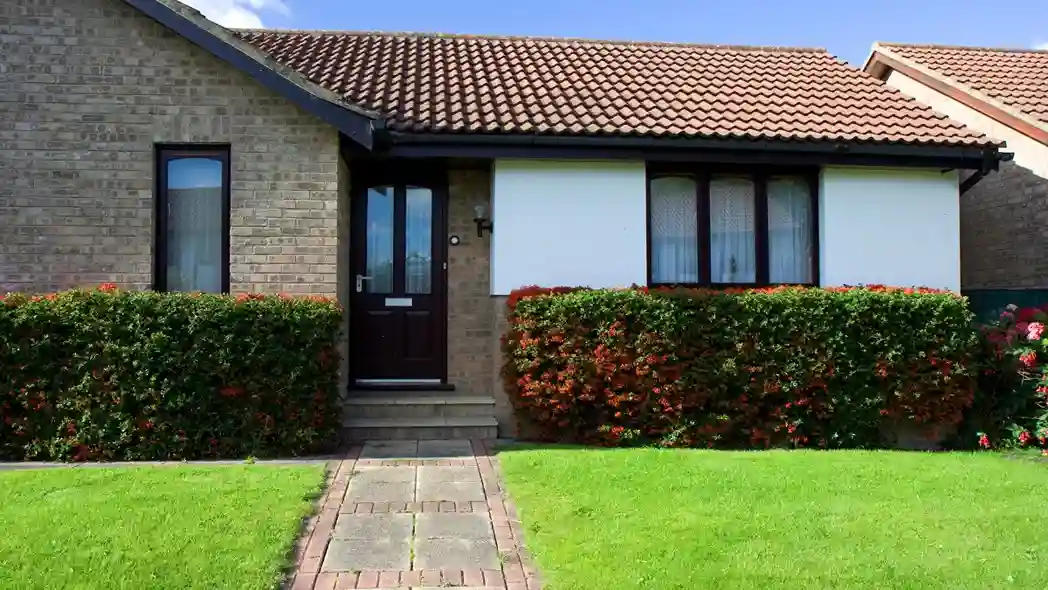
The market for postwar bungalows in South Mississauga is becoming increasingly competitive. In areas like Mineola and Lorne Park, the same modest home can attract buyers with very different goals, from seniors wanting to stay close to the lake to builders searching for their next redevelopment project. As demand continues to grow, Mississauga bungalows have become one of the hardest property types to find in the GTA.
Here’s what’s going on, and why it matters for both ends of the market.
A Demographic Shift is Meeting a Built Environment That Can’t Absorb It
Canada is aging fast. As of July 2024, about 7.82 million Canadians were aged 65 or older, making up nearly 19% of the population. Statistics Canada expects that number to rise to between 21.4% and 23.4% by 2030.
According to the Region of Peel’s own demographic data:
- In 2021: Seniors made up 15% of Peel Region’s population.
- By 2041: Seniors are expected to account for 20% of the population. That would mark a 134% increase compared to 2014 levels.
The number of residents aged 85 and older, the group most likely to need accessible single-level housing, is projected to grow from 1% of Peel’s population in 2011 to 3.8% by 2041.
Recent CMHC research found that most seniors are choosing to age in place rather than sell. Between 2016 and 2021, only 21.5% of homeowners aged 75 to 79 sold their homes, compared with more than 40% in the early 1990s. When older Canadians do move, they usually stay close to the communities they already know.
While many older buyers want a simple, single-level home close to amenities, very few new communities are offering that type of housing.

The Condo “Alternative” Isn’t Really An Alternative Right Now
The long-standing idea of selling a family home and moving into a less expensive condo is no longer guaranteed to save money.
Since 2021, Mississauga has seen condo prices fall more consistently than anywhere else in Ontario. At the same time, developers have pulled back on new projects, limiting the supply of larger condos suited for downsizers.
Available condo stock is heavily weighted toward small investor units, which makes downsizing difficult. These units often lack the space needed to replace a full household, and monthly fees can also reduce the expected financial advantage of downsizing.
So a growing share of downsizers are making the same call: skip the condo, find a bungalow.
The South Mississauga Arena: Mineola, Lorne Park, Port Credit
These neighbourhoods are similar in the features that matter most to both downsizers and builders. They have large, mature lots, deep front yards, easy access to Lake Ontario, and GO Train service connecting to Union Station in roughly 25 to 40 minutes.
In April 2026, Mississauga detached homes averaged $1,364,097 across 187 sales. This makes it the highest-priced detached market among major suburban areas.

Wide-lot bungalows and custom detached listings tend to draw three main buyer groups:
- Downsizers who want to stay in the neighbourhood and need single-level living.
- Investors drawn to deep lots with potential for an additional residential unit (ARU) or garden suite.
- Custom builders evaluate the property based on lot value alone, with the existing house treated as a demolition cost.
That third category is what’s pushing prices.
The Teardown Math
Here’s why a builder will outbid a downsizer almost every time.
For builders, a heavily outdated bungalow that needs extensive work is often not worth renovating. Instead, the structure itself carries minimal value, and the focus shifts to the lot. The approach is to buy the property, demolish the home, rebuild from scratch, and resell at the higher new-construction value.
A 3,000-square-foot custom build in South Mississauga costs about $1.3M to $1.9M, excluding land. Finished homes in Mineola and Lorne Park commonly start around $3 million and can exceed $5 million for high-end estates. That price difference creates enough margin for builders to aggressively pursue and bid up land values.
A downsizer trying to purchase a bungalow is often competing with a builder whose offer reflects the expected value of a much larger home that could be built on the same land.
The Downstream Effects
1. Downsizers get priced out of their own neighbourhood.
Downsizing traditionally means unlocking equity by moving from a large home to a smaller one. In South Mississauga, that model is becoming harder to follow because smaller homes are often priced at similar levels to larger ones.
2. The “move-up” market stalls.
A lack of downsizing options means many seniors stay in large detached homes longer. These homes are then not released into the resale market.
That reduces opportunities for younger families trying to move up from smaller housing types, and the pressure spreads across the entire freehold market.
3. The single-level housing stock shrinks permanently.
Every bungalow that is torn down is replaced by a 3,000 to 5,000 square foot multi-storey home, because that is the only type of housing the land economics support.
At the same time, the supply of accessible single-level homes in South Mississauga is shrinking just as demand for them is expected to rise.
- Read: From Major Downsizing to Smaller Down Payments: Zoocasa’s 2026 Canadian Housing Market Predictions
What This Means If You’re In The Market
In today’s market for Mississauga bungalows, downsizers compete directly with builder economics, not just other buyers. Sellers are effectively selling land in high-demand pockets like Mineola and Lorne Park, where redevelopment value drives pricing. And builders are facing more competition as downsizers bring strong equity into the same market.
Looking for a bungalow or considering a downsizing move in South Mississauga? Browse current listings on Zoocasa. Start your search today.