For years, a new Costco has been seen as both a convenience and a disruption for growing communities. While some residents worry about traffic and busy roads, others see new jobs, better shopping, and rising property values. New research on the Costco effect on home values suggests both views are right, but the impact on nearby properties is larger than many people expect.
A study from the University of British Columbia found that Costco’s impact on home values depends largely on where it opens. Economics honours student Silas Kwok analyzed 84 Costco warehouse openings across the U.S. between 2002 and 2020. While the average effect on nearby home prices was negligible, homes within five miles of new stores in higher-income counties appreciated by up to 7.9% over the following 2.5 years. In more densely populated counties, the increase was smaller but still significant at 5.2%.
With Costco planning nearly 30 new U.S. warehouse openings in 2026, we analyzed which communities have the right mix of income and population density to benefit from the Costco effect on home values, and which markets may see little change.
Why Costco Is Different From a Walmart or an IKEA
Costco is not the only retailer linked to rising home values. A study by economists Devin and Jaren Pope found that homes within half a mile of a new Walmart gained 2% to 3% in value, while those located between half a mile and one mile away saw a smaller 1% to 2% increase.
IKEA followed a different pattern. A peer-reviewed study from Sweden found home prices rose by an average of 4.2% to 4.4% in cities that welcomed a new store, but homes closest to the location saw no statistically significant gain. Instead, prices increased farther away, with the effect still reaching about 2% six miles from the store.
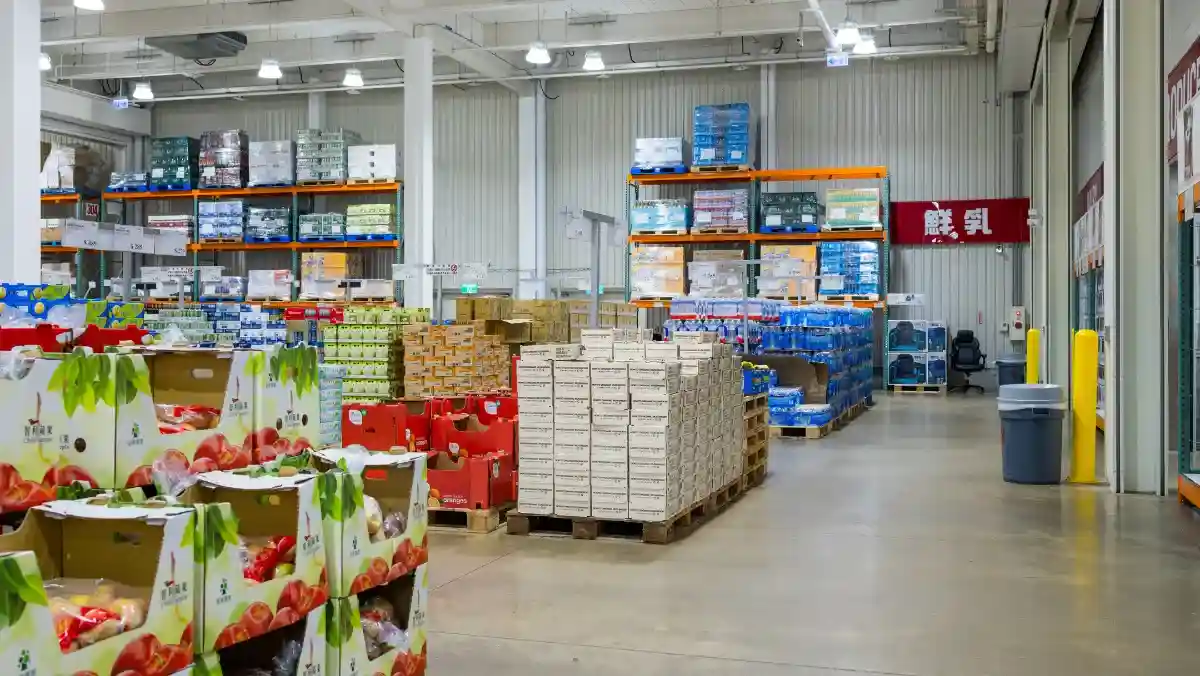
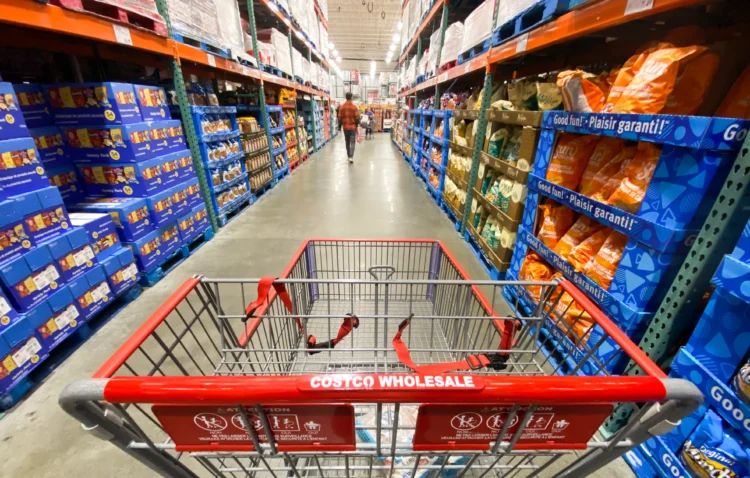
Costco stands apart from both Walmart and IKEA. A typical warehouse is more than just a retail store. It usually spans over 150,000 square feet, includes a busy gas station, and operates around frequent freight deliveries. Residents gain access to lower prices, affordable fuel, and new jobs, but they also face more truck traffic, busier roads, and a much larger commercial presence. According to Kwok’s research, these competing factors generally offset each other, leaving little overall impact on nearby home values.
Where the Cancellation Breaks Down
To measure the true Costco effect on home values, Kwok compared homes at several distances from each new warehouse with similar properties located 20 to 25 miles away. This control group was close enough to reflect the same local economy but far enough away to avoid being affected by the new store. The study also accounted for seasonal changes and broader housing market trends.
As a final test, Kwok repeated the analysis using fake opening dates from years before the warehouses opened. Because those tests showed no meaningful effect, the findings are more likely to reflect Costco’s arrival rather than neighborhoods that were already appreciating.
Once income and population density were factored in, the results for homes within five miles became much clearer.
- Above-average household income: +7.9%, statistically significant
- Above-average population density: +5.2%, statistically significant
Why Income Matters More
Part of Costco’s appeal comes down to who shops there. Its membership model, which depends on bulk purchases and upfront annual fees, is often a better fit for higher-income households. A new warehouse can also act as a signal to other businesses that an area has strong consumer demand, potentially attracting additional retail and commercial development.
Why Density Matters, But Less
In busy suburbs, a Costco nearby can actually make life easier. People are already used to traffic, so the added activity feels less disruptive. The biggest benefit is convenience because residents spend less time driving for everyday purchases. That helps support home values, but the boost is usually smaller.
7 U.S. Towns to Watch as Costco Expands in 2026
Since Costco usually keeps new locations quiet until they are close to opening, we pulled together this list using local permits, hiring pages, and news reports available as of mid-July 2026. We looked specifically at communities that fit the profile where the research found the biggest home value gains: higher-income and more densely populated markets. For reference, the median U.S. home sold for $403,200 in Q1 2026.
1. Celina, TX
Celina checks many of the boxes that researchers say matter most. Collin County households earn a median income of $124,920, nearly 50% higher than the U.S. median of $83,730, and homes are already worth more than the typical U.S. property.
The city is also growing quickly, and the new 158,000-square-foot Costco at Preston Road and Ownsby Parkway is bringing more attention to the area. As other retailers move into the corridor, the new development could add even more momentum to this fast-growing suburb.
2. Guilderland (Albany), NY
After years of rumors, Costco is finally coming to the Capital Region. The new warehouse opens Aug. 6 beside Crossgates Mall, giving residents their first local Costco. Albany County may not have the highest home values, with a median of $294,600, but household incomes are above the national average. That puts the area closer to the type of higher-income market where Kwok’s research found the strongest Costco-related home value gains.
3. Oconomowoc, WI
Wisconsin’s wealthiest county is about to get its biggest Costco yet. The new 161,000-square-foot warehouse at Pabst Farms opens on Aug. 7, bringing Costco to a community where home values are already among the state’s highest. While the county’s median home value of $398,200 is slightly below the national figure, the area’s affluence makes it the type of suburb where new retail investment can create a ripple effect.
4. Otsego, MN
Wright County is growing quickly, and its housing market is keeping pace. Median home values jumped 7.84% in one year to $358,900, putting the county within reach of the national benchmark. Add in household incomes above the U.S. median, and the area starts to look like the type of market where Costco’s arrival could have a bigger impact. The new Otsego warehouse opens Aug. 14 and will give local shoppers an alternative to the busy Maple Grove Costco.
5. Mansfield, TX
Mansfield represents the type of market where Costco’s density effect may be more important than income alone. Although Johnson County’s median home value is $285,900, the warehouse’s location near the Johnson and Tarrant County line places it within reach of some of the Dallas-Fort Worth area’s most populated suburban neighborhoods. The surrounding density and existing retail demand could strengthen the convenience value associated with having a Costco nearby.
6. Syracuse, UT
Davis County stands out because it matches both demographic profiles linked to Costco-related appreciation. Household income is roughly 15% above the Utah average, while population density ranks among the highest in the state.
The county’s median home value has climbed to $505,500, up 7.44% year over year and approximately 25% above the national median sale price. The Syracuse warehouse strengthens retail access in one of Utah’s most competitive suburban markets.
7. Lee’s Summit, MO
Lee’s Summit is getting another Costco, but the story is less about wealth and more about convenience. The new warehouse opening this August will be the area’s sixth Costco and will anchor a new development near the U.S. Route 50 and Missouri Route 291 interchange. While Jackson County home values are below the national average at $230,500, they have risen more than 8% in a year. The area’s density could make having a Costco nearby a meaningful advantage for residents.
From the Warehouse to Your Equity
The Costco effect on home values is not as simple as being close to a new warehouse. Kwok’s research found that the biggest gains occur within five miles of a new Costco, but only in communities with strong income levels or population density. Properties directly next to a warehouse may still face drawbacks from traffic congestion and increased commercial activity.
For buyers and investors, the takeaway is not to search for any property near a Costco. The stronger signal comes from finding communities where a new warehouse is arriving alongside strong economic fundamentals. In lower-income or less dense markets, the housing impact is more likely to be limited.
Bulk toilet paper aside, a new warehouse can be a real signal of where a market is headed. If one of these towns has you thinking about a move, start your search with Zoocasa today.