


Buying a condo-apartment in Canada in 2015 was a smart move, but holding onto that property until 2025 proved to be even more beneficial. Over the past decade, apartment prices nationwide have undergone significant changes. Whether in a large metropolitan area or a smaller city, the real estate market has undergone significant shifts. Zoocasa analyzed price changes across Canada to gain a better understanding of how different regions performed. Learn more about headline-worthy growth in Ontario, consistent gains in Quebec and Atlantic Canada, and more gradual increases in the Prairies.
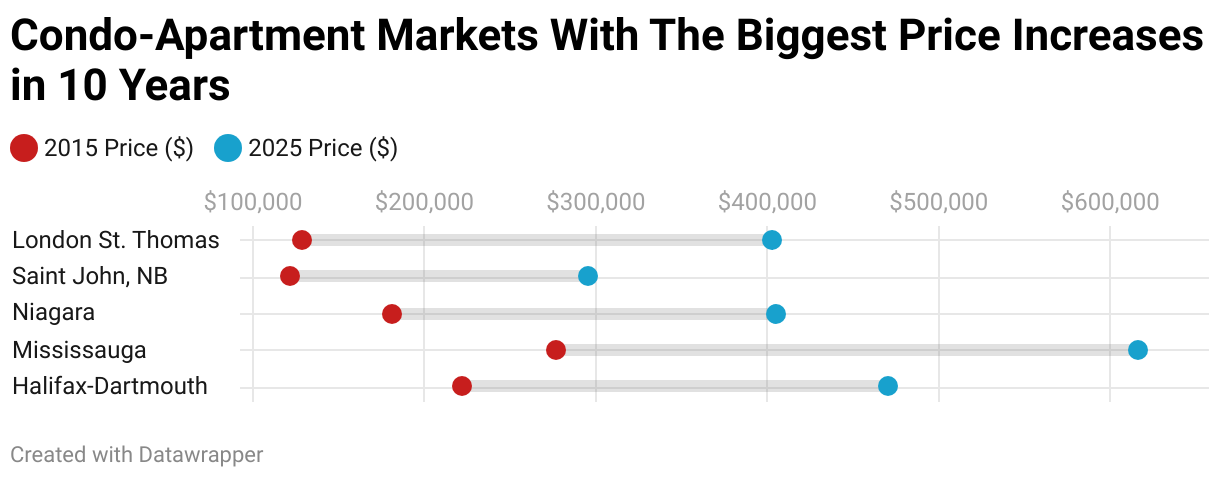
Canada’s Most Profitable Condo Markets From 2015 to Today
Over the past decade, Canada has experienced a significant surge in home prices across multiple regions, particularly in mid-sized cities that were once considered affordable. Between 2015 and 2025, the most dramatic increases occurred outside the biggest metro hubs, indicating a broader shift in where housing demand has grown.
Leading the nation in price growth was London St. Thomas, with a 213.21% increase as average home prices rose from $128,800 to $403,416. Saint John, followed by a 143.55% spike, showing strong growth in Atlantic Canada.
Other notable increases included:
- Niagara Region, with a 123.50% jump from $181,300 to $405,200
- Mississauga, up 122.33% from $277,600 to $617,200
- Halifax-Dartmouth, where prices climbed 112% from $222,100 to $470,800
Related: Housing Affordability in the US vs. Canada: Why American Buyers Are Getting More for Less

Sustained Growth and Recent Cooling in Ontario’s Key Markets
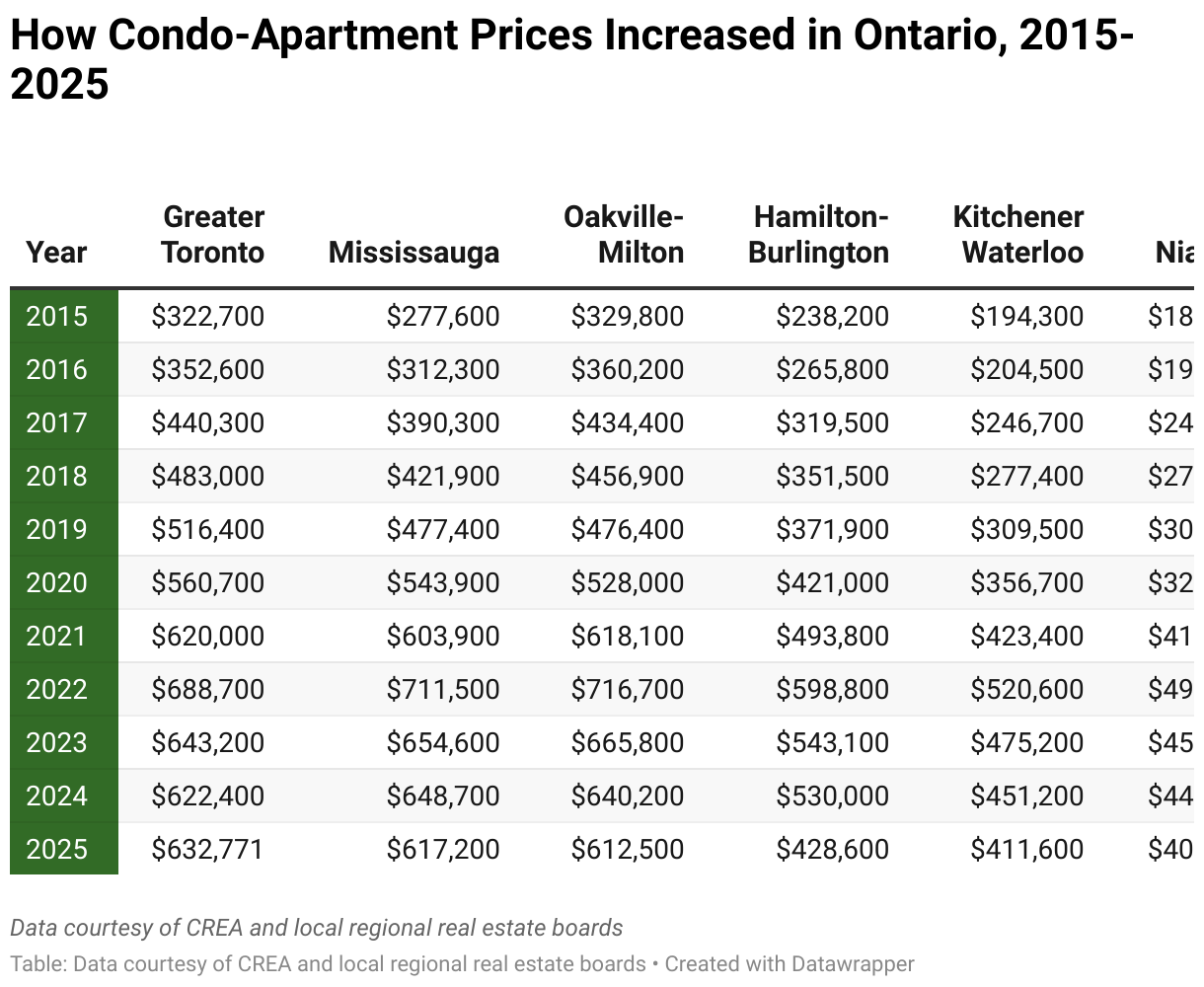
Ontario cities saw some of the most dramatic price growth from 2015 to 2022. London St. Thomas experienced a remarkable 213.21% increase in condo prices, climbing from $128,800 in 2015 to $403,416 in 2025 —a gain of $274,616. Meanwhile, the average home price in the Niagara Region rose from $181,300 to $405,200, marking a 123.50% increase. Mississauga experienced a 122.4% increase, climbing from $277,600 in 2015 to $617,200 by 2025. Barrie followed closely with a 109% rise, while Toronto nearly doubled with a 96 % gain.
Oakville-Milton and Hamilton also saw strong growth, with increases of 85.8% and 79.9% respectively. Other cities such as Ottawa, Kitchener-Waterloo, Niagara, and London-St. Thomas also posted significant gains during this time, for example, London-St. Thomas’s average apartment increased from $128,800 in 2015 to $445,400 by 2022.
However, the momentum slowed between 2023 and 2025. Many Ontario cities, including Toronto, Mississauga, Hamilton-Burlington, Barrie, and others, experienced consistent price declines after the peak in 2022. Despite this cooling, most markets still maintain prices well above 2015 levels.
Eastern Canada’s Long-Term Price Performance
On the East Coast, Halifax-Dartmouth experienced the most price growth, with a 112% increase over the decade, from $222,100 in 2015 to $470,800 in 2025. Montreal also showed substantial gains with an 85.2% increase, while Quebec City’s major price increases happened in the past two years. Most of Quebec City’s 83% growth occurred after 2023, reflecting a recent surge in buyer demand.
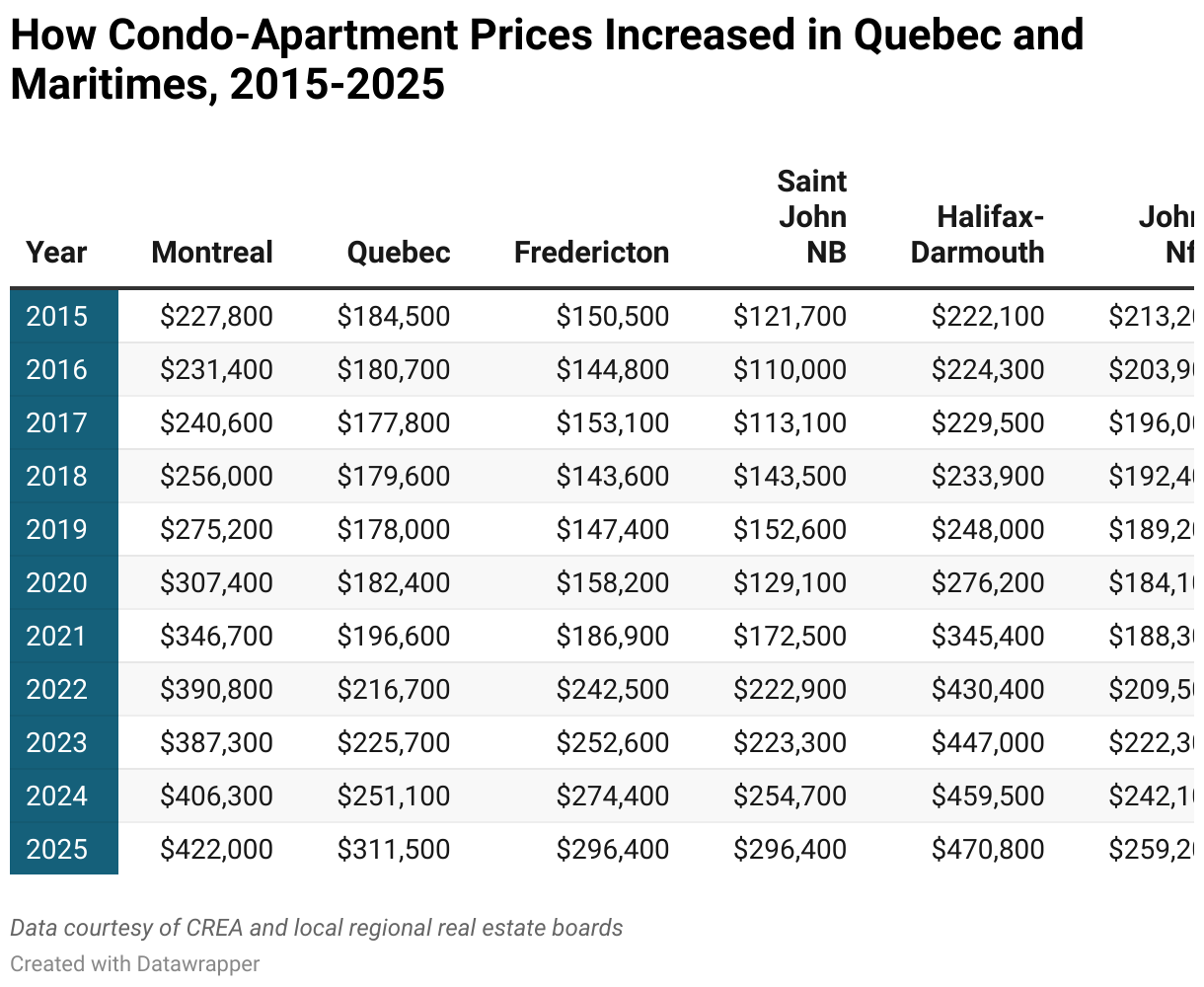
Other Maritime provinces saw more gradual increases. For example, Saint John rose from $121,700 in 2015 to a projected $296,400 in spring 2025, ultimately more than doubling, though it remains relatively affordable. In Fredericton, New Brunswick, and St. John’s, Newfoundland, both cities experienced slower growth, staying well below the national average for most of the decade. That said, all three cities saw stronger price appreciation after 2020, indicating broader momentum even in smaller markets.
High Prices and Uneven Progress Out West
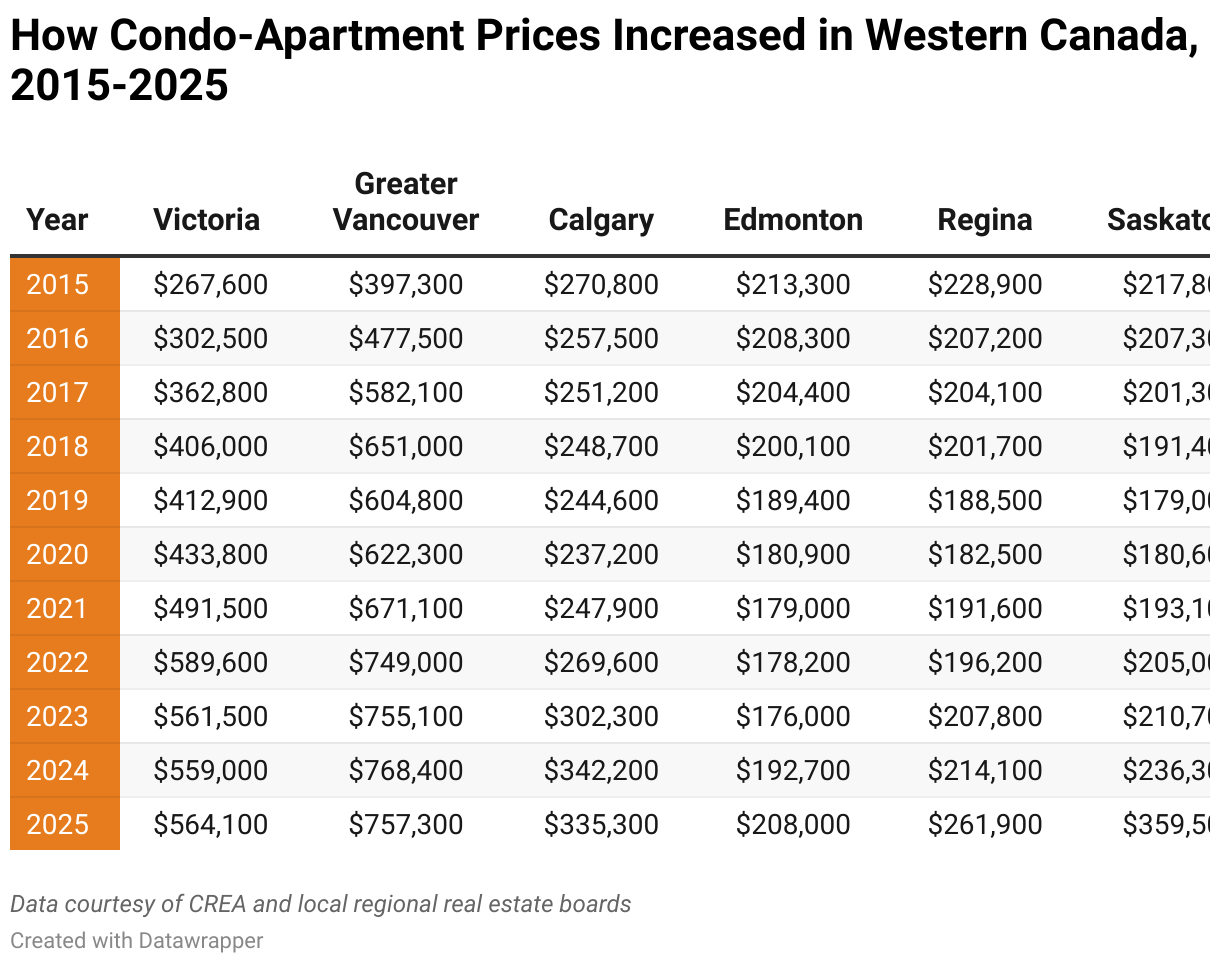
Out West, Victoria and Greater Vancouver posted some of the highest prices and strongest long-term growth. Victoria saw prices increase by 95.7%, while Greater Vancouver rose by 90.6% between 2015 and 2025. Both markets peaked between 2022 and 2024, with some signs of softening or plateauing by 2025. Vancouver, for instance, reached $768,400 in 2024 and is expected to stay stagnant the rest of this year.
In contrast, markets across the Prairies had slower and more varied trajectories. Calgary’s prices declined in the early years but recovered after 2021, rising to $335,300 by 2025, a 23.7% increase over the decade. Saskatoon stood out for its late surge, gaining 52% between 2024 and 2025, driven by renewed demand and overdue pricing corrections. Winnipeg remained relatively stable until 2020, after which it showed steady growth, reaching a projected $297,864 by 2025.
Related: Breaking Ground: Alberta’s Clear Advantage in New Home Construction
Edmonton, however, struggled throughout much of the decade. Its benchmark apartment price dropped from $213,300 in 2015 to $176,000 by 2023, before experiencing a slight recovery to $208,000 by 2025. This makes Edmonton one of the few major cities to have experienced nearly flat growth over the decade, likely due to high inventory from new builds and ample land availability for further expansion.
Regina, Saskatoon, and Winnipeg experienced similar slowdowns early on, but most recovered strongly after 2020. Regina and Saskatoon in particular saw significant gains toward the end of the period, demonstrating that even traditionally slower markets can turn around under the right conditions.
How Condo Prices Increased in Canada Since 2015
In 2015, apartment prices ranged from a low of $121,700 in Saint John to a high of $397,300 in Greater Vancouver. By 2025, Vancouver will remain Canada’s most expensive apartment market at a projected $757,300. Meanwhile, the lowest benchmark ($208,000 in Edmonton) is still significantly higher than the country’s lowest price point ten years ago. This suggests that even cities with slower growth have seen meaningful long-term price increases. Victoria, Toronto, Oakville-Milton, and Mississauga remain some of the most expensive markets in 2025.
Even with a few price dips in recent years, these cities continue to hold their value thanks to steady demand and limited housing supply. If you’ve been thinking about buying a condo, this could be your moment. It’s a buyer’s market right now in BC and Ontario, which means more options, less competition, and a better shot at finding something that fits your budget. If you’re ready and able, it might just be the right time to jump in.