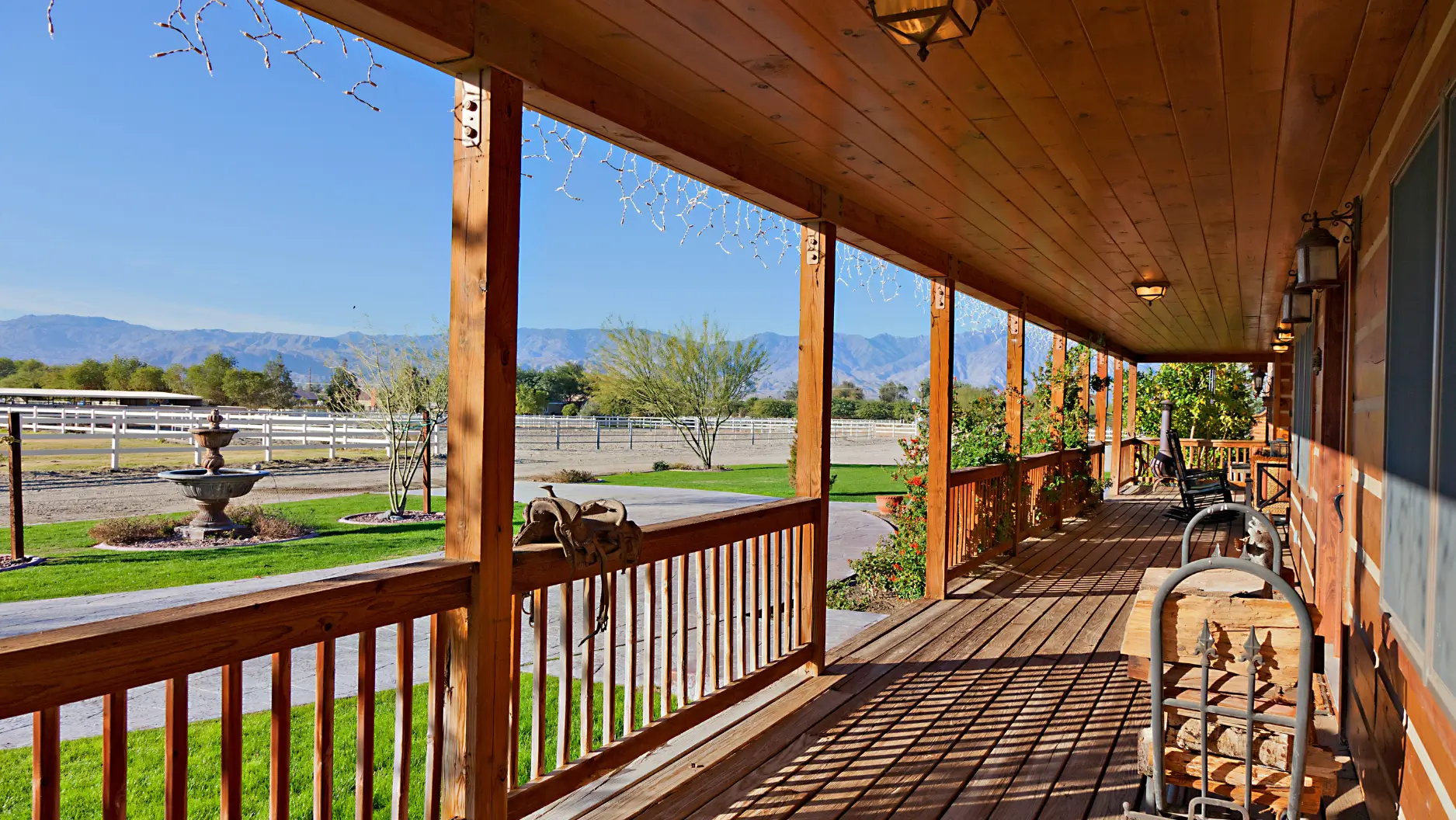
Ranch homes may be nearly a century old, but they’re making a comeback as homeowners rediscover the features that make them so easy to live in.
Once a staple of farms, rural towns and postwar suburbs, ranch homes were designed around simple, practical living. With their low profiles, open layouts and easy connection to the outdoors, they’re finding a new audience among homeowners looking for spaces that are comfortable, flexible and easy to live in.
The ranch home has changed quite a bit since its early days, but its basic idea remains the same: make everyday life comfortable, functional and connected to the outdoors.
Today, that timeless approach is being reimagined with bigger windows, warmer materials and seamless indoor-outdoor spaces, helping modern ranch homes make a comeback.
The Ranch Home Has Been Around for Nearly a Century

The ranch home has deep roots in American residential architecture. The style began developing in California in the early 20th century and became especially popular after the Second World War.
By the 1950s and 1960s, ranch homes were everywhere. Their low, horizontal shape, open living areas and connection to patios and yards fit the more casual way many families wanted to live.
But the ranch wasn’t only popular in the suburbs. Its practical layout also worked well for families living on farms and in rural communities. A single-story home made it easy to move between indoor and outdoor spaces, while its wide footprint worked well on larger plots of land.
The National Park Service notes that the ranch style grew alongside Mid-Century Modernism and became popular partly because its simple design could be built quickly and in large numbers.
Typical ranch homes had one floor, a low-pitched roof, large windows, an attached garage and a layout that often stretched across the lot. In other words, the ranch was designed around a simple idea: make everyday life easier. That idea may be exactly why the style is coming back.
What Makes a Modern Ranch?

Think:
- Long, low profiles
- Open-concept kitchens and living rooms
- Large windows and glass doors
- Strong connections to patios, gardens and pools
- Natural wood, stone and concrete
- Clean rooflines
- Indoor-outdoor entertaining spaces
- Flexible rooms that can change with a family’s needs
Modern ranch homes can also borrow from several different architectural styles. A home might combine the horizontal shape of a traditional ranch with Mid-Century Modern windows, contemporary finishes or the warmth of a modern farmhouse.

Historic ranch homes often used L- or U-shaped layouts to create a stronger relationship between the house and the yard. Newer designs can take that idea even further, using courtyards, covered patios and large walls of glass to make the outdoors feel like an extension of the home.
The Los Angeles County Department of Regional Planning describes the Modern Ranch as a variation influenced by Mid-Century Modernism, with an emphasis on horizontal lines, simple materials, recessed entrances and low-profile forms.
The result can feel less like a traditional suburban ranch and more like a modern retreat.
Western Culture Is Having a Pop Culture Moment
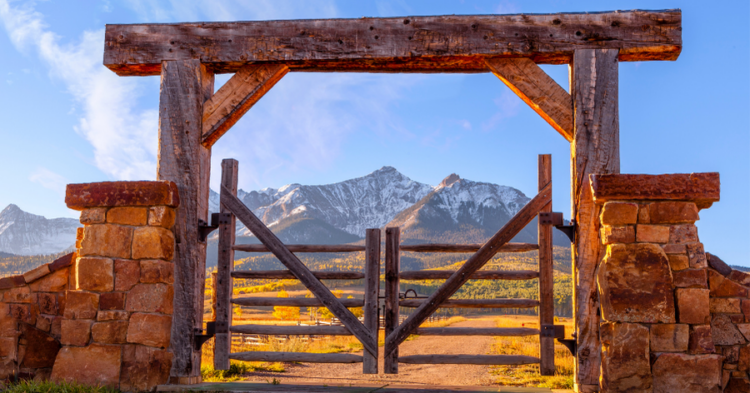
The ranch home revival isn’t just happening in architecture. Ranch life and Western culture have also found a bigger place in pop culture.
Shows like Yellowstone have brought ranch living to mainstream audiences, showcasing everything from sprawling properties and horseback riding to the appeal of wide-open spaces and a slower pace of life.
Country music and Western-inspired fashion have also been gaining mainstream attention, helping bring the ranch lifestyle into the cultural spotlight.
You don’t need 1,000 acres or a cattle operation to embrace the trend. Today’s modern ranch homes borrow the parts of rural living that appeal to homeowners most: space, privacy, natural materials and a strong connection to the outdoors.
That cultural shift may be helping make the ranch feel less like a relic of the past and more like a lifestyle worth bringing into the present.
One Floor Is Suddenly Looking Pretty Good
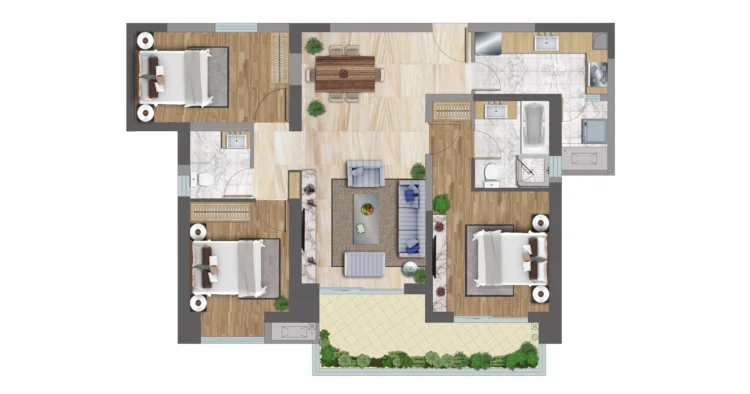
One of the biggest reasons ranch homes are getting another look is also one of their simplest features: there are (usually) no stairs.
That can make a home easier to navigate for young children, older adults and anyone who simply doesn’t want to spend their day going up and down stairs.
There is also evidence that one-story construction is gaining ground in new housing.
According to the National Association of Home Builders, the share of new homes started in the U.S. that were one story rose from 47.5% in 2024 to 48.6% in 2025. At the same time, the share of new homes with two or more stories fell from 52.5% to 51.4%.
That doesn’t mean two-story homes are disappearing. They remain common in many parts of the country–but the shift is worth watching.
The same NAHB analysis found that single-story homes made up more than half of new starts in several regions, including 55.7% in the East North Central division and 56.6% in the West South Central division in 2025.
For buyers thinking about how a home will work not just today, but years from now, one-floor living can be an appealing feature.
The Ranch Fits the Aging-in-Place Conversation
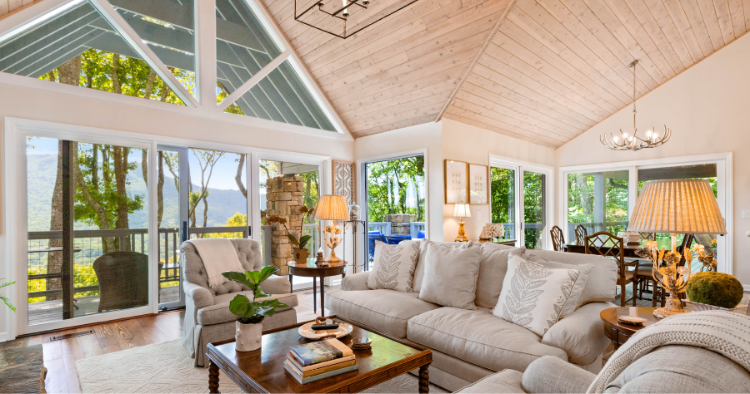
The return of the ranch also lines up with a larger conversation happening in housing: how can people stay comfortably in their homes as their needs change?
Research shows the growing importance of aging-in-place design, including features such as first-floor bedrooms, wider doorways and more accessible bathrooms.
A ranch home doesn’t automatically solve every accessibility challenge, but its single-level layout can make it easier to design a home where the most important spaces are all on the same floor.
Plus, modern ranch homes prove that accessibility doesn’t have to look clinical. They can include wide doorways, curbless showers, large open spaces and fewer level changes while still feeling stylish.
Open-Concept Living Was Practically Built Into the Ranch
The ranch also has another feature that feels very current: the way it brings people together. Many traditional ranch homes were designed around informal living. Instead of separating every room, the layout often allowed living, dining and kitchen spaces to flow into one another. That concept has become a major part of modern home design.
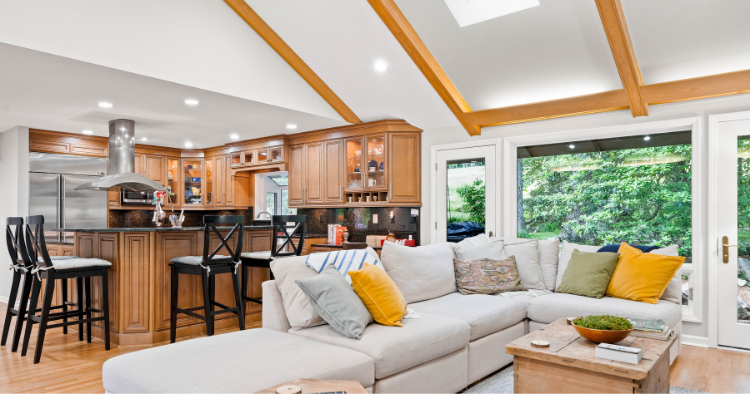
Today’s version might take that open layout and make it even more flexible. A large kitchen can open into a dining area and great room. Sliding glass doors can lead directly to a patio. A spare bedroom can become an office, gym or guest room. The house can change without requiring a completely different floor plan.
Old-School Architecture Meets Modern-Day Priorities
The ranch home’s comeback may not really be about nostalgia. It may be about practicality.
The original ranch was successful because it responded to the way people wanted to live at the time. It offered casual spaces, simpler construction, garages and easy access to the outdoors.
Today’s version is responding to a different set of priorities. Homeowners are looking for spaces that can support working from home, entertaining, relaxing, spending time outside and adapting as life changes. They are also showing interest in warmer materials and more personalized interiors rather than homes that feel overly uniform.
Research found in 2025 that design professionals were seeing growing interest in warm, earthy palettes, layered textures and more personalized spaces. The modern ranch fits surprisingly well into that picture. It’s simple without being boring, open without feeling empty, modern without necessarily feeling cold. And most importantly, it puts everyday living at the center of the design.
So, Are Ranch Homes Really Back?
Maybe the better question is: Did they ever really go away? Ranch homes have remained a major part of the North American housing landscape for generations. What is changing is the way designers and homeowners are looking at them.
The ranch no longer has to mean dated cabinets, low ceilings and a sea of beige carpet. Instead, today’s ranch can mean floor-to-ceiling windows, warm wood, dramatic fireplaces, indoor-outdoor entertaining areas and a layout designed around the way people actually live.
The style may be nearly a century old, but the idea behind it feels surprisingly current.Modern ranch homes aren’t bringing back the past exactly as it was–they’re taking what worked and building it for the way we live now.
Ready to start your home search? Explore homes for sale on Zoocasa and find a property that fits your needs. Reach out today.