
The rise of wellness-centric small towns reflects a measurable shift in American urban planning and residential development. Rather than centering on cars and large lots, these communities prioritize walkability, sustainability, healthcare access, and shared public spaces.
From solar-powered communities in Florida to car-free districts in Arizona, these neighborhoods are redefining real estate value through design that prioritizes human health and connection.
Jump Ahead
- Serenbe, Georgia
- Babcock Ranch, Florida
- Culdesac Tempe, Arizona
- Seabrook, Washington
- Lake Nona, Florida
- Norton Commons, Kentucky
- Village of WestClay, Indiana
Serenbe, Georgia
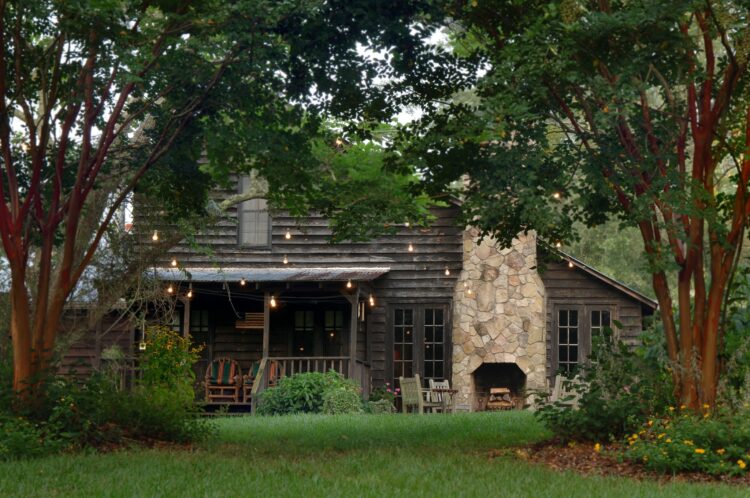
As a master-planned community, Serenbe is a leading example of biophilic urban design. Set inside a 40,000-acre preserve in Chattahoochee Hills, the 2,000-acre development is built around small, walkable hamlets rather than large suburban divisions. Every hamlet centers on a common green and is connected by walking trails, limiting the need for large roads and supporting a more people-focused environment.
What sets Serenbe apart is its agricultural core. A 25-acre organic farm produces hundreds of seasonal crops distributed via CSA subscriptions and local markets. At the same time, its edible landscaping, like blueberry bushes and herbs, enhances pedestrian pathways, linking daily activity with food production.
Residential design in Serenbe avoids monotonous tract housing, combining cottages, lofts, live-work units, and estate homes in proximity. Front porches encourage neighborly interaction, and with 70% of the land preserved as forest and meadow, nature is central to daily life.
Babcock Ranch, Florida
Babcock Ranch was master-planned as a fully solar-powered town, and its energy grid defines its identity as much as its architecture. Built around an 870-acre solar field with more than 680,000 panels generating 74.5 megawatts, the community is designed to operate on renewable energy at scale.
Beyond energy production, its stormwater systems rely on restored wetlands and native landscaping rather than traditional drainage infrastructure. These systems were tested during Hurricane Ian in 2022, when the town maintained uninterrupted power and internet access while surrounding areas experienced outages. Such resilience keeps residents safe and gives them peace of mind.
Daily movement is reinforced through strategic spatial planning: Founder’s Square forms the retail and lakeside heart of the town, while “The PKWY” threads neighborhoods together across a 313-acre expanse of parks and trails. Healthcare integration via regional partnerships ensures wellness and primary care services are always within easy reach.
Culdesac Tempe, Arizona
Culdesac Tempe questions the long-standing American norm that residents must own a car. Within its 17-acre footprint, private vehicles are not permitted on-site. With no parking lots or wide roads, more than half of the community is allocated to courtyards, walking paths, and shaded communal spaces.
The absence of cars alters residents’ behavior. Daily errands require walking, biking, or transit use, embedding moderate physical activity into everyday life. Rather than relying on optional gym visits, movement becomes structurally unavoidable.
With narrow paseos measuring 10 to 15 feet, the neighborhood links homes to businesses and transit, while integrated light rail and shared electric vehicles replace the private driveway. The removal of cars from sight and street transforms everyday encounters into more organic social interactions.
Seabrook, Washington
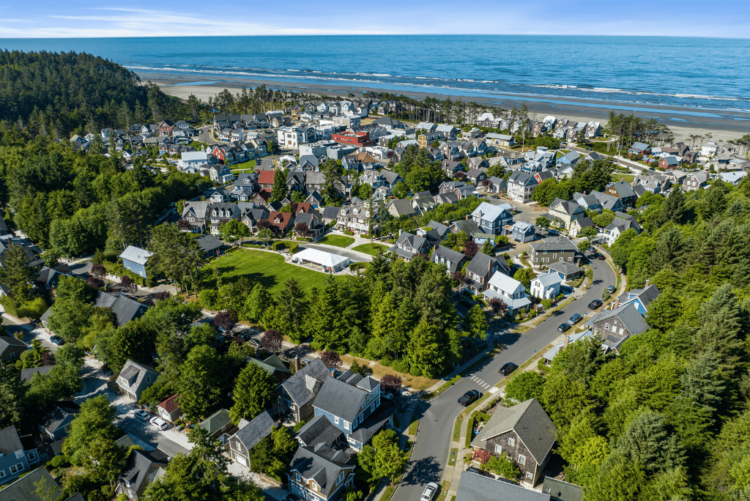
Seabrook’s streets follow a compact grid, creating short distances between homes, shops, and recreation facilities. This layout reduces reliance on vehicles while increasing incidental daily walking.
The town leverages its geography as a wellness asset. Direct access to coastal forest and Pacific shoreline integrates nature immersion into routine life. More than 24 miles of walking and mountain biking trails connect neighborhoods to beaches and wooded preserves. Indoor and outdoor saltwater pools support year-round activity despite the temperate climate.
Retail, dining, and a fresh foods market are concentrated within a walkable town center, minimizing commute stress. High-speed internet infrastructure supports remote work, enabling residents to replace rush-hour traffic with beach walks and community events.
Lake Nona, Florida
Lake Nona operates at a metropolitan scale but maintains neighborhood-level integration. Anchored by Medical City, which includes major hospitals and research institutions, the community embeds healthcare directly into residential planning.
Autonomous shuttle fleets reduce internal car trips and connect districts to retail and medical hubs. The Lake Nona Performance Club combines traditional fitness with recovery therapies and mind-body programming.
Residential neighborhoods, such as Laureate Park, are connected by trail networks that link homes to parks, public art installations, and social hubs like Boxi Park. Housing prototypes incorporate smart-home technologies, including advanced air-quality monitoring and circadian lighting systems.
Norton Commons, Kentucky
Norton Commons pairs classic design with modern sustainability. In its North Village, every home operates on a geothermal ground-source heat pump system, significantly reducing energy use and mechanical noise.
The street grid follows New Urbanist principles, featuring narrow roads, prominent front porches, and dense town-center blocks. Three schools sit within walking distance of residential areas, reducing reliance on car drop-offs. A YMCA is integrated into the neighborhood core, reinforcing daily fitness access.
With over 70 businesses in the town center, residents can walk to fulfill most daily needs. Energy-efficient buildings and compact, walkable design show how classic neighborhood layouts can support sustainability.
Village of WestClay, Indiana
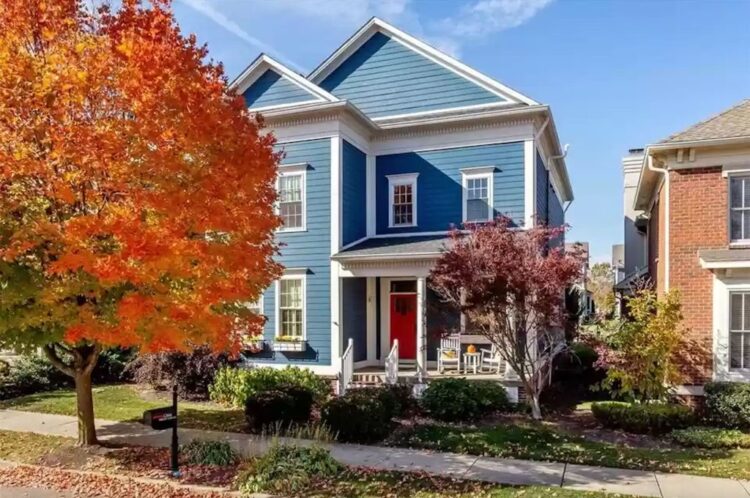
The Village of WestClay is structured around park density rather than a single central green. Across 760 acres, the community includes 45 distinct parks, 25 ponds, and more than 10 miles of walking paths.
This distribution ensures that nearly every home sits within immediate proximity to open space. Formal squares with fountains are interspersed with natural preserves such as the Three Forks Nature Preserve, creating varied environments for recreation and decompression.
The Village Center integrates approximately 100 businesses, including medical offices, restaurants, and professional services. Residents can meet healthcare, social, and commercial needs without extended commuting.
The Rise of Wellness-Centric Small Towns
Wellness-centric small towns are transforming the way Americans live and interact. Buyers are increasingly evaluating neighborhoods not only by square footage but by access to trails, food systems, healthcare networks, and resilient infrastructure. With climate challenges and lifestyle trends influencing housing demand, wellness communities are set to define the future of small-town growth.
Zoocasa makes it easy to explore top neighborhoods for health and lifestyle. Start your search today.