
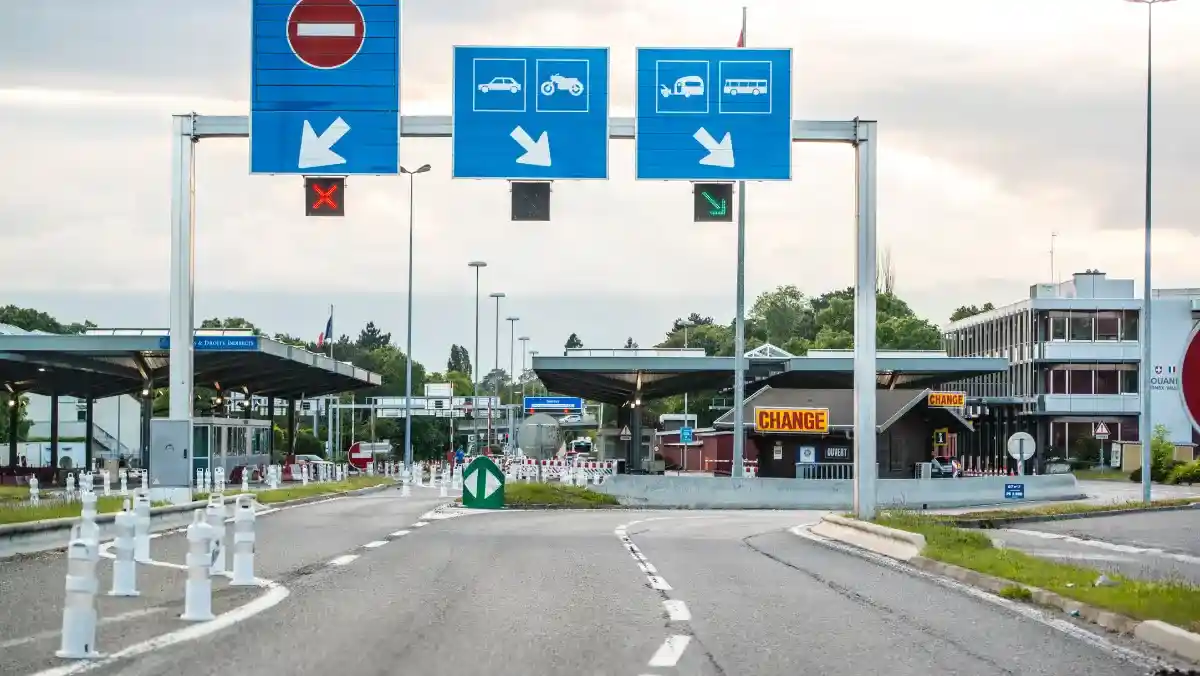
The 75 miles separating Victoria’s Inner Harbour and Seattle’s Elliott Bay now form one of the most interesting cross-border commutes in North America. Vancouver Island appeals to residents with walkable neighbourhoods, while Seattle draws professionals with high-tech salaries and lower income taxes. More professionals are embracing the Victoria-to-Seattle commute to balance Vancouver Island living with Seattle career opportunities.
This type of setup is typically only feasible for people working remotely who need to commute to an office only a few times a month. Most commonly, the Victoria-to-Seattle ferry line is used for tourism.
The Victoria-to-Seattle commute is not for everyone. Crossing the border regularly means coordinating transportation, dealing with customs officers, and filing taxes in both countries. But for those earning U.S. wages, the opportunity can be difficult to ignore.
Here’s a breakdown of how the Victoria-to-Seattle commute works in 2026.
The Math Behind the Commute
The reason this commute exists at all is the price gap. As of April 2026, the Victoria Real Estate Board reported a benchmark single-family home value in the Victoria Core of $1,339,100, with condos benchmarked at $558,300 CAD. Seattle’s median home sale price sat in the mid-$800,000s USD as of April 2026. However, in Seattle’s most desirable neighbourhoods like Madison Park, Queen Anne, and parts of Capitol Hill, single-family homes routinely list well above $1.5M USD, with waterfront properties pushing past $3M.
For buyers earning between $250,000 and $400,000 USD in Seattle, Victoria can provide a level of housing affordability and lifestyle balance that is difficult to find in comparable Seattle neighbourhoods.
Currency conversion adds another major advantage. A $300,000 USD salary converts to roughly $410,000 CAD before taxes, giving buyers far more purchasing power in Victoria’s balanced 2026 housing market.

Seattle’s home prices may appear lower when viewed in U.S. dollars, but currency conversion and property tax differences can make Victoria the more accessible option for higher-income buyers. That advantage becomes even more noticeable in the luxury housing market, where price gaps widen significantly.
How Commuters Actually Get to Work
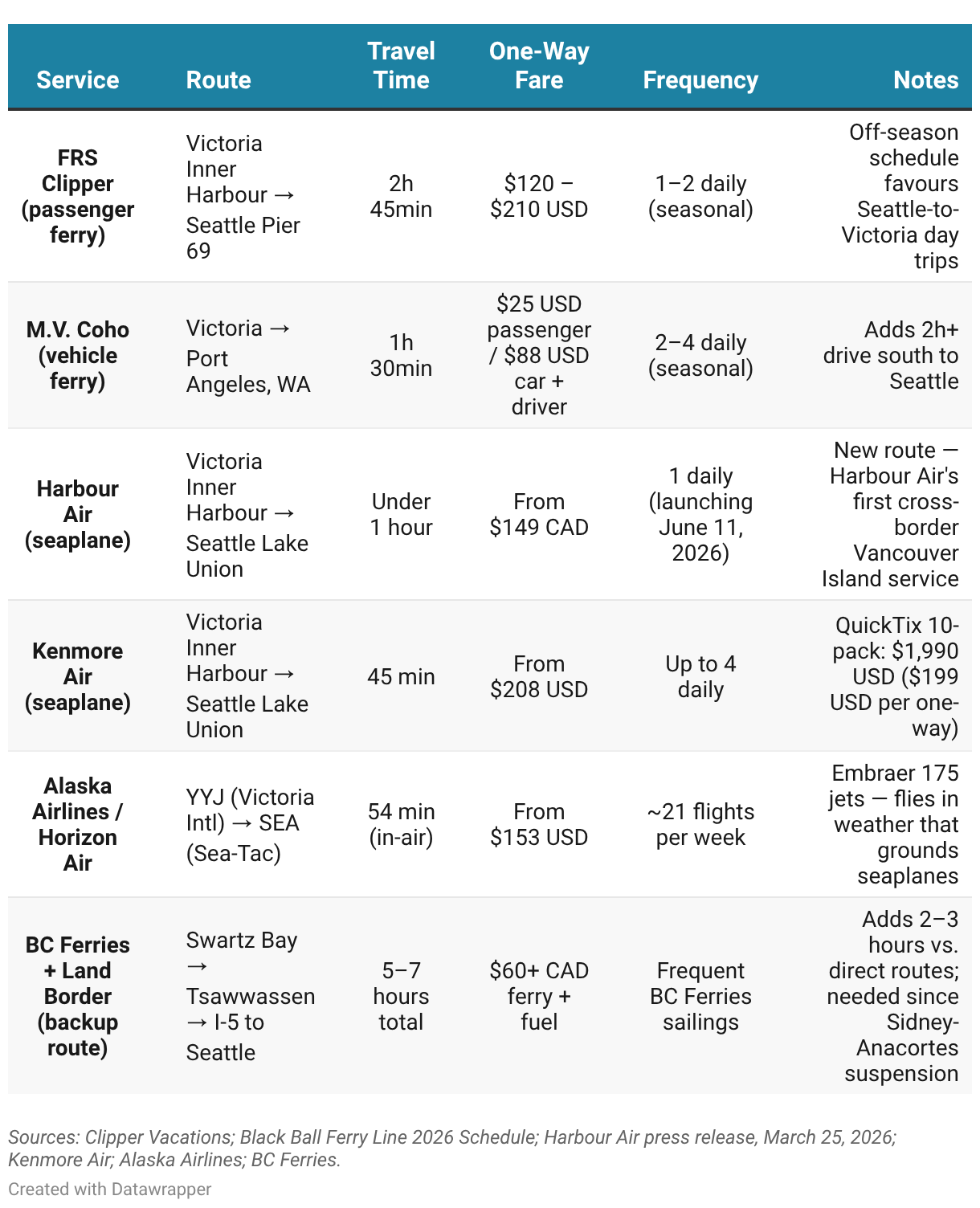
The Victoria-to-Seattle commute is built around flexibility. Regular travellers often alternate between ferries, flights, and seaplanes to make the schedule work. In June 2026, Harbour Air is expected to add a major new link with the launch of a direct Victoria-to-Seattle seaplane service.
The Sidney-Anacortes Gap
The loss of the Sidney-to-Anacortes ferry route has reshaped how commuters move between Vancouver Island and Seattle. Washington State Ferries suspended the service in 2020, and WSDOT estimates suggest it may not return before 2030 due to vessel and staffing shortages.
Drivers now face a much longer journey through Tsawwassen and the Peace Arch crossing, often adding several hours to each commute.
For buyers thinking long term, the possible return of the Sidney-to-Anacortes ferry service is worth watching closely. Easier cross-border access could strengthen demand in communities such as North Saanich, Sidney, and Central Saanich.
Working in the U.S. While Living in Canada
The Victoria-to-Seattle commute only works if you can legally work in the United States, and most Canadian professionals get there through one of two pathways.
TN Status
TN status remains the most common immigration route for Canadians working in Seattle while living in Canada. Eligible categories include engineers, computer systems analysts, accountants, scientists, and management consultants.
Because approvals happen at the border, renewals are often quick, but commuters are also subject to inspection and questioning each time they enter the U.S.
L-1 Visas
L-1 visas are designed for internal company transfers between Canadian and U.S. offices. They are generally considered more predictable than TN status, but workers must first spend at least one year employed by the company in Canada before qualifying.
NEXUS Card
Most experienced cross-border commuters consider a NEXUS card essential for keeping travel times manageable between Victoria and Seattle. The system streamlines border processing across multiple forms of transportation, although travellers must remain careful about customs compliance because minor infractions can still carry serious consequences.
The Tax Trap Most Commuters Miss
Washington has no state income tax, which sounds like a major win for cross-border professionals. For most Victoria-based commuters, it isn’t.
For Victoria-to-Seattle commuters, the phrase “no state income tax” can be misleading. Canadian residents are still responsible for B.C. provincial taxes on income earned in the U.S. The Canada-U.S. Tax Treaty reduces double taxation through federal tax credits, but without a Washington state tax to claim against, the provincial obligation remains fully intact.
A few other tax realities worth flagging:
- Spending large amounts of time working in Seattle can trigger the IRS Substantial Presence Test, potentially classifying a commuter as a U.S. resident alien for tax purposes. The Canada-U.S. Tax Treaty can often override that classification if the commuter’s strongest residential and personal ties remain in Canada, but the U.S. filing obligations remain.
- Cross-border commuters can sometimes reduce costs through Washington state sales tax refunds. British Columbia residents are eligible to claim refunds on qualifying goods purchased in Washington and used outside the state, but expenses like hotels, meals, and services are not included.
- One of the most important parts of the Victoria-to-Seattle arrangement is maintaining B.C. residency status. Doing so keeps commuters eligible for the Medical Services Plan, which can provide substantial long-term healthcare savings compared with relying entirely on the U.S. system.
What the Victoria-to-Seattle Commute Actually Feels Like
Beyond the logistics, regular commuters tend to describe the same handful of trade-offs.
“Time Tax”
Even the fastest Victoria-to-Seattle commute comes with unpredictability. A routine 45-minute flight can easily become a four-hour process because of weather delays, border inspections, or technical issues at customs.
That is one reason many professionals in Seattle now structure hybrid schedules around only a few days per week.
Social Asymmetry
The commute also creates a kind of social disconnect on both sides. In Seattle, commuters often feel temporary, missing out on after-work networking and deeper community ties.
In Victoria, their financial reality looks different from that of many neighbours, since their salaries, currencies, and careers are anchored in the U.S. rather than Canada.
Mobility Asymmetry
Mobility differences are important to plan for. Victoria is highly walkable, with the Clipper, Coho, and floatplane terminals all close to the downtown core and James Bay.
A car is often unnecessary in Canada, but it becomes essential in Washington, so many commuters end up keeping a vehicle in Port Angeles or relying on rideshare around Lake Union.
Is the Victoria-to-Seattle Commute Worth It?
It depends entirely on what you’re earning and what you value.
For those at the top end of tech and finance, the Victoria-to-Seattle corridor can create a combination that is difficult to replicate elsewhere: strong U.S.-based earnings alongside life in Victoria, where lifestyle amenities and housing options remain comparatively accessible versus equivalent Seattle-tier neighbourhoods.
While the Victoria-to-Seattle setup can work well for top earners, for most people, the friction is significant. Transportation expenses alone can reach tens of thousands of dollars per year, and the unpredictability of border crossings and weather can make the lifestyle challenging to sustain.
Thinking about a move to Victoria or Vancouver Island? Start your search with Zoocasa today.