

Ontario’s university towns spent years in a strong rental boom, with very low vacancy rates, crowded bidding wars on student houses, and rents climbing every fall. Not long ago, student rentals in Ontario were so competitive that many students signed leases sight-unseen just to secure housing. Today’s student rental markets look very different. In Waterloo, London, Kingston, and Hamilton, landlords are offering promotions, and tenants have more time and bargaining power than they have had in years.
Here’s how the numbers are changing across Ontario’s four largest university towns, and what is driving the trend.
What’s Driving the Cooldown in Student Rental Markets
Federal immigration policy has become a major factor in Ontario’s rental market slowdown. Ottawa reduced the national study permit cap for 2026 to 408,000 permits, down 7% year over year and 16% below 2024 levels. Ontario received 104,780 Provincial Attestation Letters and a maximum of 70,074 permits, marking a 42% decrease from 2025 and the third straight annual cut.
These policy changes are having a major effect on Ontario’s population numbers. Provincial data shows Ontario lost 192,989 non-permanent residents from October 2024 to October 2025, with study permit holders driving the decline.
Statistics Canada reported that more than 107,000 non-permanent residents left the province in Q3 2025 alone, the largest quarterly drop ever measured.
The other major driver is a wave of new rental supply. Many purpose-built rental towers entering the market today were planned during the low-rate boom between 2020 and 2022. According to CMHC, the national purpose-built rental vacancy rate reached 3.1% in 2025, the highest level seen in over ten years.
Here’s what that means if you’re a student renter: a vacancy rate above 3% is the threshold where the market starts working in your favour. More empty units mean longer listing times, which means landlords are willing to negotiate. Ontario’s 2026 rent increase guideline of 2.1% adds even more pressure on landlords competing for tenants.
Waterloo: A Balanced Market For The First Time in a Decade
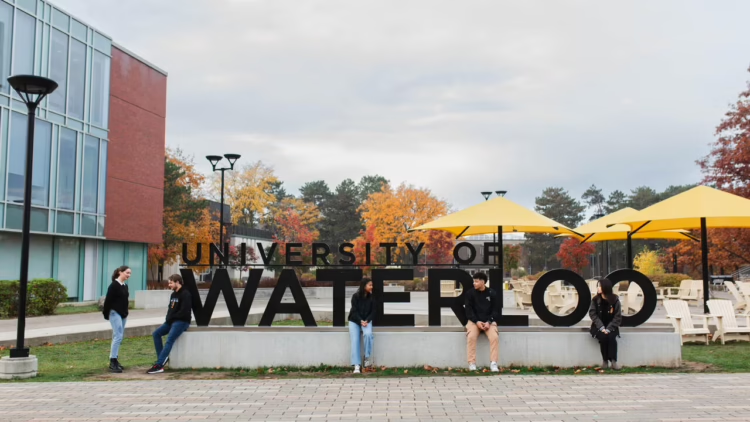
For years, the Kitchener–Cambridge–Waterloo rental market was supported by demand from the University of Waterloo, Wilfrid Laurier University, and Conestoga College. Combined enrolment of about 75,000 students helped keep vacancy rates extremely low across the region.
By 2024, the market had started to cool. CMHC’s latest report found that Kitchener-Cambridge-Waterloo maintained elevated vacancy rates through 2025, with the strongest increases concentrated around the University of Waterloo and Wilfrid Laurier University. Industry tracking now places the region’s vacancy rate between 2.5% and 4.0%.
Newer purpose-built rental towers near the ION light rail line in Uptown Waterloo and downtown Kitchener are still achieving premium rents, but they are taking longer to lease up fully. At the same time, older student houses in the University District are sitting vacant for longer periods, with landlords offering summer sublet discounts to help fill standard 12-month leases.
Summer leasing has seen the steepest price drops. Sublets on University Avenue and Phillip Street are now going for about $495 to $600, as students with year-long leases rush to cover the May to August period. Some buildings are also offering incentives like one month free on fall leases, something that was almost unheard of in this market 18 months ago.
London: Record Vacancies and The End of “Rent Panic”

CMHC data shows the city’s purpose-built rental vacancy rate has been rising steadily since 2023, when it hit a low of 1.4%. Industry estimates now place London’s 2026 vacancy rate between 3.5% and 4.0%, its highest level since 2010.
For years, London relied on international enrolment from Western University and Fanshawe College to sustain rental demand. That support has eased as permit caps tighten and Ontario’s non-permanent resident population declines. On the supply side, thousands of new units have come online near Western and along Richmond Street.
Several rental buildings near Western University in London are now offering major incentives, including one to three months of free rent on new leases. Off-campus rooms in shared houses are priced between $700 and $1,050, depending on location. Purpose-built student suites along Richmond Street tend to range from $1,080-$1,500 per bed.
Kingston: Still Tight, But The Squeeze is Easing
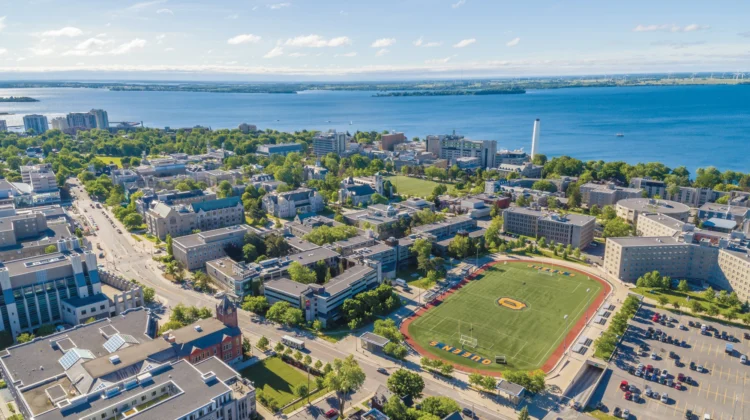
Even with weaker demand across the province, the city still faces some of the tightest housing constraints in Ontario. According to the City of Kingston, the vacancy rate remains below its 3% target, even as new housing is being built at a record pace.
The stability comes from Queen’s University, which enrols about 30,000 students, the majority from outside Kingston. Even with tighter international permit rules affecting other markets, demand has held up because Queen’s is less dependent on international undergraduates.
That said, Kingston’s housing market is becoming more divided. New purpose-built student residences like The Hive and Unity Kingston are establishing premium pricing, with furnished units priced between $1,675 and $2,199 per bed.
In Kingston’s older rental stock, flexibility has increased over the past 18 months. Queen’s Off-Campus Living Advisor reports that one-bedroom and bachelor apartments generally range from $1,400 to $2,300, while shared house rooms fall between $700 and $1,300 before utilities.
In February 2026, Kingston City Council approved a motion to develop a formal Student Housing Strategy. The plan focuses on densification, expanding Queen’s University student housing supply, and encouraging private purpose-built student housing along major corridors.
- Read: After the Blue Jays’ World Series Win, Here’s How Far Player Salaries Go in Toronto’s Housing Market
Hamilton: The West End Decompression
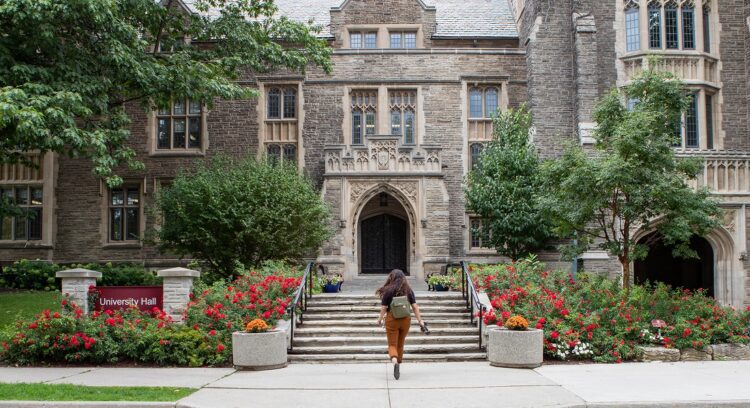
In Hamilton, the shift in the rental market is not evenly spread. CMHC data shows the city’s vacancy rate climbed to 3.6% in 2025. The rise was largely concentrated in the West End and the Mountain areas, which are key rental zones for McMaster University and Mohawk College students.
McMaster University, which enrols around 36,000 students, has concentrated off-campus demand in Westdale and Ainslie Wood. With federal permit caps limiting international student growth, those areas have transitioned from tight rental conditions to oversupply in less than two years.
Pressure in Hamilton’s rental market is being compounded by new downtown supply. Industry reports indicate that about 4,200 purpose-built rental units are under construction, with 1,400 scheduled for delivery in 2026. New buildings are already experiencing vacancy rates near 7%, and most developments are offering one to two months of free rent to attract tenants.
Even though turnover rents are softening in several submarkets, average rents are still rising in certain reports. This is because newly built, higher-end units are not subject to rent control under Ontario’s rules for post-November 2018 buildings, and they are raising overall rent averages.
What Renters and Landlords Should Know
The current cooling trend in Ontario’s student rental markets is expected to continue. Federal caps on study permits are projected to stay in place through 2027, and a large wave of purpose-built rental supply is still being absorbed. Combined with slower population growth, the province’s university towns are now moving toward balanced conditions after a decade of landlord-favoured markets.
Looking to buy or sell in one of these markets? Connect with an experienced Zoocasa agent today, and start your search today.