

Finding love and a place to call home is all about timing, intuition, and, let’s face it, the numbers. So, where are your odds best?
Using the latest data from Statistics Canada, Zoocasa analyzed population trends across the country to determine where people aged 20 to 39 make up the largest portion of the population.
Whether you’re looking for a partner in your late-20s career climb, or someone who’s also Googling “the difference between fixed and variable rates,” these numbers reveal where your dating pool might be deepest — and where love and lifestyle goals align.
Early 20s: PEI’s Coastal Charm and Canada’s Youngest Dating Pool
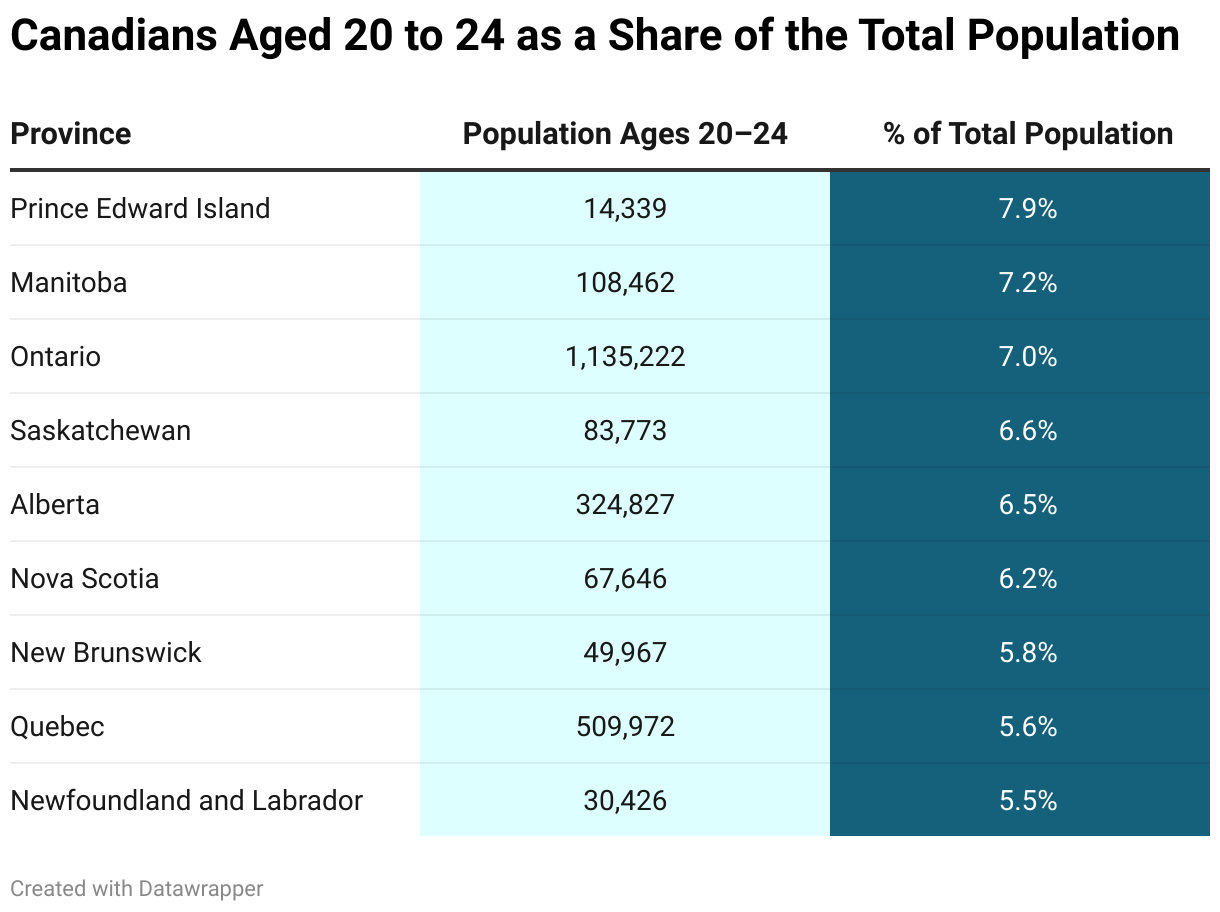
If you’re in your 20s and looking for love, Prince Edward Island might just be your perfect match. The island leads the nation in terms of the percentage of its population in their 20s, with 7.85% of residents aged 20–24 and 8.49% aged 25–29, representing the highest proportion of people in these age brackets in Canada. That means roughly one in every 12 Islanders is in their mid-to-late 20s.
A report from the PEI government shows that younger residents are driving the province’s population growth. Specifically, 80.1% of international immigrants, 92% of non-permanent residents, and 78.3% of interprovincial movers are all under the age of 40. In fact, over the past five years, Islanders aged 20 to 39 have outnumbered those aged 40 to 59, indicating a generational shift that keeps PEI’s communities vibrant and full of young people who are building their lives in the East.
Curious what it might cost you to move to the island? According to CREA, the average price of homes sold in PEI was $400,594 in August 2025.
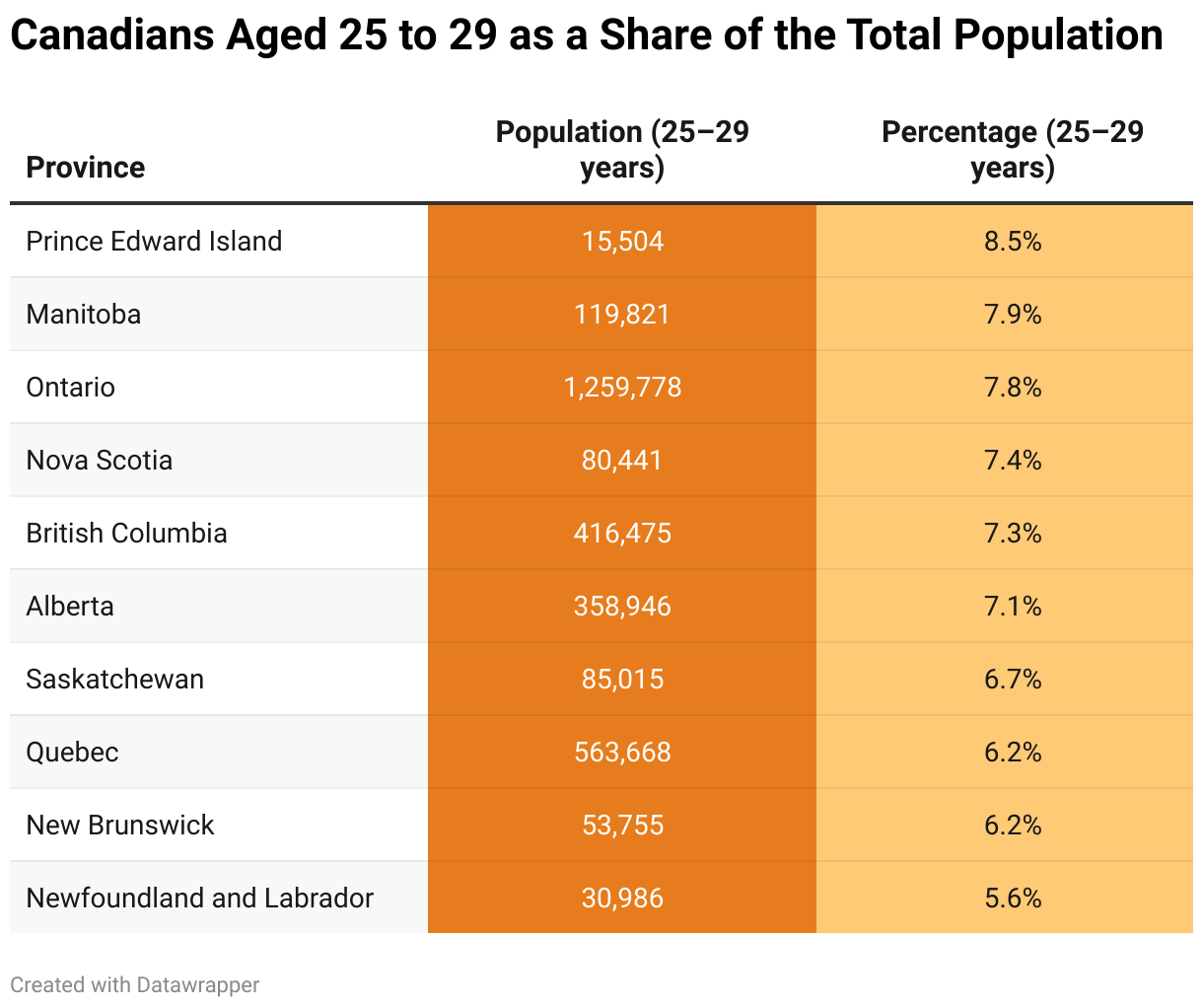
PEI, Manitoba, and Ontario are the Best Provinces for Singles In Their Mid to Late 20s
As Canadians enter their late 20s, their priorities often shift from first jobs and small rentals to long-term partners and property goals. For singles in this stage, affordability and opportunity go hand in hand.
Prince Edward Island, Manitoba (7.9%), and Ontario (7.7%) stand out for having high concentrations of individuals aged 25 to 29, ranking among the provinces with the largest proportions of people in this age group.
In Manitoba, both the numbers and budgets work in your favor. With home prices well below the national average, this province makes it possible to enjoy dinner dates while saving for a down payment. In the capital city of Winnipeg, the average home price is $384,200, according to CREA’s August 2025 statistics, which means a 20 percent down payment would amount to $76,840.
Ontario, on the other hand, boasts Canada’s largest dating pool, being the most populous province in the country. Approximately one in every 13 Ontarians is in their late 20s in 2025. While Toronto’s fast-paced energy is well-known, smaller cities like Hamilton and Ottawa strike a more balanced mix of affordability and charm — though you might find yourself comparing dating app distances just as carefully as you compare rent prices.
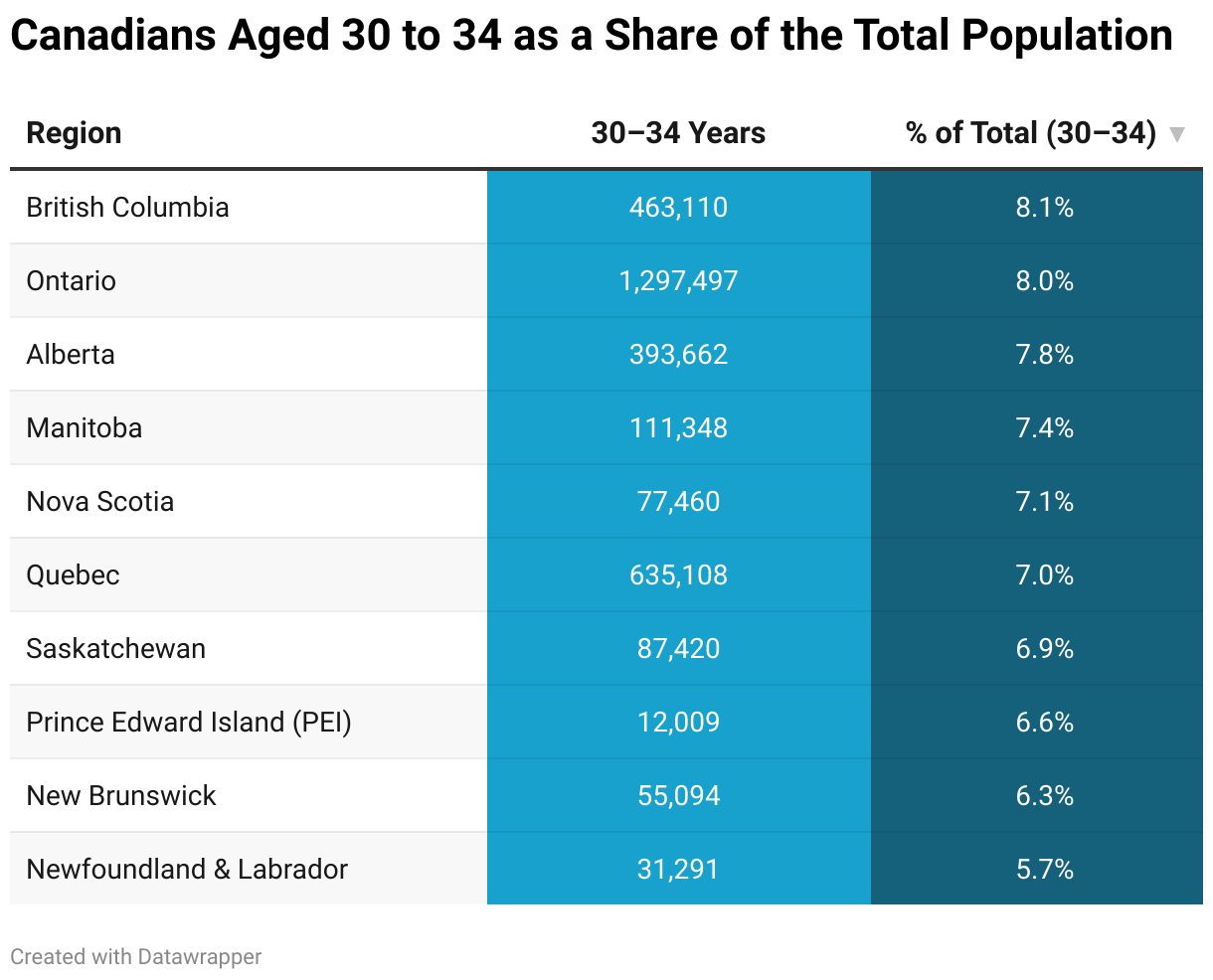
British Columbia is the Best Place for Early 30s
For those aged 30 to 34, who are flirty, thriving, and focused, your odds are best in British Columbia (8.1%), Ontario (7.9%), and Alberta (7.8%), which have the highest proportions of residents in this age group nationwide.
In British Columbia, approximately one in every 12 residents is between 30 and 34 years old, the largest share of this age bracket nationwide. The dating scene here is as active and adventurous as the locals themselves. Think post-hike coffees in Vancouver, paddleboard first dates, and Sunday strolls through farmers’ markets. But with some of the steepest housing costs in Canada, it’s fair to say many couples learn the art of the shared budget early.
Ontario continues to attract ambitious 30-somethings seeking to balance their careers and connections. According to the Youthful Cities’ 2024 Urban Work Index, Toronto ranked Canada’s best city for Youth to Work for the second consecutive year, though love (and rent) don’t come cheap. About 32.5% of residents spend more than 30% of their income on housing, making Toronto one of the least affordable cities in the country. Still, the opportunities, culture, and endless first-date options keep singles coming back for more.
Out in Western Canada, Alberta’s energy is young and fast-growing, literally. The city of Airdrie, with a median age of just 33, is one of the province’s fastest-growing communities. Plus, you can buy the average home there for $526,000, according to the Calgary Real Estate Board.
Keep in mind Alberta cities like Grande Prairie, where the average age is 35.3, and Edmonton (median age 37), which are also younger than most in Canada. You’ve got a province full of people building careers, connections, and communities, often at prices that make homeownership actually attainable.
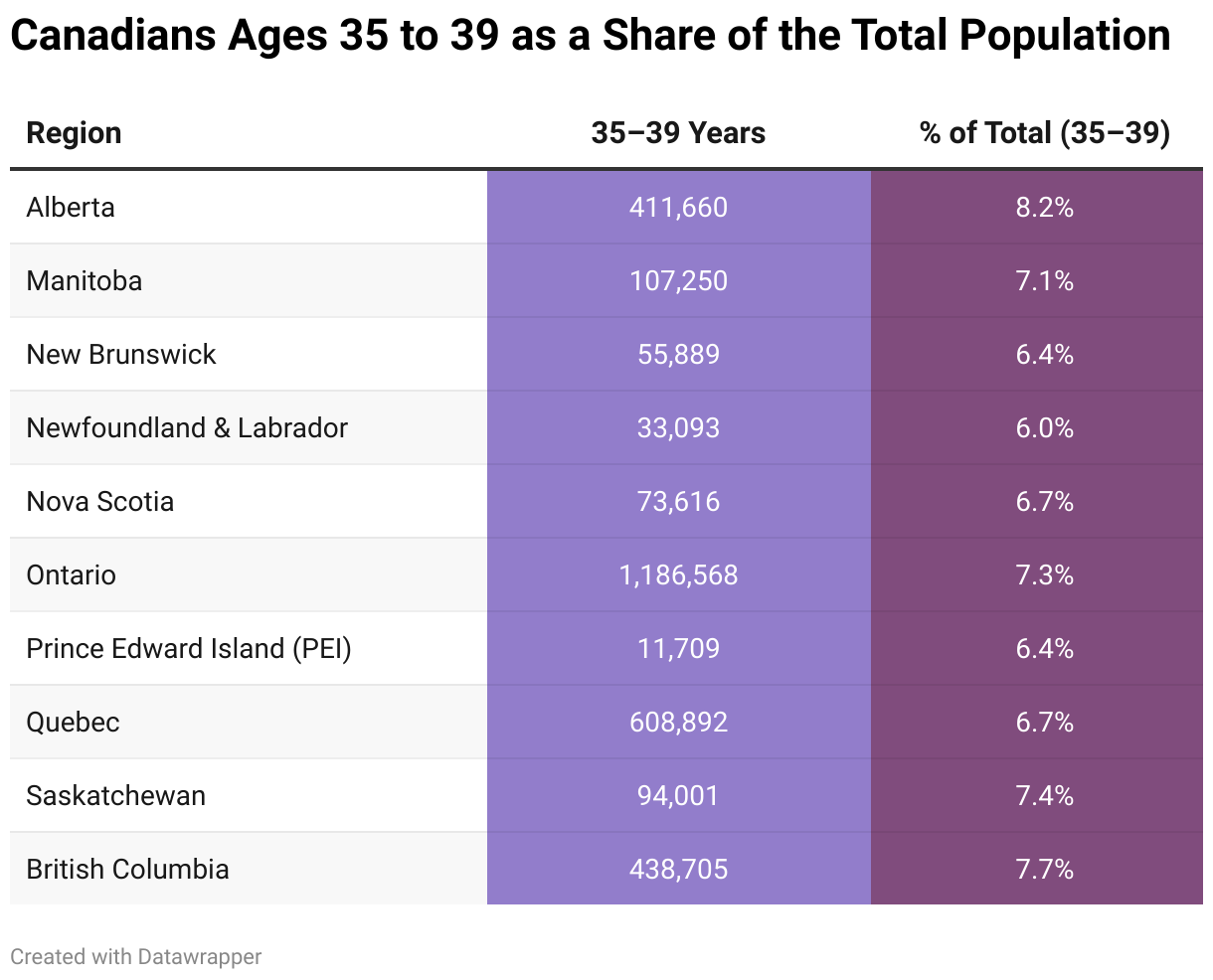
In Your Late 30s: Building Futures (and Backyards)
By your late 30s, finding someone often means finding someone who is ready for love, stability, and possibly a mortgage. The best odds for this age group are in Alberta (8.1%), British Columbia (7.7%), and Saskatchewan (7.4%), which boast the highest proportions of residents aged 35–39 in Canada.
Alberta continues to top the charts as one of Canada’s youngest provinces, offering a mix of affordable homes and an active lifestyle.
In British Columbia, late-30s singles are trading late nights for mountain hikes, backyard barbecues, and open house tours. Meanwhile, Saskatchewan’s low cost of living and growing job market make it a hidden gem for those ready to settle down without sacrificing space — or savings.
Best Places to Live and Be Single in Canada
Because while love isn’t something you can calculate, the numbers do tell a story: when young people cluster, opportunity follows. Whether you’re looking for connection, a community, or your first condo, your next chapter might be waiting just a few postal codes away.
Looking for a fresh start? Zoocasa can help you find properties that fit your goals and priorities. Start your search today.
Methodology
Statistics Canada’s 2025 population data was used to calculate the percentage of people in each age range within every province by dividing each group’s population by the provincial total to identify the largest age demographic.