

For decades, Atlanta has been the poster child for car-dependent sprawl. But that reputation is starting to feel out of date. As a wave of new infrastructure reshapes how the city moves, a handful of in-town neighborhoods have become among the most walkable places in the southern U.S.
Atlanta’s citywide Walk Score sits at a modest 48 out of 100, and pockets like Georgia State University, Buckhead Village, and Sweet Auburn now post Walk Scores above 90. For buyers, that walkability shows up in home values. Research analyzing nearly 100,000 home sales across 15 U.S. metros found that each additional Walk Score point adds between $700 to $3,000 to a typical home’s value. At the neighborhood level, homes in areas with above-average walkability sold for $4,000 to $34,000 more than otherwise comparable homes in less walkable areas.
Here’s where car-free living is actually working in Atlanta in 2026.

1. Georgia State University (Walk Score: 96)
Anchored by the city’s largest university and tucked into the eastern edge of downtown, the GSU district holds the highest Walk Score in Atlanta. Residents can walk to an average of 25 restaurants, bars, and coffee shops within five minutes, with high-frequency MARTA rail service at the Georgia State station and the Five Points hub a short walk away.
With a Transit Score of 78 and a Bike Score of 80, it’s one of the few neighborhoods in Atlanta where a car isn’t necessary.
2. Sweet Auburn (Walk Score: 91)

Home to the Martin Luther King Jr. National Historical Park, Sweet Auburn is one of Atlanta’s most significant neighborhoods. It’s also one of the most walkable, with scores of 91 for walkability, 70 for transit, and 81 for biking.
Edgewood Avenue cuts through the neighborhood with its mix of restaurants, cafés, and the Atlanta Streetcar, and it sits within easy walking distance of Inman Park, Old Fourth Ward, and Downtown.
3. Peachtree Center (Walk Score: 91)
Atlanta’s downtown core has been reinventing itself as a residential destination. There are dozens of restaurants within walking distance of the area’s commercial and residential towers, plus cultural anchors like Centennial Olympic Park, the Georgia Aquarium, and the College Football Hall of Fame.
With a Transit Score of 76, Peachtree Center has some of the best MARTA access in the city, and the 50-acre Centennial Yards redevelopment is filling in the long-vacant “Gulch” with street-level retail and housing.
4. Midtown Atlanta (Walk Score: 87)
If GSU is the institutional core, Midtown is the cultural one. The neighborhood houses more than 150 restaurants, bars, and cafés, plus the Woodruff Arts Center, the High Museum of Art, and the Fox Theatre.
The Juniper Complete Street project, substantially completed in March 2026, introduced wider sidewalks, separated bike lanes, and pedestrian-scale lighting across 12 blocks. In addition, the 1072 West Peachtree tower, the tallest building constructed in Atlanta in three decades, is adding 357 upscale apartments to the district.
5. Inman Park (Walk Score: 87)

Atlanta’s first planned suburb has aged into something rare: a Victorian-era residential neighborhood with a top-tier walkability score and the third-highest Bike Score in the city.
Krog Street Market anchors the commercial side, and direct BeltLine access lets residents bike or walk to Old Fourth Ward, Poncey-Highland, and beyond.
The trade-off is price, as a renovated Victorian measuring 2,000 to 2,400 square feet commands a median of around $850,000 to $900,000.
6. SoNo (Walk Score: 87)
Short for “South of North Avenue,” SoNo is a smaller, mixed-use pocket sandwiched between Midtown and Old Fourth Ward. Strong transit access earns it a Transit Score of 65 and a Walk Score on par with Inman Park, making it one of the most underrated walkable pockets in the city.
7. Poncey-Highland (Walk Score: 86)
Poncey-Highland sits on the BeltLine’s Eastside Trail, between Virginia-Highland and Inman Park, and its Bike Score of 80 reflects how connected the neighborhood is to the rest of in-town Atlanta. Residents can walk to Ponce City Market, Freedom Park, and a long list of locally owned restaurants, including Michelin-recommended spots like Fishmonger and Southern Belle.
In early 2026, the median home price sat near $400,000, but the average sale price rose to roughly $585,000, highlighting the BeltLine premium seen across surrounding areas.
8. Atlantic Station (Walk Score: 83)
Built on the site of the former Atlantic Steel Mill on the northwestern edge of Midtown, Atlantic Station is one of the country’s largest urban brownfield redevelopments
Its Bike Score of 79 makes it one of the more cyclist-friendly neighborhoods on this list, and Atlantic Green, its central park, hosts year-round community events.
9. Cabbagetown (Walk Score: 83)
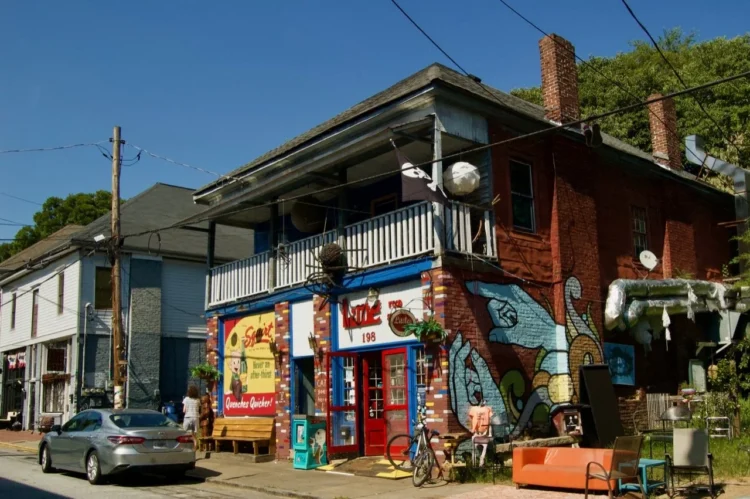
Cabbagetown earns the highest Bike Score on this list at 87, thanks to its position right on the BeltLine and its compact, historic street grid. The former mill town is now one of Atlanta’s most distinctive intown neighborhoods, with shotgun cottages, the Fulton Cotton Mill Lofts, and easy walking access to Krog Street Market.
The median sale price sat at around $440,000 in March 2026, with houses ranging from roughly $350,000 to nearly $1 million, depending on size and renovation level.
10. South Downtown (Walk Score: 83)
South Downtown’s 83 Walk Score and 77 Transit Score make it one of the most transit-rich neighborhoods on this list. A 58-building historic renovation led by Atlanta Ventures is reactivating Broad Street with a pedestrian-friendly streetscape overhaul, with around 10 new restaurants expected to open ahead of the FIFA World Cup in June 2026.
- Read: 6 Converted Churches and Schoolhouses Across the US That Turn Historic Spaces Into High-Value Homes
The Trade-Offs of Buying in a Walkable Atlanta Neighborhood
Walkability comes with real benefits and real trade-offs. On the plus side: lower transportation costs, more amenities within reach, stronger long-term appreciation, and better resale potential.
The Atlanta BeltLine’s Legacy Resident Retention Program has helped 276 longtime homeowners stay in their homes as values have climbed, covering property tax increases above 2019 levels through 2030 for income-eligible residents in designated Westside and Southside BeltLine neighborhoods.
On the other hand, buyers face higher entry prices, smaller homes, and ongoing construction noise in some areas as Complete Streets and BeltLine projects continue.
If you are considering a move to one of Atlanta’s most walkable neighborhoods, it is worth calculating how much your household could save by giving up a car. For many buyers, a higher mortgage on a walkable condo is partly or fully balanced by lower transportation costs.
Where Atlanta Is Headed Next
With Walk Scores above 90 in multiple districts and a fully redesigned bus network, the most walkable neighborhoods in Atlanta have become some of the most desirable real estate markets in the city. The premium is real, but so is the value: stronger appreciation, lower transportation costs, and a quality of urban life that’s increasingly rare in the southeastern U.S.
Looking to find a home in one of Atlanta’s most walkable neighborhoods? Explore Atlanta listings on Zoocasa and start your search today.