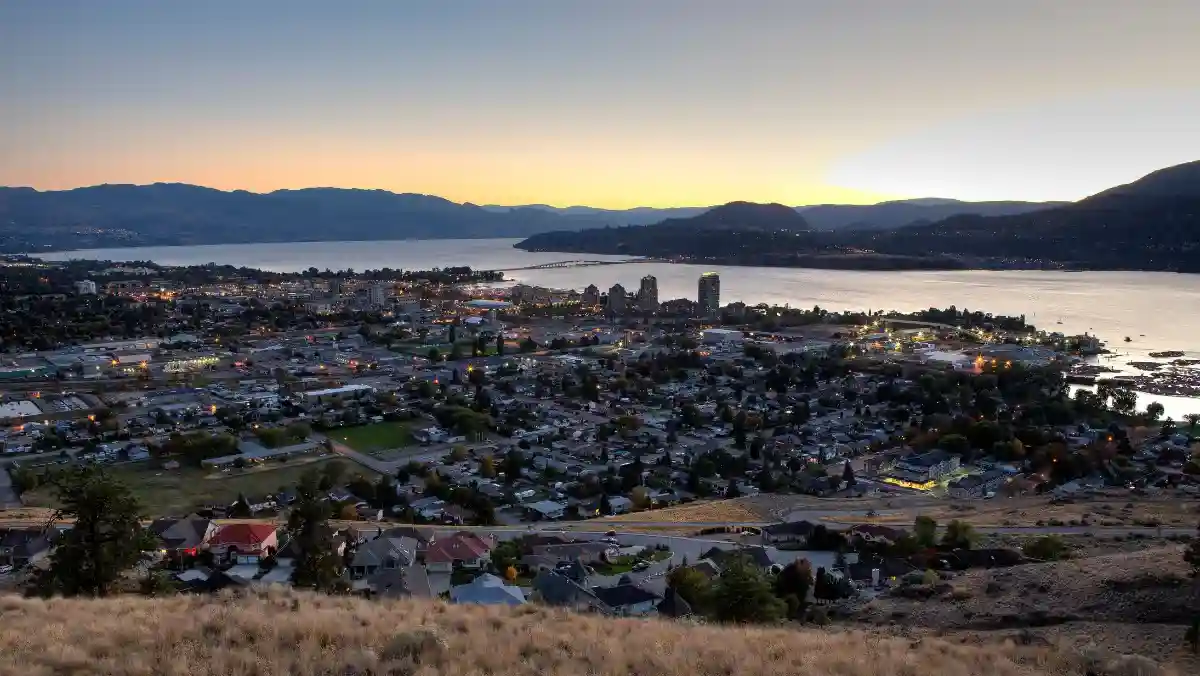
A new national wildfire risk assessment has placed Kelowna at the top of Canada’s wildfire risk rankings for 2026, giving it the highest Kelowna wildfire risk score in the country. Built on Natural Resources Canada’s upgraded forecasting model, the report highlights growing climate-related risks that are becoming increasingly important in real estate. Here’s why Kelowna ranked first in Canada and what condo buyers should check before making an offer.
What the 2026 Wildfire Risk Index Found
The rankings are based on a major update to Canada’s wildfire forecasting system. In April 2026, Natural Resources Canada launched Seasonal Forecast 2.0, an upgraded version of the Canadian Wildland Fire Information System (CWFIS).
Kelowna posted the highest overall wildfire risk score in Canada at 6.8 out of 10. The city’s ranking was driven mainly by its community exposure score, not by having the country’s most extreme weather.

Although Regina and Winnipeg faced the most severe forecast fire weather this summer, Kelowna ranked higher because homes are so close to where the fires could spread. The study gave Kelowna one of its highest community exposure scores, tied with Fort McMurray, because many homes are located beside forested slopes in wildfire-prone areas. The city’s terrain, history of major fires, and evacuation challenges all contributed to its top ranking.
Why This Is Showing Up in Insurance Costs, Not Just Weather Reports
For insurers, Kelowna’s wildfire risk is backed by years of costly claims. The 2023 McDougall Creek and Bush Creek East fires caused more than $720 million in insured losses, making them the most expensive insured event in British Columbia’s history at the time. Nationally, severe weather losses reached a record $8.5 billion in 2024. Those costs eventually filter through to homeowners in the form of higher insurance premiums, especially in communities with elevated wildfire exposure.
A joint study by MyChoice and Wahi tracking real homeowner insurance quotes found:
- Kelowna premiums rose 52% between 2023 and 2025, from an average of $2,250 to $3,424 a year, pushing the insurance-to-mortgage ratio from 4% to 7%.
- Kamloops premiums nearly doubled, up 98% to $3,743.
- Regina rose 59% to $1,957.
- Nationally, average home insurance premiums rose 12% over the same period, from $933 to $1,043.
- In the most exposed markets—Medicine Hat and Wood Buffalo/Fort McMurray—insurance now eats up 16% to 19% of the average monthly mortgage payment.
The impact isn’t limited to detached homes. Higher wildfire risk can also increase the strata insurance premiums paid by condo corporations, making it an important factor for anyone buying a condo in Kelowna.
When a Wildfire Threatens Your Closing Date
One of the biggest risks for buyers comes during the closing process. Many insurers temporarily stop issuing or transferring policies for properties located near an active, uncontained wildfire. The restricted area varies by insurer, typically ranging from 25 to 100 kilometres, with roughly 50 kilometres being common. Since most BC lenders require proof of bound fire insurance before funding a mortgage, buyers may be unable to close if coverage cannot be secured in time.
BC condo buyers are not without options when wildfire risk affects insurance availability. The BCFSA Wildfire Clause can provide a one-time extension of up to 30 days for completion, adjustment, and possession dates if wildfire conditions prevent a buyer from securing coverage.
Buyers must show they made “best efforts” by keeping a record of insurance inquiries from the moment their offer is accepted. Another strategy is an “incumbent stay on risk” arrangement, where the seller’s insurer temporarily continues coverage under the buyer’s ownership to help keep the transaction moving.
For condo buyers, the risk does not end once insurance is secured. A wildfire-related delay can push a closing beyond a standard 90-day mortgage rate hold and create a domino effect if the seller is relying on the sale proceeds for their next home.
Buyers shopping the Okanagan between May and October should speak with their lender about extending their rate hold and start working with an insurance broker as soon as the offer is firm, not when the closing date is approaching.
Condos Aren’t Immune—They’re Just Exposed Differently
Wildfire risk can affect condo buyers differently because coverage is split between the strata corporation and individual owners. The strata’s master insurance policy covers the building and shared property, while each owner’s personal policy covers their unit contents, improvements, liability, and their portion of the strata’s deductible following a claim.
As wildfire and other climate-related risks increase, strata deductibles have also grown. In higher-risk BC markets, some deductibles for major events have reached as high as $250,000, compared with the $25,000 to $100,000 range that was more common in the past. If a strata cannot cover that deductible through its reserve fund, owners may face a special assessment. Buyers without adequate deductible-assessment coverage may have to pay their share themselves.
A Buyer’s Due Diligence Checklist for Kelowna Condos
Before writing an offer on a Kelowna condo, it’s worth working through a short list with your realtor and insurance broker:
- Request the Form B Information Certificate and the strata’s master insurance schedule. Confirm the exact deductible for fire and smoke damage, and ask whether the strata has faced any non-renewals or coverage exclusions in the past three years.
- Check your own insurability before subjects expire. Confirm with a broker that a personal policy with a matching deductible-assessment endorsement is available and affordable for that specific building.
- Review the strata’s Depreciation Report and Contingency Reserve Fund. Look for planned FireSmart-related upgrades and confirm the reserve fund can absorb an unplanned assessment.
- Add the BCFSA Wildfire Clause and a subject-to-insurance condition to your offer if you’re closing between May and October.
- Ask your lender about a 120-day rate hold instead of the standard 90 days, to buffer against a possible wildfire-related extension.
- Walk the property’s perimeter if you can. Non-combustible ground cover, screened vents, and clear balconies are good signs the building is actively managing ember risk.
What Kelowna Buyers Should Take Away
Kelowna wildfire risk ranking is driven less by short-term weather conditions and more by the interaction between development patterns and historical wildfire activity. Beyond evaluating location and building features, buyers need to understand the strata’s insurance position, confirm coverage timelines, and ensure their offer includes appropriate protections if wildfire conditions affect the transaction.
If you’re weighing a purchase in the Okanagan or comparing it against lower-exposure markets, start your search today with Zoocasa to see what’s currently listed across Kelowna’s neighbourhoods.