What is the biggest tangible asset for most Canadians? Well, in most cases, it would be our home – our own four walls and a roof. Not surprisingly, most of us would rather have this asset protected through home insurance. The scary thing is that, even if we think that we are protected, in many cases we are actually not.
Here is a list of 10 situations where you might think that insurance has your back, but in reality, it does not.
Related: 3 Tips to Save Money on Your Home Insurance
1. Going away for vacations or a short trip
Most home owners are still not aware of the fact that, even if they are away for a one-week-long vacation, their property might be not covered if anything were to happen to it.
Most insurers build into their policy a clause that requires somebody to check in on your property every few days to make sure it stays covered. Make sure that somebody you know well has access to your place in your absence and drops by every few days to make sure that everything is ok.
2. Sewer backup
One of the ugliest home insurance claims is linked to sewer backup – when sewage water from municipal storage is pushed back into your home. If you do not have a sewer backup valve, the consequences can be very dirty, smelly, and expensive.
The worst thing is, if your policy does not have sewer back up coverage (not always included in a policy and must be purchased on top of your home insurance policy), you might be on the hook for all cleaning and restoration costs.
3. Overland flooding
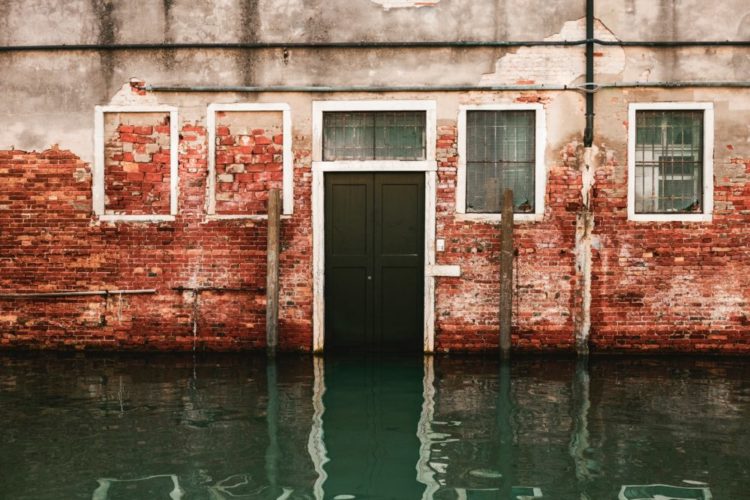
Imagine the following situation: after intensive rain or melting snow, water penetrates your home from the outside (for example, because of the raised water level in the nearby river) and damages your finished basement… and your insurance company does not pay.
In the past, this situation was very realistic. Most home insurance policies were not covering overland flooding – a situation when water enters your dwelling from outside. Now, many policies offer this protection, but it is important to know that, in many cases, it still must be purchased on top of your standard home insurance coverage.
4. AirBnB tenants
Not every home insurance policy covers damages your property can face through AirBnB tenants – that is a very particular risk, as seen by home insurers. Make sure that your policy actually covers short-term rentals.
5. Unexpected condominium charges
The general idea behind a condominium fund is that it offers enough financial security to deal with unexpected condo issues as related to the building and common areas. Unfortunately, this is just a theory.
In practice, the condominium fund can be sometimes short of resources to fix unexpected issues, such as roof damages or a flooded basement due to extensive rain. In this case, the condominium corporation might pass these costs on to condo owners, and these costs can be high.
Some policies offer protection against this type of unexpected financial surprise.
6. Lost jewelry and other expensive items
Though your condo insurance policy might offer content protection up to a particular limit, you should consider getting additional coverage for the most expensive items, such as jewelry, furs, expensive pieces of art, a wine collection, etc. Otherwise, you might not be able to recover the full amount because coverage amounts might be capped.
Insuring expensive items often involves two parts: evaluating (also called appraising) and getting coverage for these items. In some cases, it is just a few extra dollars on top of your coverage, but it is worth it if something expensive or sentimental, like an engagement ring, is lost.
7. Small business
If you started operating a small business from home without telling your insurer about it and, after an accident at home (e.g. flooding, fire, theft), decided to claim some of your business property (e.g. an expensive laptop, printer, damaged supplies, etc.), your insurance company will very likely decline your claim. You are supposed to inform your home insurance company if you operate a business from home.
From the insurance perspective, you represent more risk (e.g. liability, additional assets to protect), and this is associated with additional premiums.
8. A tree that damaged your house
A tree that damaged your house typically will be covered if it was a live tree that was not expected to fall. On the contrary, if it is an old tree that was endangering your dwelling for a while, its damages, typically, will not be covered because it is seen by the insurance company as neglected house and garden maintenance.
9. Damages by insects or animals
If, after a long winter, your home is suddenly getting damaged by insects (e.g. ants) or animals (e.g. racoons) who just became more active in spring, many insurance companies might not cover these damages.
Check with your insurance provider about their insect/animal damage policies.
10. Updating your home
Many Canadians make this mistake: they upgrade their homes and forget to adjust their coverage limits afterwards. Once your upgrades are done, the value of your home typically goes up – that’s the best time to let your insurer know about it. Otherwise, you are running into the danger of having coverage limits that are too low to suffice when something unexpected happens. An insurance company only covers your home up to the limits defined in the policy.
Read: Buying a Home? Here’s What People Pay For Home Insurance in Ontario
What can you do to ensure that your house is covered in many of these questionable situations?
First of all, make sure that, when you buy a policy, you ask detailed questions about what is covered and what is not.
Secondly, consider getting additional riders for your insurance, like sewer back up and overland flooding, if your standard policy does not have it.
Thirdly, make sure that you understand what your existing policy covers and consider switching if you feel that your dwelling is vulnerable to risks.
Enjoying our content? Subscribe to our free weekly newsletter to get Canadian real estate market insights, news, and reports straight to your inbox.
These insights have been provided by InsurEye, the largest Canadian platform for insurance, mortgages, and credit card reviews. InsurEye also provides access to various types of home, auto, and life insurance, such as life insurance in Ontario and whole life insurance.