

It’s no surprise that Canada’s cost of living and ongoing affordability challenges remain at the forefront in 2025. According to FP Canada, money remains the nation’s biggest source of stress, increasing from 38% in 2021 to 42% in 2025.
Still, despite higher grocery bills, rising rents, and growing concerns about job security, Canadians are holding on to one thing that makes the daily grind worthwhile: the chance to escape. As stated in a recent BMO survey, more than half (55%) of Canadians reported their plan to take a leisure trip in summer 2025, up from 47% in 2024.
The trend is echoed in a Flight Centre survey, where 57% of Canadians reported trimming non-essential spending to make their trips possible. Among those who couldn’t afford to travel, 28% still swiped their credit cards to chase a change of scenery. Millennials (57%) and Gen Z (69%) are leading the charge, cutting back on nights out or clocking extra hours at work just to afford a holiday.
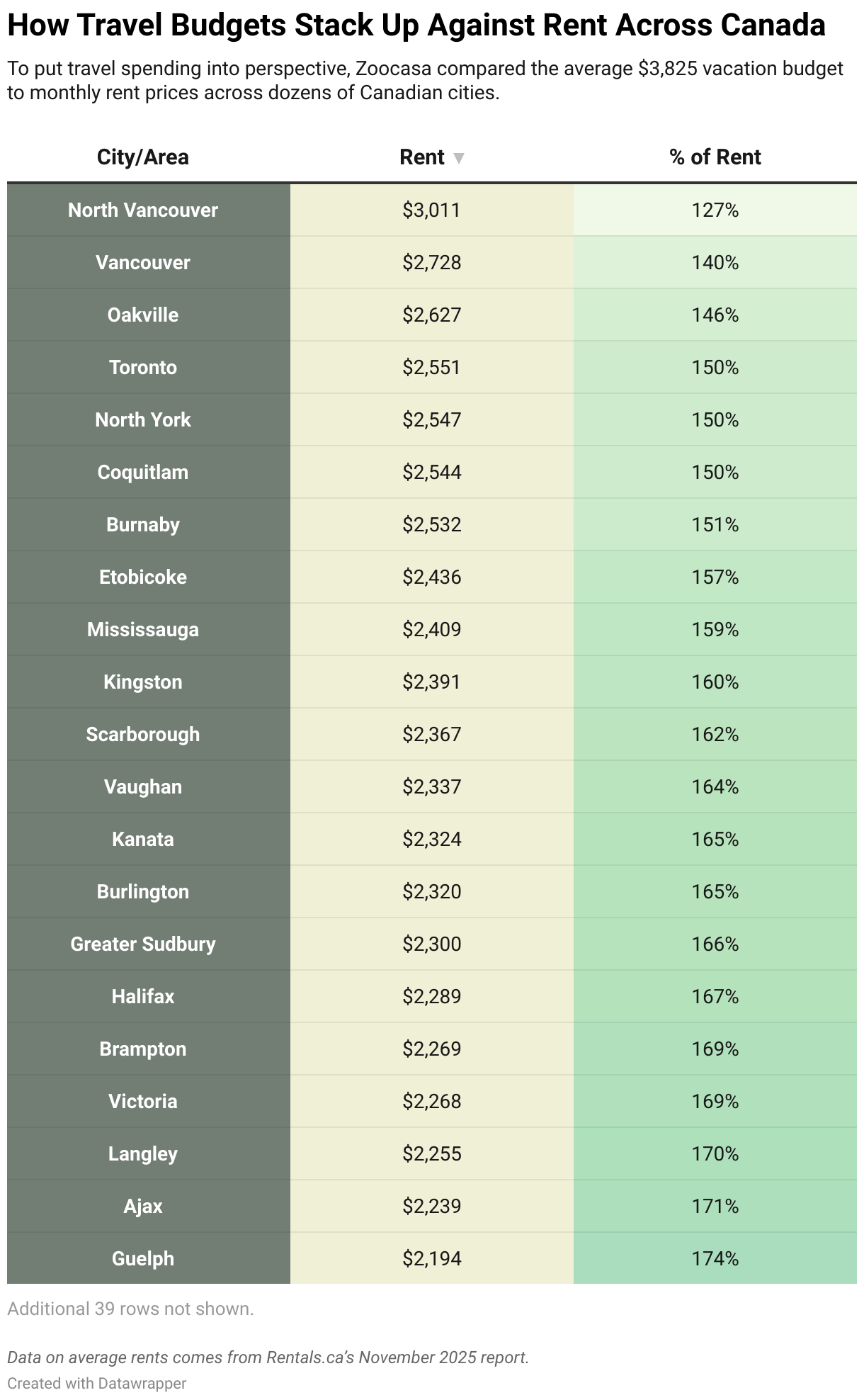
To put travel spending into perspective, Zoocasa compared the average $3,825 vacation budget to monthly rent prices across dozens of Canadian cities. The findings reveal a striking divide in how Canadians are weighing life’s biggest costs, between the daily grind of home and the gift of a new change of scenery.
Living Near Canada’s Biggest Airports Comes at a Cost
As Canada’s busiest air travel gateways, Toronto Pearson International Airport and Vancouver International Airport connect millions of passengers to destinations around the world each year, many of whom already live in the country’s most expensive rental markets. In the Greater Toronto Area, one-bedroom rents average $2,551 in the downtown core, $2,409 in Mississauga, and $2,627 in Oakville. On the West Coast, rents average $2,728 in Vancouver, $2,532 in Burnaby, and $2,544 in Coquitlam. These nearby suburban markets, once considered affordable alternatives to the major city centres, have now caught up to their core cities, reflecting the same cost-of-living challenges.
Both Toronto and Vancouver remain the top destinations for newcomers to Canada, fueling continued demand for housing and international travel. In 2025, Ontario welcomed nearly 44% of all new immigrants, with Toronto accounting for the largest share, while Metro Vancouver projects that 90% of its population growth through 2051 will come from immigration. This steady influx of residents, combined with strong global connectivity through major airports, keeps both regions among the most competitive rental markets in the country. For both homeowners and renters (especially those who love to travel), living near major urban hubs offers unmatched convenience and plenty of route options. But that accessibility comes at a price, with some of the highest real estate costs in the country.
Related: Why a Higher Minimum Wage Still Won’t Pay the Rent in 51 Canadian Cities
Stretching Your Dollar (and Your Vacation Days) in Alberta
At the same time, more troubling factors of Canadian’s financial instability have been reported in the past year, painting a picture of just how much some people are struggling with their finances.
Despite Alberta having the highest income per capita, a new report from the non-profit credit counselling agency Money Mentors, in partnership with Angus Reid, reveals that finances remain a concern for many workers. According to their 2025 Workplace and Wellness Report, which surveyed 800 Albertans, 58% said their financial situation somewhat affects their job performance.
In Alberta, however, renters have more room to breathe. The province’s rent prices remain among the most competitive in Canada, giving residents more financial flexibility than in most major markets. A one-bedroom apartment in Calgary averages approximately $1,851, placing the city among the most affordable large urban centres nationwide.
For renters seeking to stretch their income even further, nearby Airdrie offers a practical and cost-effective alternative. The average one-bedroom there rents for about $1,656 per month, nearly $200 less than Calgary, or roughly $2,400 in annual savings. For households managing rising living costs, or simply looking to fit in an extra getaway each year, that difference can make a meaningful impact on both financial stability and lifestyle flexibility.
Related: How Many Homes the Highest-Paid NBA Players Could Afford in Their Cities
How Many Months of Rent Does Your Vacation Cost?
When you flip the perspective, that dream getaway can look a lot like a few months’ rent. Across Canada, the average $3,825 vacation now equals two or more months of housing costs.
In Edmonton, that same trip adds up to roughly 250% of monthly rent — about two and a half months’ worth of housing. The good news? Because Edmonton’s rents are relatively low, residents there can recover more quickly from travel expenses or set aside money for a trip with less strain on their budget.
When Affordable Living Fuels Adventure
Elsewhere in the Prairies, travel takes a bit more planning. Renters in Lethbridge (243%), Regina (271%), and Medicine Hat (290%) would need to save the equivalent of nearly three months of rent for a typical vacation.
Similarly, renters in St. John’s, for instance, could save nearly $12,000 more annually than renters in Vancouver, who pay over $3,000 a month, assuming similar incomes and spending habits. That difference could fund multiple trips and contribute meaningfully to an emergency fund or down payment goal.
Looking for a new home? Give us a call today to speak with an agent in your area and start planning your next real estate endeavor.