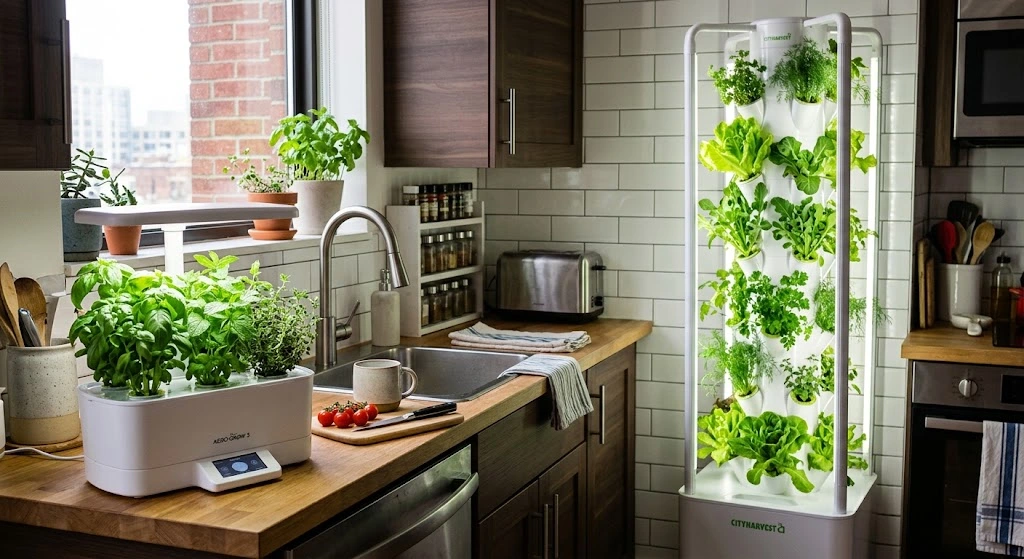
You don’t need a backyard or balcony to grow your own food. Even if you rent a studio apartment or live in a condo with limited space, you can grow fresh herbs and vegetables indoors with the right setup. One option is hydroponic gardening, a method of growing plants without soil by delivering essential nutrients through water. With a compact system, you can cultivate leafy greens and herbs year-round, including during Canada’s colder months.
Hydroponics can support year-round vegetable production in indoor spaces with suitable lighting, according to the University of Minnesota Extension’s guide to small-scale hydroponics
Here’s how to start growing food in a small apartment, even if you’re a beginner.
What Is Hydroponic Gardening?
Hydroponic gardening allows plants to grow without traditional soil. Instead, their roots receive essential nutrients through a water-based solution, sometimes with the support of a growing medium such as coconut coir or perlite.
Hydroponics uses nutrient-rich water to grow plants, with other materials sometimes providing root support, per the U.S. Department of Agriculture’s National Agricultural Library.
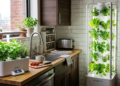
Systems range from simple containers to countertop gardens with built-in LED lights and water pumps. For apartment residents, a small setup can fit on a kitchen counter or shelf without taking up much floor space.
However, hydroponics requires more than water alone. Plants need appropriate lighting, balanced nutrients and regular monitoring. Equipment can also cost more upfront than conventional pots.
What Can You Grow in a Small Apartment?
Compact plants that grow relatively quickly are generally the best choices for small indoor gardens.
Here are four options to consider.
1. Lettuce and leafy greens
Leaf lettuce is a practical starting point because it grows well in many compact hydroponic systems. You can also try spinach, arugula, kale and Swiss chard, depending on your setup’s temperature and lighting conditions.
2. Fresh herbs
Basil, parsley and cilantro can provide fresh ingredients without requiring much space. If you’re new to gardening, start with one or two varieties and learn their light and temperature requirements before expanding your garden.
3. Spinach and salad greens
Spinach and similar greens work well in many small systems and can add variety to salads, sandwiches and cooked meals. Monitor their spacing, temperature and lighting to help them grow successfully.
4. Cherry tomatoes and strawberries
Fruiting plants can also grow hydroponically, but they usually require more attention than leafy greens. Tomatoes need strong lighting, sufficient root space and support as they grow. Depending on the variety and conditions, indoor fruiting plants may also need help with pollination.
For beginners, lettuce and herbs are generally the easiest crops to manage.
How to Start a Hydroponic Garden in an Apartment
You don’t need to turn your apartment into a greenhouse. A small countertop system with a few planting spaces is enough to learn the basics.
Step 1: Choose a hydroponic system
Two options are worth considering:
- Passive hydroponics: Delivers water and nutrients without a powered pump, making it a relatively simple option for some herbs and leafy greens.
- Deep water culture: Suspends plants above a reservoir so their roots reach nutrient-rich water. These systems often use an air pump to supply oxygen.
Passive systems can offer a simple, low-equipment approach, accord to The University of Georgia Cooperative Extension’s hydroponic gardening guide.
If you’re renting, consider how much counter or shelf space you can dedicate to your garden. Choose a stable, leak-resistant setup, protect nearby surfaces from moisture and avoid installations that require permanent changes to your unit.
Step 2: Find the right light source
Lighting can be a challenge when growing food indoors, particularly during Canadian winters. A bright window may provide enough light for some plants, but short days, nearby buildings and shaded windows can limit growth.
A grow light can help maintain more consistent conditions throughout the year. According to the University of Minnesota Extension’s indoor lighting guide, hydroponic lettuce and herbs generally benefit from around 12 to 14 hours of light daily, depending on the crop and fixture.
LED grow lights are available in compact sizes and are generally energy-efficient. Follow the manufacturer’s instructions for light distance and operating time, and position your setup near a safe power outlet without obstructing walkways.
Step 3: Gather your supplies
You can purchase a ready-made hydroponic kit or assemble a basic system yourself. Depending on your setup, you’ll need:
- A clean, food-safe container or reservoir
- Net pots or another way to support plants
- Seeds or suitable seedlings
- Growing medium, if required
- Hydroponic nutrients formulated for edible plants
- A suitable light source
- An air pump, if your system requires one
- Tools to monitor water levels and, when appropriate, pH
Growing media such as coconut coir, perlite and expanded clay pellets support plant roots but don’t replace the nutrients plants need.
If you’re building your own system, use materials suitable for contact with the growing solution. Start with a simple setup rather than buying features you may not need.
Step 4: Add water and nutrients
Hydroponic plants rely on a balanced nutrient solution rather than garden soil. Follow your system’s instructions when mixing nutrients, since too much fertilizer can harm plants while too little can restrict growth.
Depending on your setup and water source, you may also need to monitor pH, which affects how readily plants absorb nutrients. Use the recommended range for your crop and system rather than assuming one setting works for every plant.
Check water levels regularly, replace the nutrient solution as directed and keep unnecessary light out of the reservoir to help prevent algae growth.
Step 5: Maintain your indoor garden
Hydroponic gardening still requires regular care, even if you use an automated kit. Check for yellowing leaves, unusual growth and pests, and clean your reservoir and equipment according to the manufacturer’s recommendations.
When harvesting, use clean tools, wash your hands and rinse produce before eating it.
Start with just a few plants so you can learn how they respond to your apartment’s lighting and temperature. Once you establish a routine, you can add more planting spaces or experiment with different crops.
How Much Does It Cost to Grow Food in an Apartment?
The cost of an apartment hydroponic garden depends on the system, the number of plants you want to grow and whether you need supplemental lighting.
A basic DIY setup may require a container and a few growing supplies, while a countertop kit with integrated lighting and automated water circulation will involve a larger initial investment.
Before buying equipment, account for these expenses:
Hydroponics can use less water than conventional soil-based growing. The University of New Hampshire Extension notes that hydroponic production can use substantially less water than irrigated field-grown crops, although savings depend on the system and growing conditions.
However, lower water use doesn’t automatically mean lower overall costs. Equipment, electricity and maintenance can offset potential savings, and a small garden may not noticeably reduce your grocery bill.
For many apartment residents, the appeal is having fresh ingredients on hand and enjoying gardening without needing outdoor space.
Is Hydroponic Gardening Worth It for Renters?
Hydroponics offers renters and condo owners a way to grow food without a backyard. It’s especially useful if you enjoy cooking, want fresh herbs nearby or hope to keep gardening throughout the winter.
The main trade-offs are the upfront equipment costs, lighting requirements and ongoing maintenance. If you have very little natural light or limited room for equipment, a few pots of herbs may be a more manageable starting point.
Ultimately, you can grow food in a small apartment by choosing crops suited to your space and providing the right growing conditions. Start with lettuce or herbs, establish a simple care routine and expand your garden when you’re ready.
You don’t need a sprawling backyard to bring more greenery into your home. Sometimes, a small shelf and a few growing containers are enough to get started.
Ready to find a home that suits your lifestyle, whether that means a compact condo or a property with outdoor space? Explore listings with Zoocasa.