Each of these Canadian communities has a special spark. From creative hubs to diverse cultural enclaves, these progressive neighbourhoods in Canada offer an exciting glimpse into possible urban futures and a haven for the unusual and the unconventional.
In 2026, progressivism in Canada’s cities has evolved beyond creative vibes and indie cafés. Increasingly, it’s defined by community land stewardship, pedestrian-first urban design, sustainability policies, and grassroots activism around housing and affordability. As the urban landscape evolves following years of housing pressure and rapid population growth, these neighbourhoods continue to represent the country’s most forward-thinking communities.
North End | Halifax, NS
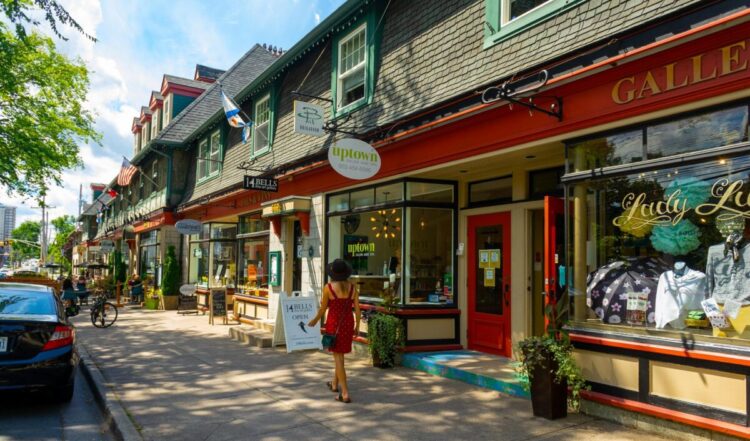
Gottingen Street and Agricola Street remain the two arteries of this fascinating place, teeming with eateries, studios, and shops, not to mention the colourful crowd of students living in the borough.
But Halifax’s North End is no longer just the “new hip area of town.” In 2026, it became one of Atlantic Canada’s most important battlegrounds for housing affordability and community-led development. The neighbourhood, long known for its strong African-Nova Scotian heritage, is now experiencing intense redevelopment pressure as Halifax’s population boom pushes demand for housing.
In response, community organizations and residents have been advocating for Community Benefit Agreements and land trust models. The North End Halifax New Roots Community Land Trust has emerged as a major voice in protecting long-term community ownership.
Meanwhile, the city’s Complete Streets initiative is redesigning corridors such as Gottingen and Maynard to prioritize pedestrians, cycling, and transit. The North End continues to serve as a living example of social inclusion, community activism, and urban transformation.
Plateau Mont-Royal | Montreal, QC
The Plateau Mont-Royal remains one of Canada’s most densely populated and culturally vibrant neighbourhoods. With more than 100,000 residents in roughly eight square kilometres, its lively streets, particularly Boulevard Saint-Laurent and Rue Saint-Denis, are filled with cafés, galleries, and iconic brick row houses.
In 2026, the Plateau’s reputation as a progressive hub has shifted from experimental to institutionalized. The pedestrianization of Avenue du Mont-Royal, once a summer pilot project, is now a permanent fixture supported by provincial funding. This “slow zone” approach prioritizes pedestrians and cyclists while supporting small local businesses.
The neighbourhood continues to attract a young population, and its artistic culture is evident in street festivals, buskers, and public art. However, the real estate market reflects a two-speed dynamic: while single-family homes remain firmly in sellers’ territory, the condominium market has become more accessible to buyers due to rising inventory.
If you’re fascinated by cultural melting pots or urban anthropology, The Plateau continues to be one of Canada’s most dynamic neighbourhoods.
ByWard Market | Ottawa, ON
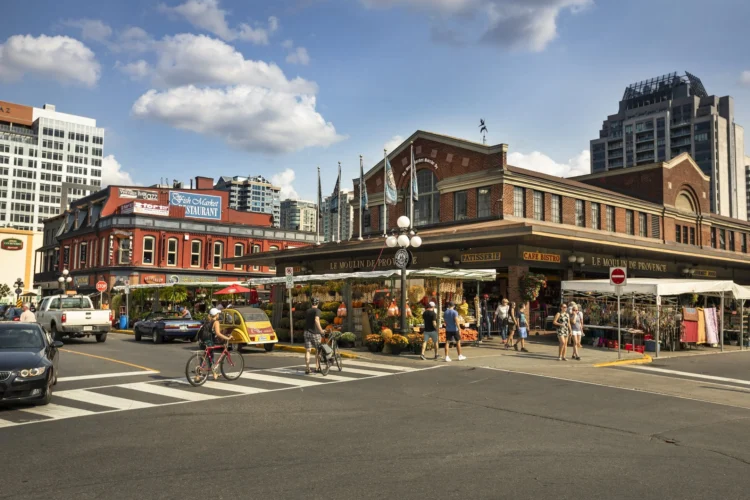
If you’re a patient free-thinker with a moderate streak and a love for the finer things in life, take a close look at ByWard Market.
Long known for its blend of history and nightlife, the neighbourhood is now at the centre of Ottawa’s rise to the top of North American quality-of-life rankings. In 2026, the city approved a major revitalization framework for the Market focused on safety, accessibility, and long-term economic sustainability.
Design changes, including improved lighting, more pedestrian-friendly streets, and public space upgrades, aim to strengthen the area’s role as a welcoming place for people to gather. Major projects like the pedestrian transformation of William Street and the redevelopment of ByWard Market Square are laying the groundwork for the district’s 200th anniversary in 2027.
Kensington Market | Toronto, ON
Markets spell diversity and colour, sometimes enough of it to overtake the surrounding area altogether; Toronto’s Kensington Market is one such place.
Kensington has long been a haven for waves of newcomers and creative communities. That spirit remains alive today, though the neighbourhood faces mounting economic pressures from Toronto’s volatile commercial real estate market.
In 2026, Kensington’s progressivism is reflected in grassroots activism aimed at protecting independent food sellers and small businesses from rising rents. Local merchants and residents continue to fight for the survival of community staples such as independent produce shops and specialty grocers.
The neighbourhood is also preparing for a surge of global attention as Toronto hosts matches during the 2026 FIFA World Cup. Plans are underway for multicultural street celebrations and fan zones that reflect Kensington’s diverse immigrant heritage.
Anchored around fresh markets and independent shops, the borough continues to draw artists, activists, and free thinkers who refuse to let its unconventional spirit fade.
Parkdale | Toronto, ON
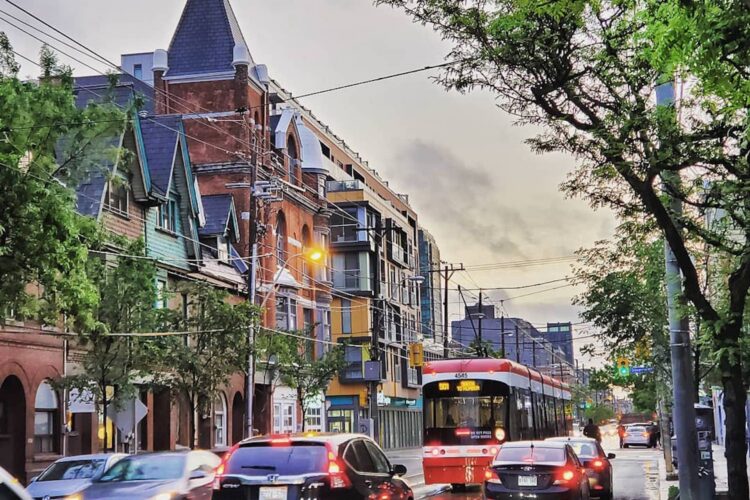
Change is woven into the very nature of being progressive; the endless search for challenge and improvement urges on, the second things become “too comfortable.” Parkdale has become one of Canada’s leading examples of community-driven housing reform. Once known primarily for its low-cost rental stock, the neighbourhood is now at the forefront of the Community Land Trust movement.
As of 2026, the Parkdale Neighbourhood Land Trust manages roughly 300 permanently affordable housing units. These properties are protected from speculative investment, ensuring that housing remains accessible to residents.
The neighbourhood is also home to the upcoming Parkdale Hub West Block, a 16-storey development that will deliver 175 new rental homes, 88 of which will remain permanently affordable, along with community space for social services.
Osborne Village | Winnipeg, MB
It’s impossible to separate art and progress nowadays, and Osborne Village remains Winnipeg’s most recognizable bohemian district. The neighbourhood continues to strengthen its reputation as a cultural hub thanks to renewed investment in arts infrastructure. The revitalization of the Gas Station Arts Centre is expanding performance spaces and supporting a new generation of artists.
Osborne Village also hosts a lively calendar of festivals and cultural events. Annual highlights include Osborne Music Fest and Nuit Blanche Winnipeg, which bring thousands of visitors to the neighbourhood for celebrations of music, visual arts, and multicultural creativity.
Kensington | Calgary, AB
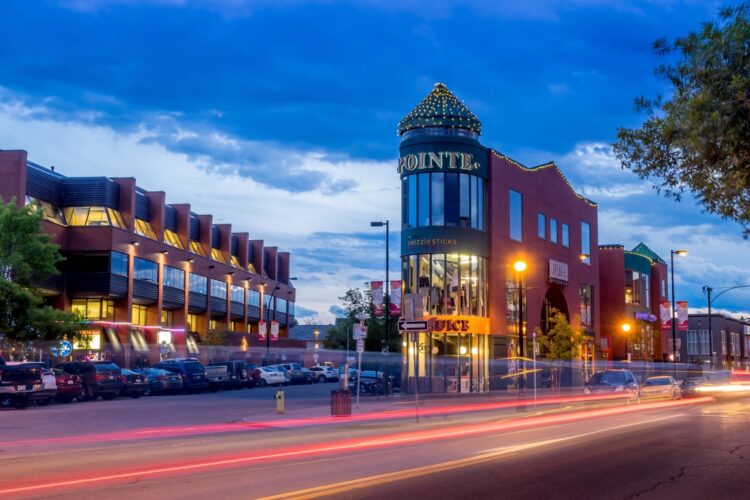
Despite the coincidence, Calgary’s Kensington is quite different from its Toronto namesake. Located along the Bow River just minutes from downtown, the neighbourhood continues to thrive as a walkable boutique district filled with independent businesses, restaurants, and cafés.
In 2026, the area’s business association has undertaken a governance refresh, including a formal transition from a Business Revitalization Zone to a Business Improvement Area structure. The move aims to improve transparency and strengthen the neighbourhood’s ability to support events and streetscape improvements.
Kensington’s festival calendar remains central to its identity, while the city’s improving rental supply has made the area a popular destination for professionals relocating to Calgary.
Commercial Drive | Vancouver, BC
Starbucks once got the cold shoulder in this neighbourhood, welcomed with a “DIE YUPPIE SCUM” graffiti over the front. That should tell you all you need to know about the inhabitants’ fiercely independent spirit.
Commercial Drive, often simply called “The Drive,” remains Vancouver’s most celebrated multicultural corridor. Running through the Grandview-Woodland neighbourhood, it has long been associated with activism, diversity, and alternative lifestyles.
Today, the neighbourhood’s progressive reputation is tied to its role as a transit-oriented development hub around the busy Commercial-Broadway SkyTrain station. Multiplex housing projects are rapidly increasing density in the area, reflecting Vancouver’s push to address its severe housing shortage.
However, 2026 also brought challenges. Rising costs forced the cancellation of the popular Car Free Day festival along Commercial Drive, highlighting the financial pressures facing community events across Vancouver. Despite these setbacks, the neighbourhood’s vibrant culture and strong community identity remain intact.
Downtown Victoria | Victoria, BC
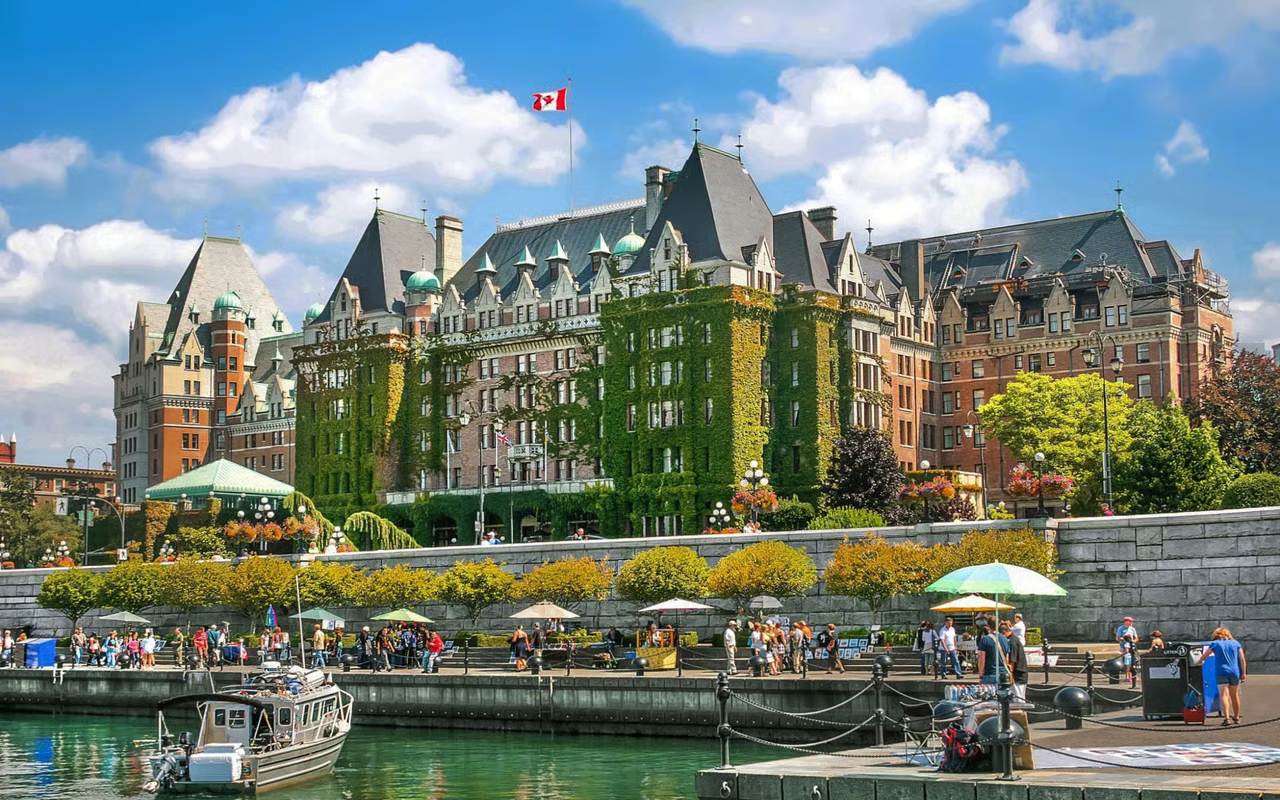
While many progressive communities exist in the shifting zone between downtown and suburb, Victoria’s progressive energy is strongly centred in its historic downtown.
The city’s 2023-2026 strategic plan has emphasized affordability, safety, and reconciliation with the Ləkʷəŋən-speaking Songhees and Esquimalt Nations. These partnerships are shaping the future of downtown through initiatives focused on cultural recognition and shared stewardship.
A new concept known as the Capital Culture District is reimagining parts of the harbour area as a hub for arts, innovation, and creative industries while maintaining the working character of Victoria’s waterfront.
Meanwhile, the neighbourhood’s beloved mix of breweries, bookstores, restaurants, and galleries continues to draw residents and visitors alike. Events such as Dine Around Victoria highlight a growing culinary scene focused on local sourcing and sustainability.
The Evolution of Progressive Neighbourhoods
Looking across Canada’s cities in 2026, a clear shift has taken place. The idea of a “progressive neighbourhood” revolves around who controls the land, how communities manage growth, and how cities address sustainability and affordability. Despite rising costs and development pressures, the nine neighbourhoods on this list continue to serve as testing grounds for new ideas about how cities can grow.
Thinking about living in one of Canada’s most forward-thinking communities? Explore listings with Zoocasa and start your search today.
This article was originally published on July 7, 2016, and was last updated on March 14, 2026.