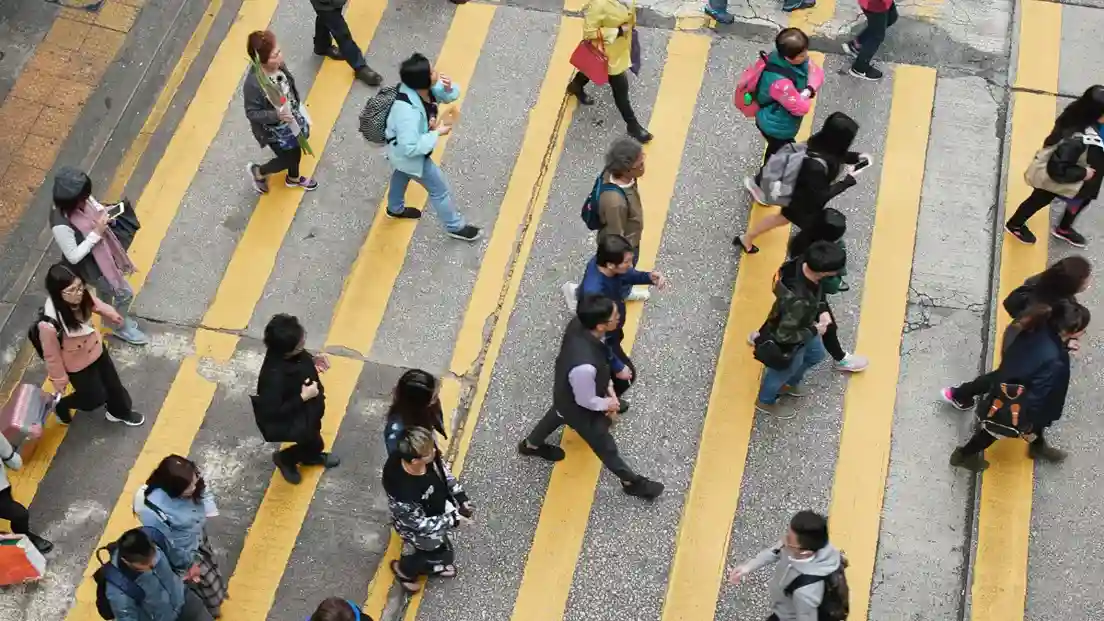
The belief that Los Angeles is not walkable is increasingly outdated. Today, the city features several highly walkable neighborhoods that rival older East Coast cities. However, walkability can vary widely from block to block, and not all walkable areas offer the same experience. As housing density rises and transit improves, more Angelenos are choosing car-free or car-light lifestyles, supported by pedestrian-first policies like Measure HLA and Vision Zero. Here are some of the best, most walkable neighborhoods in LA to know right now.
Jump Ahead
- MacArthur Park & Westlake
- Downtown Los Angeles
- Wilshire Center/Koreatown
- Santa Monica
- Venice Beach
- Los Feliz, Silver Lake & Echo Park
- Larchmont Village & Hancock Park
- Palms & Sawtelle
- Highland Park & South Pasadena
MacArthur Park & Westlake
MacArthur Park consistently ranks among the most walkable neighborhoods in LA, driven by extreme residential density and one of the city’s most connected transit nodes. The intersection of the Metro B and D Lines allows residents to reach DTLA, Hollywood, Koreatown, and Union Station without transfers.
Daily necessities like groceries, pharmacies, clinics, and restaurants are tightly clustered along Wilshire Boulevard and 7th Street, creating a true “10-minute village.”
However, walkability here comes with tradeoffs. Westlake experiences elevated crime rates, particularly after dark. While foot traffic and transit access make walking easier, pedestrians may still encounter uneven safety and visible social challenges.
Downtown Los Angeles (DTLA)
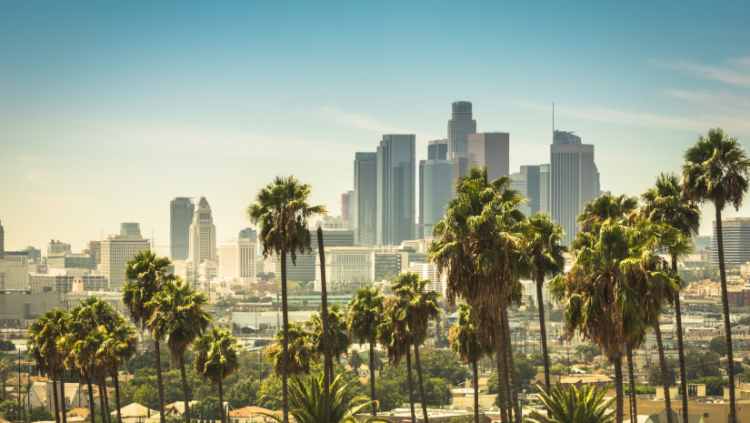
DTLA offers walkability comparable to that of MacArthur Park, though the experience varies by district.
South of 6th Street and west of the 110 Freeway, residents can walk to major grocery stores, offices, entertainment venues, and nearly every Metro rail line. South Park offers the most cohesive pedestrian experience, anchored by L.A. Live, mixed-use towers, and wide sidewalks designed for high foot traffic.
The Arts District delivers a low-rise walking experience shaped by galleries, cafés, and adaptive reuse, while the Financial District excels in efficiency and access. Because of its proximity to Skid Row, safety conditions can change suddenly, making route choice and time of day especially important.
Wilshire Center/Koreatown
Koreatown is one of the most complete, walkable areas in Los Angeles. Along Wilshire, 6th Street, and Western Avenue, dense residential towers sit alongside 24-hour dining, medical offices, spas, and grocery stores. Multiple Metro D Line stations ensure fast east–west connectivity, while frequent bus service fills in gaps.
While this area is extremely walkable, its busy nightlife contributes to higher crime rates. Streets feel safer during the day, though late-night conditions can be less predictable.
Santa Monica
Santa Monica sets the benchmark for pedestrian-first urban design on the Westside. Features like wide sidewalks, clear crosswalks, and car-free zones such as the Third Street Promenade make walking easy and safe.
The Metro E Line connects residents directly to Culver City and DTLA, while protected bike lanes extend walking trips through multi-modal options.
Walkability peaks along Montana Avenue, Wilshire Boulevard, and downtown Santa Monica. While crime remains lower than citywide averages, areas near the Promenade have seen increased incidents related to homelessness.
Venice Beach
Venice’s walkability is defined by its historic “walking streets,” canals, and beachfront paths rather than traditional street grids. Abbot Kinney Boulevard anchors the neighborhood with walkable access to dining, shopping, and social spaces.
While the canals provide calm pedestrian routes, the boardwalk introduces crowding and higher rates of property crime. Venice is highly walkable for residents, but it can feel chaotic for newcomers.
Los Feliz, Silver Lake & Echo Park
These Eastside neighborhoods offer a quieter version of walkability. In Los Feliz, Silver Lake, and Echo Park, walkable hubs are surrounded by residential streets, letting residents walk to cafés, parks, theaters, and neighborhood grocers without heavy traffic.
The biggest drawback is terrain. Steep hills make some areas harder to walk, but neighborhoods near commercial centers remain walkable for everyday needs.
Larchmont Village & Hancock Park
Larchmont Village offers one of the more refined pedestrian experiences in Los Angeles. A compact commercial strip lined with cafes, bakeries, and boutiques serves surrounding historic homes.
The area benefits from low crime, well-maintained sidewalks, and consistent foot traffic without nightlife-related disruption.
Palms & Sawtelle

Palms stands out as one of the most realistic car-free neighborhoods on the Westside. Residents have walkable access to grocery stores, theaters, and the Metro E Line, supported by bike infrastructure and relatively flat terrain.
Sawtelle’s restaurant corridor provides dense walkable amenities, though residential areas just outside the strip require longer walks.
Together, these neighborhoods offer strong alternatives to Santa Monica at more moderate price points.
Highland Park & South Pasadena
Highland Park’s resurgence is tied to the Metro A Line and a revitalized Figueroa Street corridor. Cafes, bars, and historic venues cluster within walking distance of transit stops, making it a great option for car-light living.
While technically separate from Los Angeles, South Pasadena stands out for its safe, walkable streets and a strong sense of community.
Choosing the Right Walkable Neighborhood
Not all walkability feels the same. Some of the most walkable neighborhoods in LA thrive on constant activity and 24-hour energy, while others prioritize a slower pace.
Looking for a home in one of the most walkable neighborhoods in LA? Start your search with Zoocasa today.