

Houston has long been known as a car-first city, but that reputation is changing fast. With new pedestrian-friendly ordinances and major infrastructure investments, several walkable neighborhoods in Houston are emerging as some of the most livable urban districts in the South. Some neighborhoods are reaching Walk Scores in the 80s and 90s, rivalling cities that have been pedestrian-friendly for decades.
Whether you’re a first-time buyer looking for a car-light lifestyle or an investor eyeing high-demand rental markets, here’s a look at where walkability is thriving in Houston.
What’s Driving the Shift?
The biggest policy change behind Houston’s walkability push is the Walkable Places and Transit-Oriented Development (TOD) Ordinance. The program allows property owners to opt into pedestrian-friendly design standards in exchange for development flexibility. In return, developers commit to wider sidewalks, safety buffers between the road and sidewalk, and buildings with windows and street-facing entrances.
As of 2026, three pilot areas are testing these regulations: Emancipation Avenue in the Third Ward, Midtown, and Hogan Street in the Near Northside. The TOD standards apply to streets within a half-mile of METRORail stations and high-frequency bus routes, tying density directly to transit access.
Montrose
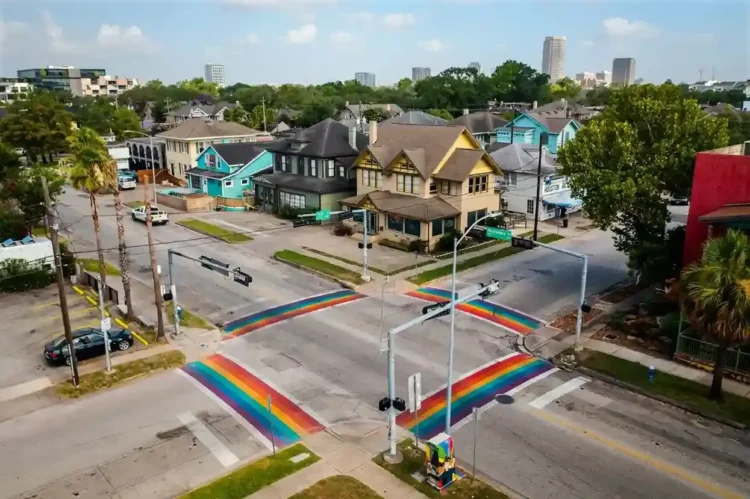
Montrose consistently holds the highest Walk Score in Houston at 96. The compact, four-square-mile layout provides a natural street grid that supports foot traffic, with everything from artsy cafes along Westheimer to luxury high-rises near Buffalo Bayou Park.
The development to watch here is the Montrose Boulevard Improvements Project. The project is widening sidewalks, improving drainage, and closing a median at Montrose and West Clay Street to reduce vehicle-pedestrian conflicts. Over 100 new trees are also being planted to combat the urban heat island effect and make summer walking more comfortable.
Midtown
Midtown acts as a bridge between Downtown and the Texas Medical Center, scoring a 90 Walk Score and a strong 74 Transit Score. It’s also one of the key testing grounds for the Walkable Places Ordinance, which requires new buildings in the area to place entrances directly on the sidewalk.
The neighborhood’s development is currently led by the Ion District, an innovation corridor designed around car-light living. The Midtown Redevelopment Authority has committed up to $65 million to fund pedestrian infrastructure, public plazas, and laneways in this district.
Midtown remains more affordable than Montrose or the Heights, making it a popular landing spot for young professionals seeking walkability without the premium price tag.
Downtown
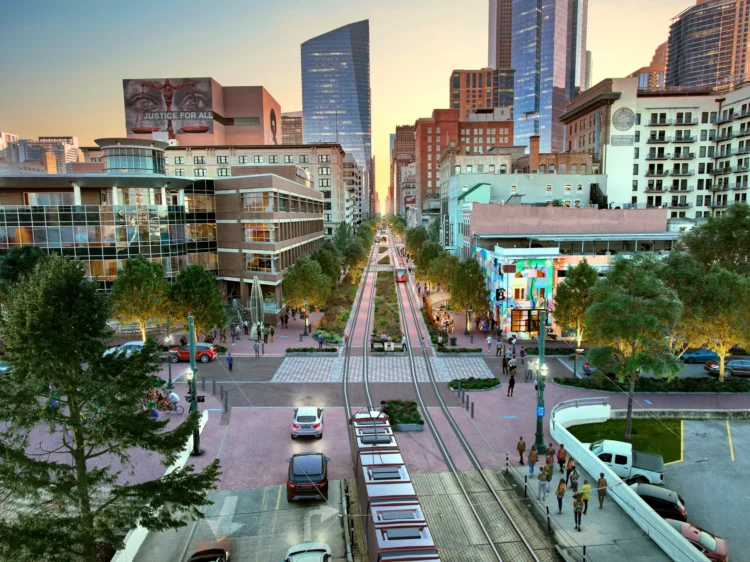
Downtown Houston is undergoing one of the most dramatic transformations of any neighborhood in the city, largely driven by preparations for the 2026 FIFA World Cup. he centerpiece project is “More Space: Main Street 2.0,” which is converting 11 blocks of the central business district into a permanent, vehicle-free pedestrian promenade.
The design includes “outdoor rooms,” which consist of flexible zones that shift between cafe seating, public programming, and pop-up retail. Meanwhile, the GreenStreet redevelopment is transforming traditional mixed-use space into pedestrian-friendly alleyways.
Downtown also has a unique walkability asset that operates year-round: the Tunnel Network. The system connects office buildings and retail hubs, offering climate-controlled walking during Houston’s intense summer heat.
The Heights
The Heights holds a Walk Score of 88 and represents trail-oriented development. Rather than building around transit stops, the Heights has evolved around the Heights Hike-and-Bike Trail.
For example, the Swift Building project is converting a historic refinery site into 60,000 square feet of retail and office space. Its architectural strategy is built around patios that overlook the bike trail.
Despite its high walkability, the Heights remains one of the most expensive neighborhoods for homeowners. Renters will find the Heights somewhat more accessible, with average 1-bedroom rents around $1,837, which is competitive with Midtown.
Other Walkable Neighborhoods to Watch
Beyond the top four, several Houston neighborhoods are seeing pedestrian investment.
Greenway/Upper Kirby (Walk Score: 76)
Upper Kirby created a “convenience-meets-walkability” model centered on upscale high-rise living. The area scores well for internal errands, though a Transit Score of 49 and Bike Score of 55 indicate that residents still rely on cars for trips beyond the neighborhood.
Museum District (Walk Score: 74)
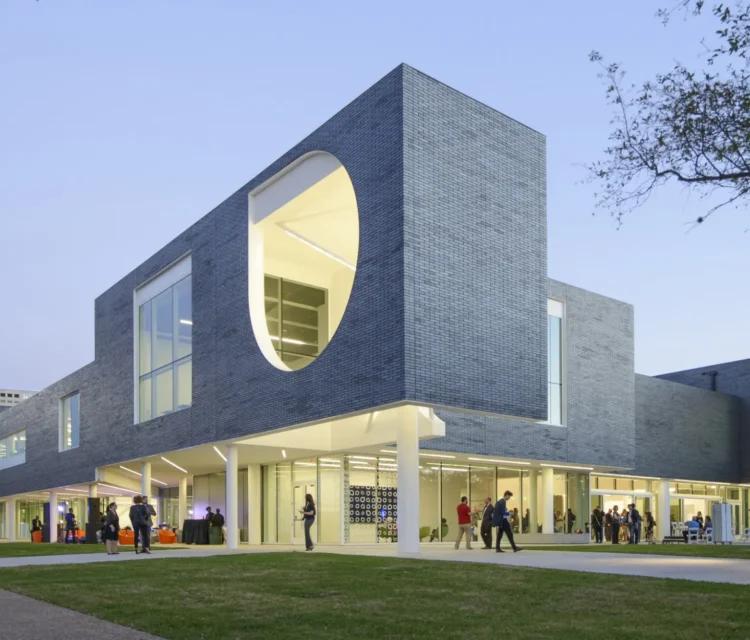
Nineteen museums, Hermann Park, and the Houston Zoo are all within a cohesive pedestrian environment, and the METRORail Red Line provides a 17-minute commute to Downtown. However, the area is one of the most expensive for renters, with average 1-bedroom rents around $2,383.
EaDo/East End (Walk Score: 70+)
EaDo is s transitioning from an industrial district into an entertainment and residential hub. The “East Blocks” project is creating an open-air alleyway concept that connects three buildings along Hutchins and McKinney Street. It also includes a walking and biking loop designed to link the area to the Columbia Tap trails.
Where Houston is Headed Next
The momentum behind walkable neighborhoods in Houston shows no signs of slowing down. With major projects underway and demand rising, these areas are shaping the future of how people experience the city.
Ready to explore walkable living in Houston? Use Zoocasa to discover homes in the city’s most in-demand neighborhoods and start your search today.