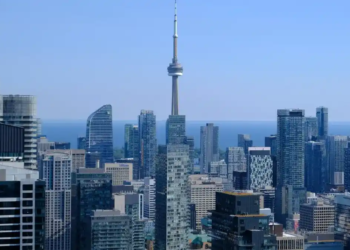
The Ontario housing market is hot, hot, hot. So hot, in fact, that the provincial government recently unveiled a plan to throw cold water on the hottest cities – Toronto real estate, we’re looking at you.
But the steps outlined in the plan, such as the 15% non-resident speculation tax for non-Canadian citizens, and the expanded rent controls, will only go so far. We need density to accommodate the newcomers to the Greater Golden Horseshoe, and that means more units at an affordable price.
Unfortunately, until recently, density has only meant one thing: condos.
Looking Beyond High-Rise Options
While Toronto condos are a great way to boost the housing supply in a city, not everyone wants to live in one, especially larger families. Affordable housing options should mean more than just high rises, and this is where gentle density comes in. Gentle density is a term used to describe the practice of adding housing supply to neighbourhoods where condos won’t fit with the existing character or streetscapes. Gentle density can come in a few forms. The one you are probably most familiar with is basement apartments in single family detached homes, which are a great option for homeowners with an unused basement. But there is another form of gentle density that is popular in other parts of the country but has yet to gain much traction in the GTA: laneway houses.
What Is Laneway Housing?
Laneway homes are dwellings built facing onto laneways or service roads. They can be built above garages or behind main dwellings, are usually small and share the common area backyard with the main house. Toronto has approximately 300 kilometers of laneways – enough for an additional 2,400 dwellings – located in the heart of the city and prime for development.
The Vancouver real estate market has adopted laneway homes with great success, but it’s a different story here in Toronto. In 2006, a damning report of laneway housing was published that made it all but impossible to implement laneway housing on a large scale. The report cited a variety concerns including privacy, shadows, property values and logistical issues around garbage pickup and emergency services. The report recommended against allowing laneway houses and ensured they remained a rarity.
The Challenges of Implementing Laneway Housing
This report stifled the possible success of laneway housing in Toronto. To date, it is only approved on a case by case basis, and the amount of paperwork required meant that only a select few with experience navigating the process could do so with ease.
Fortunately, the tide is slowly turning on laneway houses in Toronto. Today, supporters of laneway houses have made small but significant steps towards having this nontraditional form of housing accepted into mainstream planning in Toronto.
It started with the province. In 2011, the Province of Ontario made changes to its Planning Act, introducing legislation allowing municipalities to “establish official plan policies and zoning bylaw provisions” for laneway housing. These amendments paved the way for a new policy around laneway housing in Toronto.
Efforts to Bring Laneway Houses to Toronto
Within the city itself, advocacy groups like Lanescape have been working with planners to release a proposal outlining the guidelines around laneway housing which would calm the concerns of most residents and deliver crucial information to those considering a laneway project. Through public consultation with actual residents of the neighbourhoods that would benefit most from these laneway housing projects, city planners have learned about citizen concerns and addressed them in the proposal, which was released to the public in December, 2016. Height limits would be established on a neighbourhood by neighbourhood basis to keep new buildings consistent with the streetscape, and garbage collection would be treated the same as for a basement apartment.
The proposal floats the idea of treating laneway housing as secondary suites like basement apartments – which the city already encourages. This idea has the support of at least two city counselors, Ana Bailão and Mary-Margaret McMahon, who believe that limiting the spaces to rental suites will simplify the approval and building process. Homeowners could take advantage of the rental income, and thousands of housing units could be added to the desirable downtown neighbourhoods that need them most.
Right now, laneway houses aren’t easy to build, but if the proposal above gains traction, that could change soon. If you think your home is a good candidate for a laneway home, get in touch with the councilors mentioned above, or the advocacy groups. Get involved, let your voice be heard, and let Toronto know that we need this gentle density if we’re going to continue to grow successfully as a city.