
Following a year of substantial shifts—marked by ever-evolving government and economic policies— the U.S. housing market continues to navigate a complex landscape. Heading into 2026, affordability remains the top concern for both homeowners and buyers.
But how do they really feel about the complex issues that impact overall housing affordability and quality of life? Zoocasa’s latest survey of 1,000 homeowners provides the answers, revealing their perspectives on critical, interconnected issues: the role of AI in real estate, the risks of climate change, the importance of community integrity, and the impact of immigration policy.
Market Pessimism: Homeowners Expect Higher Prices From Policy Shifts
The National Association of Homebuilders (NAHB) estimates that 7% of all materials used in new residential construction are imported. With the government imposing tariffs on several key construction materials, like lumber, steel, and iron, there’s concern that this will exacerbate housing unaffordability.
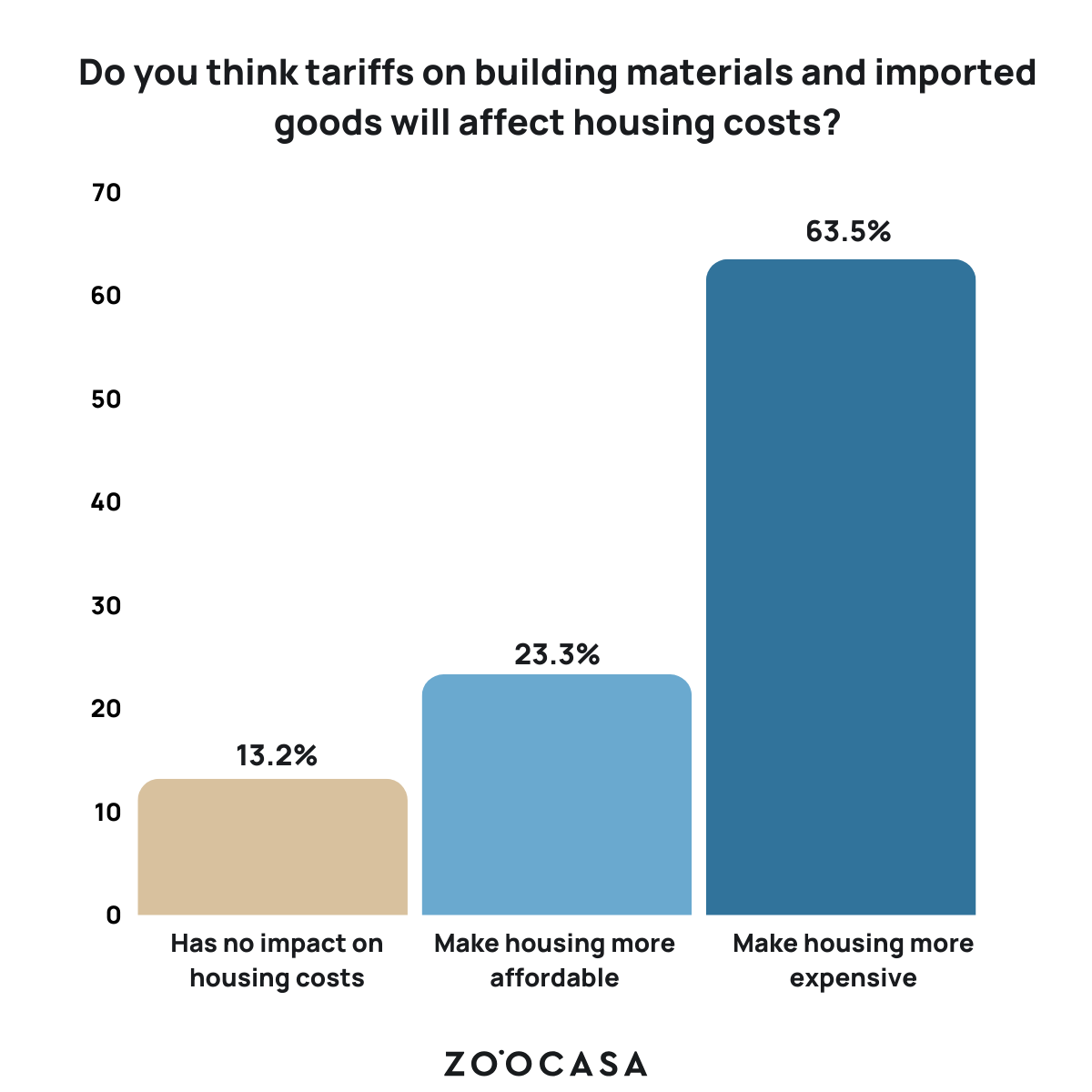
Nearly two-thirds of homeowners (63.5%) believe tariffs on building materials and imported goods will make housing more expensive, compared with only 23.3% who believe they will make housing more affordable.
Another recent policy shift that homeowners believe could negatively impact the housing market is immigration. The NAHB reports that foreign-born workers constitute a substantial portion of the construction labor force in major states: 41% in California, 38% in Florida and Texas, and 37% in New York.
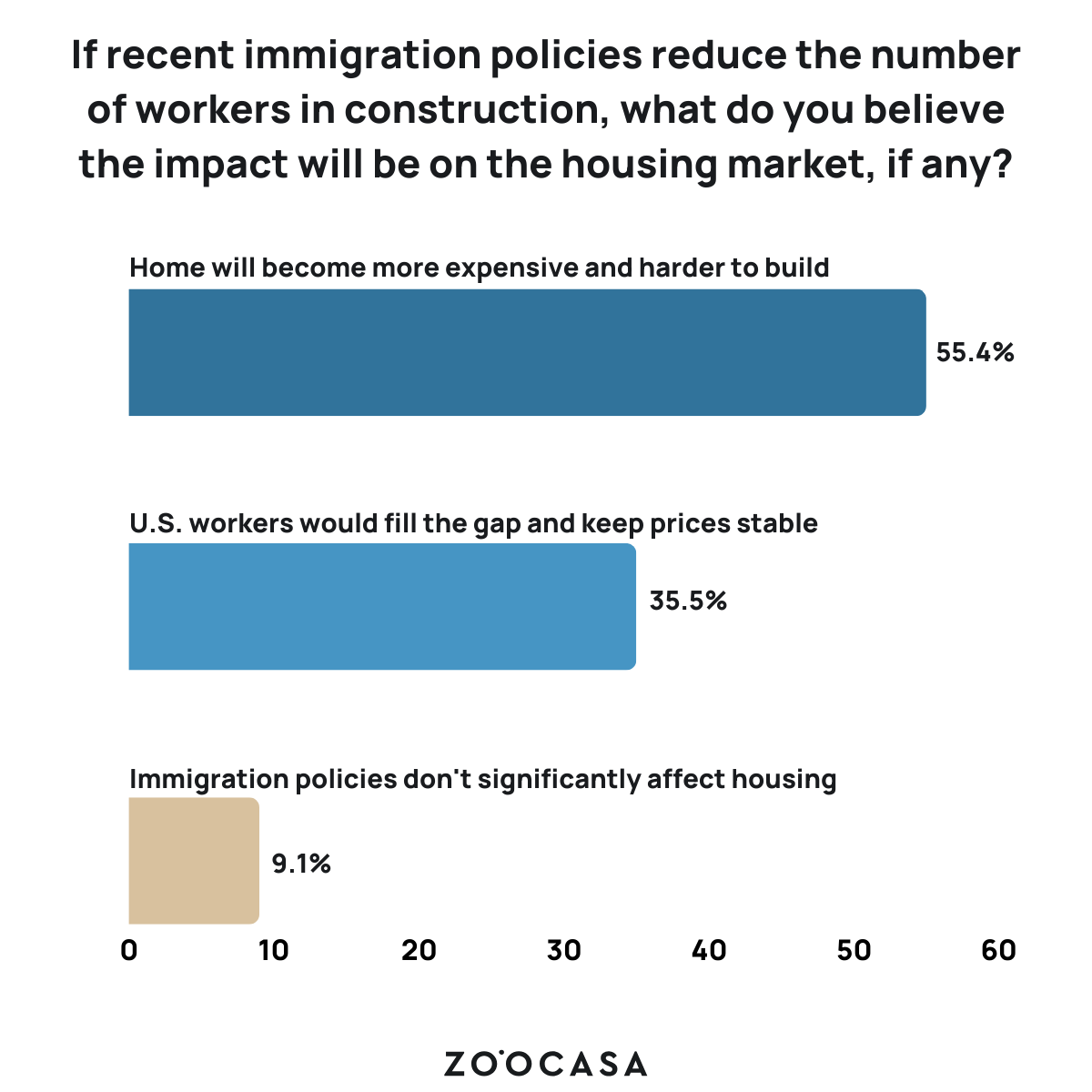
If recent immigration policies reduce the number of workers in construction, then the majority of homeowners (55.4%) believe homes will become more expensive and harder to build. Meanwhile, 35.5% believe U.S. workers would fill the gap and keep prices stable, and 9.1% don’t believe immigration policies significantly affect housing.
1 in 5 Homeowners Willing to Sacrifice Political Alignment for Lower Costs
Loving where you live is important, but being able to afford it is even more crucial. As budgets tighten and the dream of homeownership gets further out of reach, some homebuyers are willing to look beyond their geographic comfort zone if it offers savings.
Housing costs are soaring in many major metropolitan areas. According to the most recent median home price report from the National Association of Realtors, New York City, Boston, Philadelphia, and Chicago have all seen their median single-family home prices increase by over 4% from last year. Meanwhile, smaller cities and rural areas have maintained their affordability, with median prices in the $200,000 range in places like Baton Rouge, LA, Springfield, IL, and Tulsa, OK.
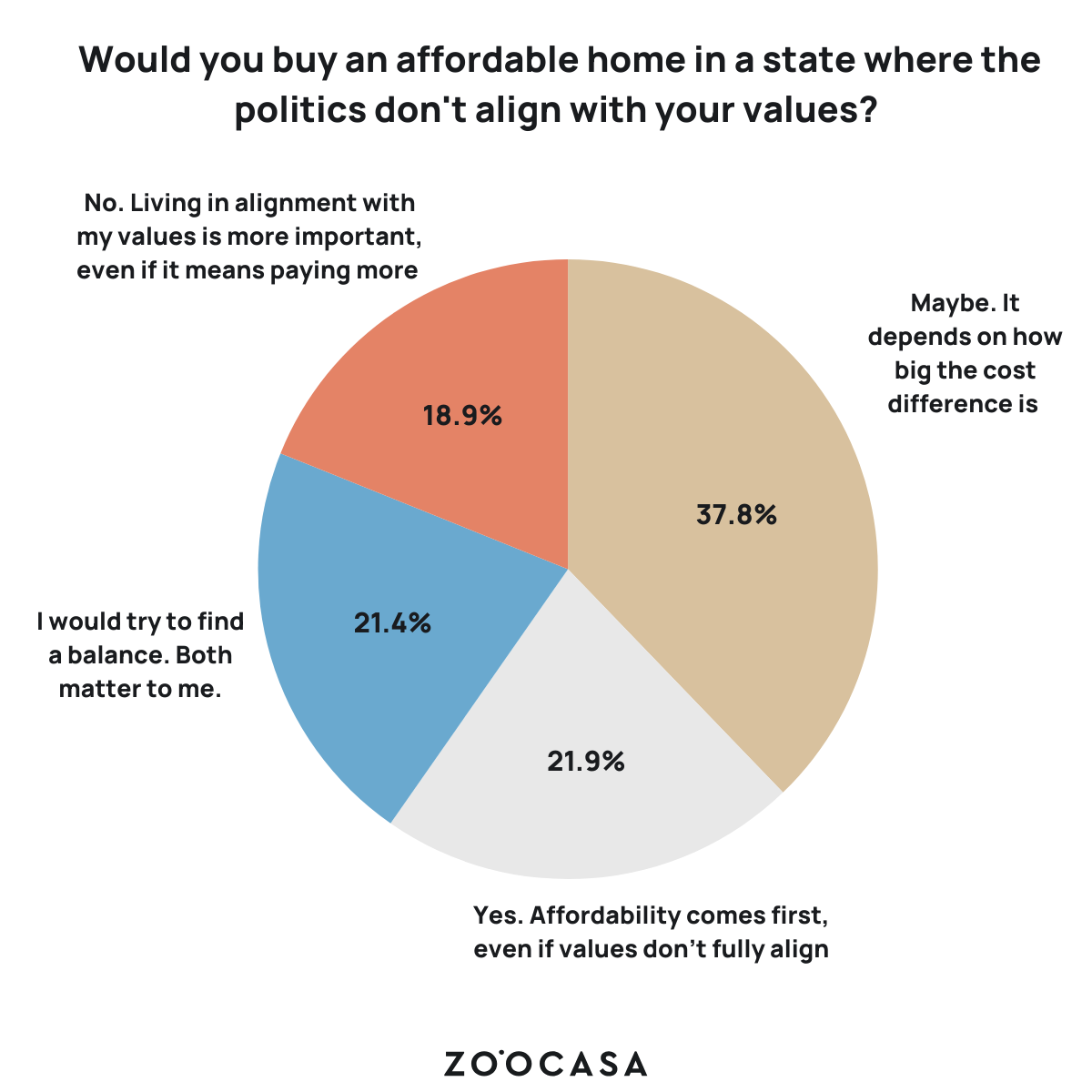
For one in five homeowners (21.9%), affordability is the number one priority, stating they would buy an affordable home even if the state’s politics did not align with their values. However, a significant portion (37.8%) said their decision would depend entirely on the magnitude of the cost savings.
The desire for balance was also notable, with 21.4% stating they would try to find a home where affordability and political alignment matched. Only 18.9% would not make a trade-off on their values for affordability, citing that living in alignment with their values is more important, even if it means paying more.
The largest segment of respondents (38.9%) indicated that visible political displays in a neighborhood could be a factor influencing their decision to live there. Conversely, 19.8% stated these displays wouldn’t weigh heavily in their decision, and 18.7% maintained that politics don’t affect where they live at all. On the extremes, 9.6% of respondents would actively avoid a neighborhood for this reason, while 13.0% would see it as a positive influence on their decision.
Climate Concerns Could Shape Buying Decisions
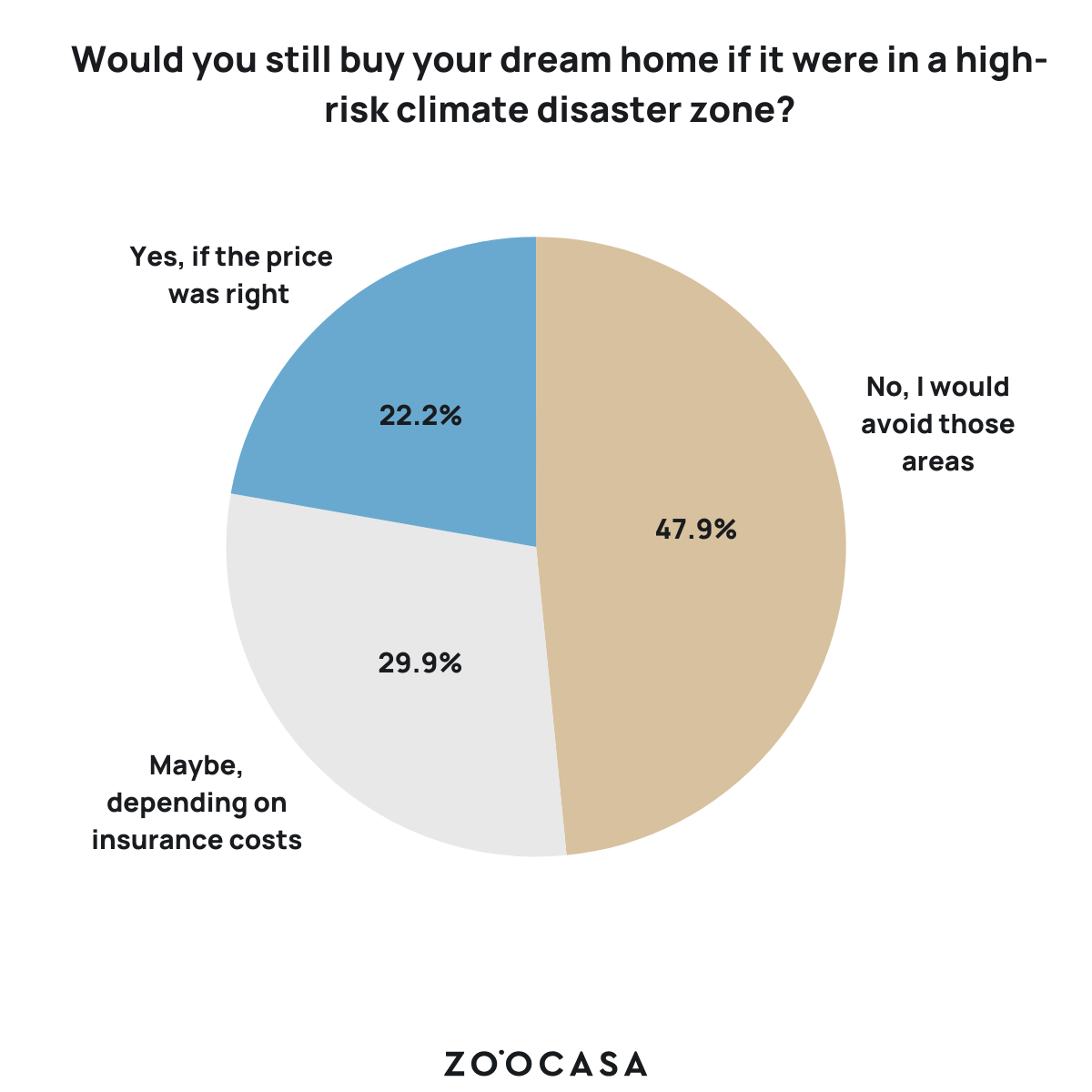
Nearly half (47.9%) of respondents indicated a reluctance to purchase a home, even their ideal one, in areas identified as high-risk climate disaster zones. However, 29.9% were less risk-averse and said buying their dream home in a high-risk climate zone would depend on the insurance costs, while 22.2% said they’d still buy their dream home as long as the price was right.
But what happens if disaster does, unfortunately, strike? Answers were split. A significant portion of respondents, 31.7%, indicated a preference for rebuilding within the same community. A near-equal portion, 31.3%, said they would relocate to a different part of the same state. The rest either weren’t sure what they would do (21.4%) or planned to move to a new state entirely (15.8%).

AI is Here, But Homebuyers Want the Human Side of Real Estate
AI is now being implemented in almost every industry, including real estate. Does that mean AI has the potential to replace real estate agents? The majority of homeowners don’t think so.
More than half of homeowners (53.6%) believe that AI will assist, but not replace real estate agents, and a further 17.3% said that AI won’t replace the human side of real estate. However, 29.1% do think AI will replace many agent tasks.
The good news for human real estate agents is that most homeowners recognize their value.
Nearly half (49.5%) of respondents said they would only somewhat trust an AI chatbot for accurate home listing information and would double-check the details with an agent. Skepticism was high among the rest: 20.8% would be skeptical of any listing information from an AI chatbot, and 12.2% are completely against it, saying they only want information from a human expert. This leaves just 17.5% of homeowners open and trusting of AI chatbots.
It’s not only real estate agents who could be replaced by AI; home stagers, too, face the risk of replacement. According to NAR’s Profile of Home Staging report, 8% of seller’s agents only virtually stage homes, and that number may increase as AI tools advance. However, not all homebuyers are open to the idea of virtual staging.
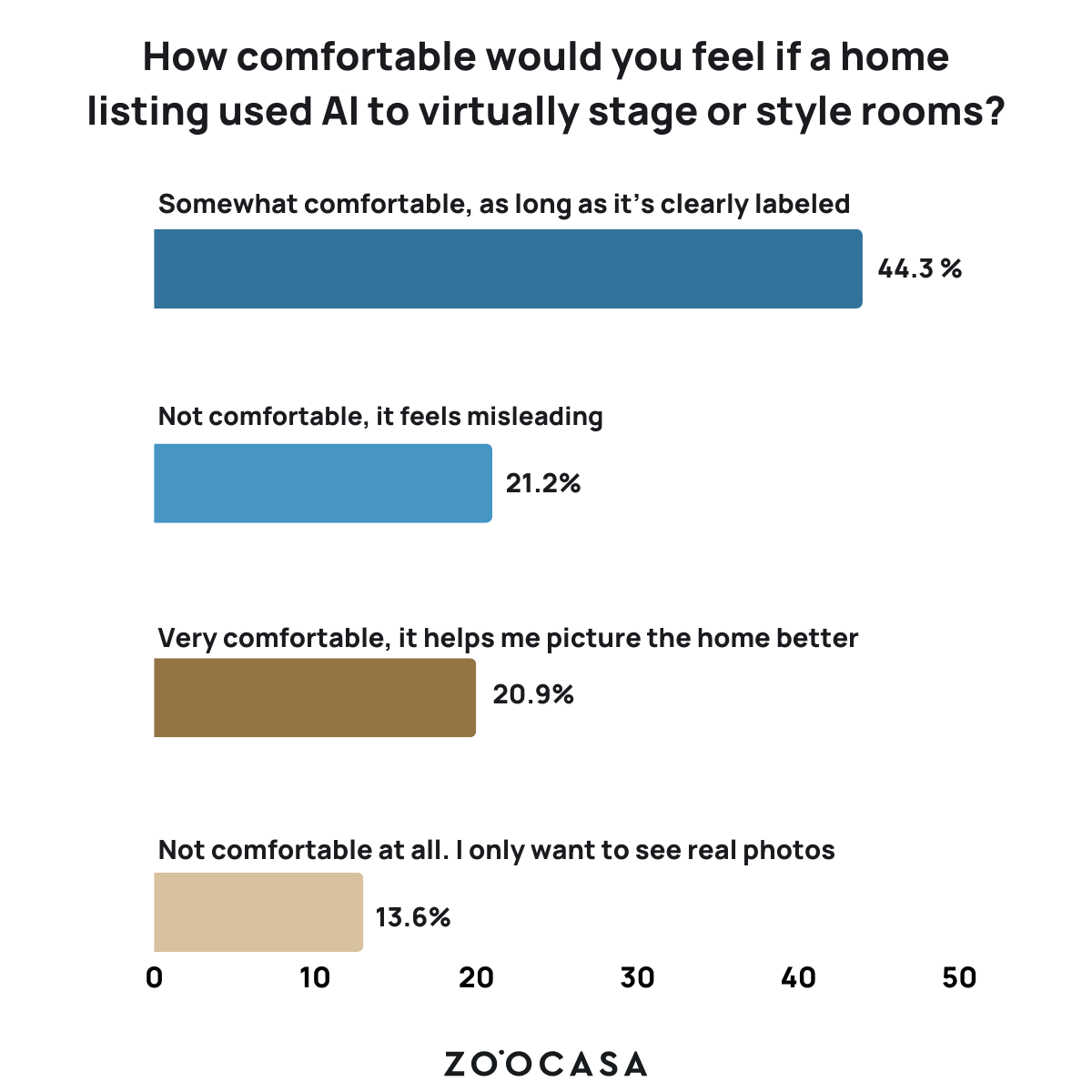
Nearly a quarter of respondents (13.6%) said they are not comfortable at all with AI being used to virtually stage a listing, citing a preference for real photos only. An additional 21.2% said that virtually-staged homes feel misleading, and they would not be comfortable if a home listing used it.
On the other hand, a total of 65.2% of respondents (44.3% somewhat comfortable and 20.9% very comfortable) are generally accepting of AI staging, provided it’s clearly labeled.
Homeowners Crave Community, But Are Reluctant to Pay or Participate
American homeowners seem to crave community connection, but the data suggests they are hesitant to fully invest in the relationships or the necessary public infrastructure.
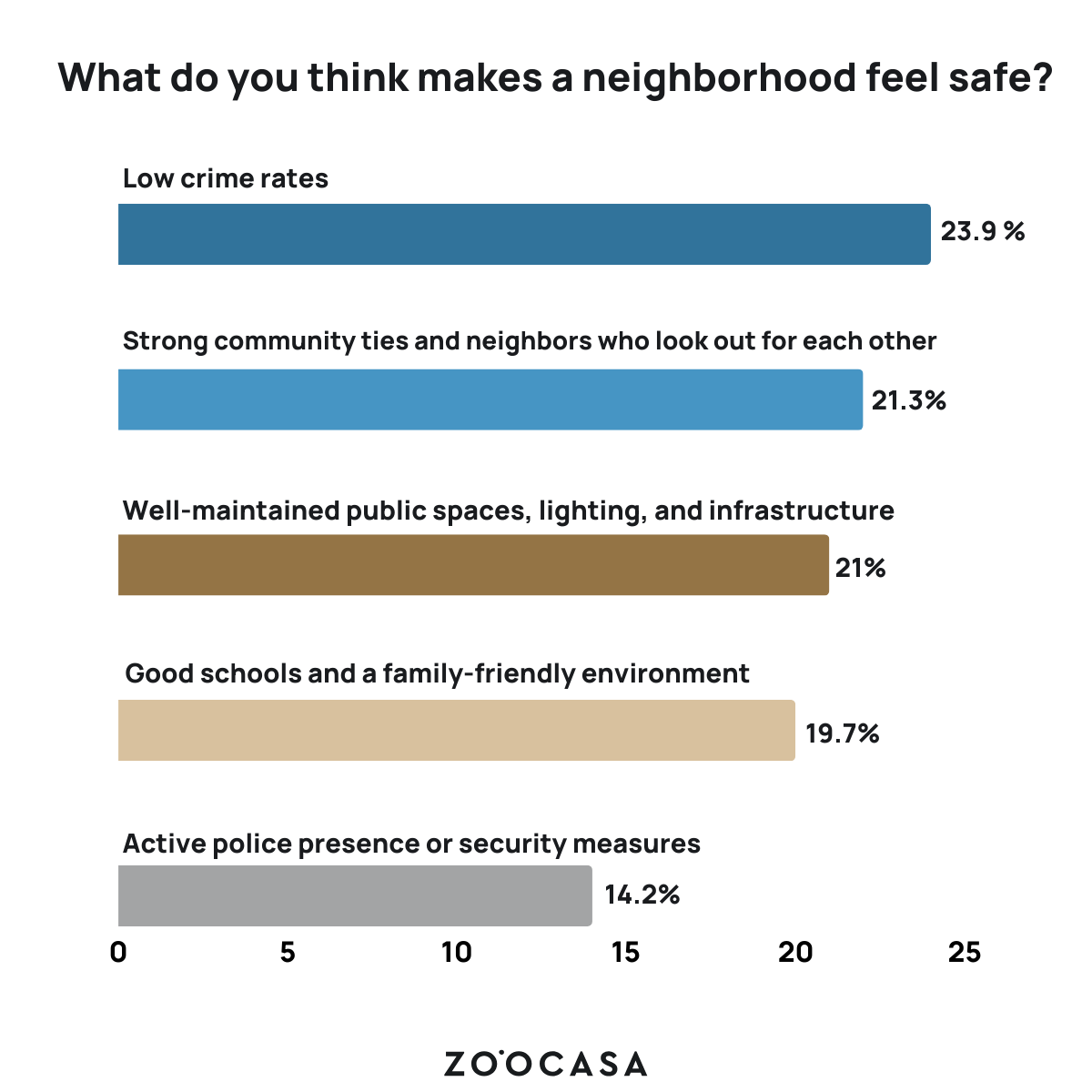
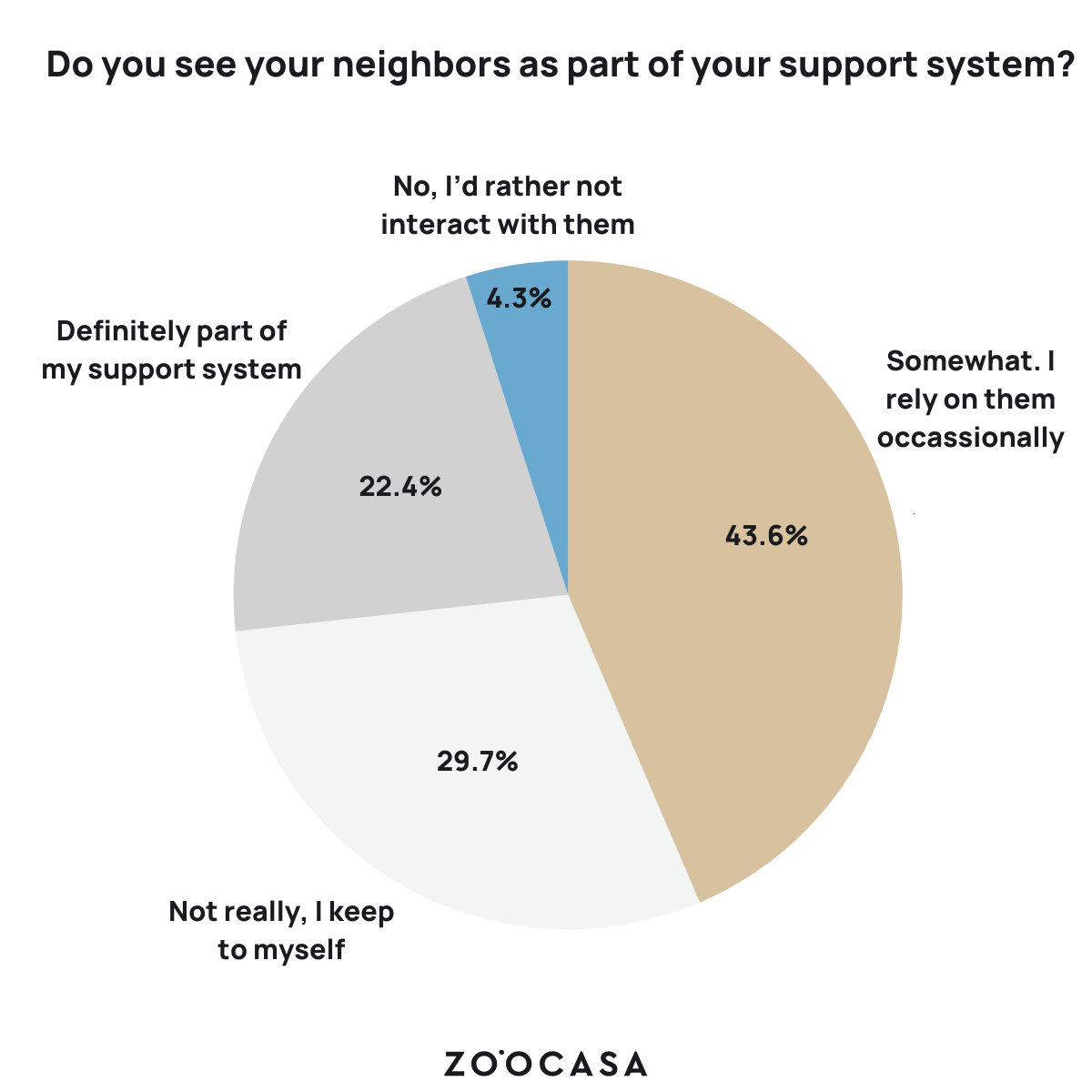
Despite 21.3% of respondents saying strong community ties and neighbors who look out for each other make a neighborhood feel safe, many do not really know their neighbors. Only 22.4% see their neighbors as part of their support system, while nearly 30% say they do not and usually keep to themselves. The largest portion of respondents, 43.6%, say they rely on their neighbors just occasionally.
A similar contradiction exists regarding public spaces. While 21% say that well-maintained public spaces, lighting, and infrastructure make a neighborhood feel safe, a similar percentage (22.9%) do not want higher taxes to support community spaces. More than a quarter (26.1%) said that the investment in community spaces is worth higher taxes, but the largest group of respondents, 44.4%, said they would only maybe be willing to pay higher taxes for this, depending on the cost. A small percentage of respondents (6.6%) said they are already satisfied with their neighbourhood’s community spaces.
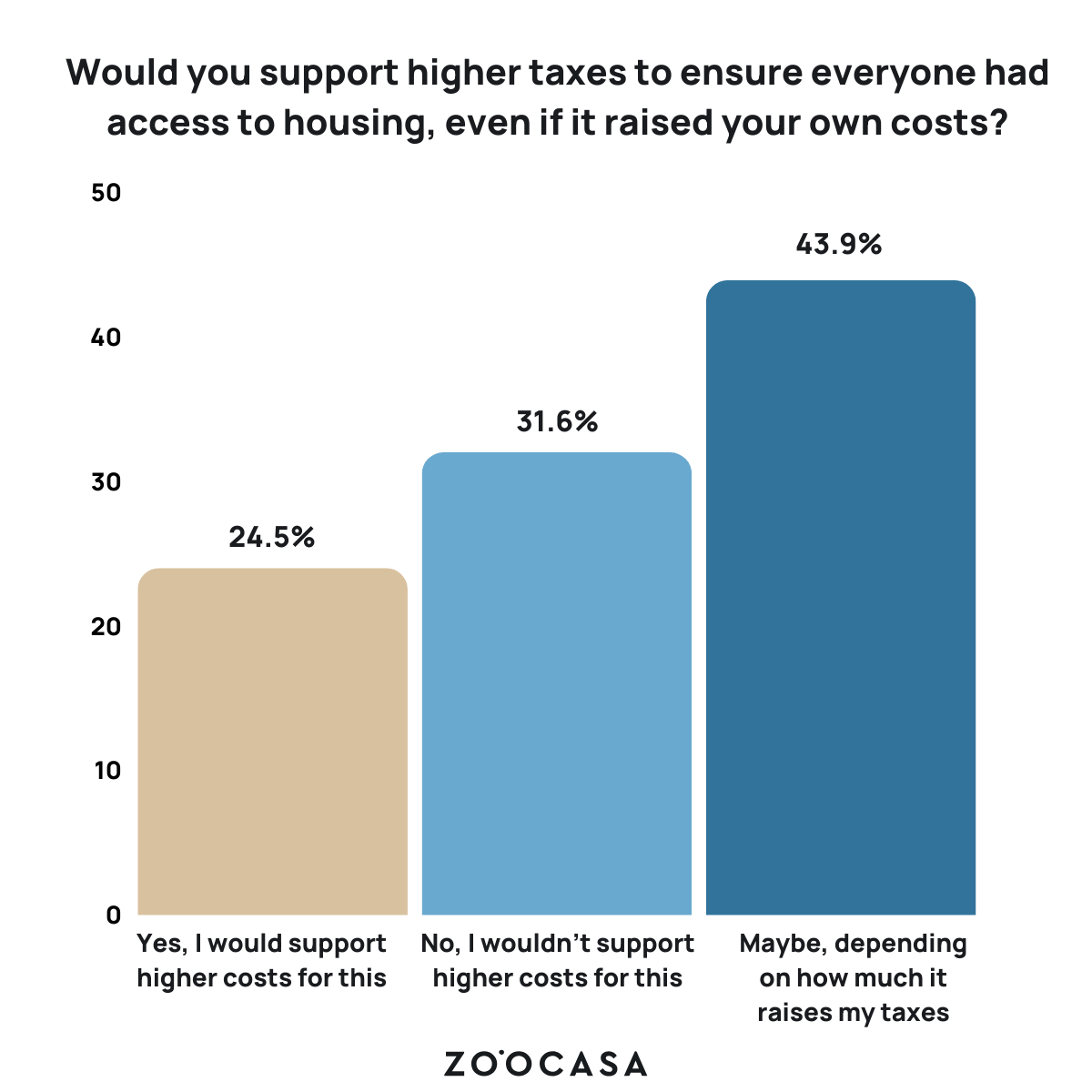
Homeowners feel similarly split about raising their taxes to ensure everyone has access to housing. The largest segment of responses, 43.9%, says their support depends on how much it raises their taxes, while 31.6% would not support higher costs for this, and 24.5% would support higher costs to ensure housing for everyone.
What the Results Mean for the Housing Market
Despite the advancements in AI, homeowner skepticism suggests a hybrid future where human agents remain crucial for trust and verification. Concurrently, increasing awareness of climate risks will likely drive buyers toward “climate havens,” accelerating migration patterns to areas less vulnerable to natural disasters.
Finally, since many respondents link safety to social ties and infrastructure, neighborhoods that successfully invest in well-maintained community spaces may become more desirable and command a premium price.
Are you thinking about buying or selling a home in the near future? Zoocasa has thousands of up-to-date listings near you. Start your search today!
Methodology
The future of housing in the U.S. survey was conducted on October 7, 2025. 1,000 American homeowners were surveyed. The survey consisted of 17 multiple-choice questions to learn about the current real estate outlook of Americans. The margin of error is roughly 2%.