When you sell your home for more than what you paid for it, the difference is called equity. Ideally, that means you’ve made a profit. But do you need to pay capital gains tax in Canada on that profit? As a first-time home seller, it can be a confusing process. There’s a lot of new terminology when you buy or sell your first home, but Zoocasa has broken it down for you so that you know what to expect.
To understand who needs to pay capital gains tax in Canada, it helps to know what it is, how it’s calculated, and what exemptions may reduce the amount you owe.
What is a Capital Gain?
Simply put, capital gains are the profits you make from selling an asset. This can apply to assets such as stocks, bonds, or real estate, including your home. But how is this different from equity?
Equity refers to the portion of an asset you own. For homeowners, equity grows as your property increases in value and as you pay down your mortgage.
Capital gains, on the other hand, refer to the actual profit you realize when you sell the asset. You can build equity while still owning your home, but you only have a capital gain once the home is sold, and that profit is in hand.
How Capital Gains Tax Works in Canada
To figure out capital gains in Canada, you’ll first need to calculate your adjusted cost base (ACB). The ACB is the purchase price of a property plus any expenses related to acquiring it, such as commissions and legal fees.
For example, if you bought a home for $500,000 and paid $1,000 in legal fees and $10,000 in real estate commissions, your ACB would be $511,000. If you made additions or improvements to your home, those costs can also be included in your ACB.
After determining your ACB, you’ll need to calculate if you sold your property for more than the total of the property’s ACB. If you did, then you’ll have a capital gain. If you didn’t, that’s referred to as a capital loss.
If you had a capital gain, then 50% of the capital gain is taxable. For instance, if you sold your property for $800,000 and the ACB was $300,000, then you had a capital gain of $500,000. However, only $250,000 would be taxable capital gain.
Not every home sale is subject to capital gains tax. Whether you need to pay depends on several factors, such as whether the property was your primary residence, if you lived in it for less than a full year, or other specific circumstances. If you’re unsure about your situation, it’s best to consult a tax professional.
In general, you’ll need to pay capital gains tax on a property if:
- It’s an investment property
- It’s a secondary residence (cottage, vacation home, etc.)
- You rented out your home for part of the time you owned it
- You inherited the property

The Principal Residence Exemption
Most homeowners will not pay capital gains tax in Canada when they sell their home. This is because of the principal residence exemption. If you lived in your home for the majority of the year and considered it your primary residence for the entire time you owned it, then you normally do not need to pay tax on any profit you made from the sale.
However, if the property wasn’t your primary residence for all the years you owned it, or if you rented it out for part of the time, you may owe capital gains tax for the period it wasn’t your principal residence. In cases where the home was partly used as a rental, you would need to divide both the selling price and the ACB between the portion used as your residence and the portion used to generate rental income. Since these calculations can be complex, it’s a good idea to consult a tax professional.
What if I Have a Capital Loss?
In the rare case that your home sells for less than what you paid, you have what’s called a capital loss. If the property was your principal residence, you can’t use that loss to offset other income or gains.
However, if you sell a secondary or investment property at a loss, you can apply that capital loss to reduce capital gains from other assets.
Common Situations: Do I Owe Capital Gains Tax?
I bought an investment property and sold it.
If you sell an investment property, you’ll generally owe capital gains tax on any profit. However, in certain circumstances, the CRA may classify the profit as business income instead of a capital gain.
I just sold my family cottage.
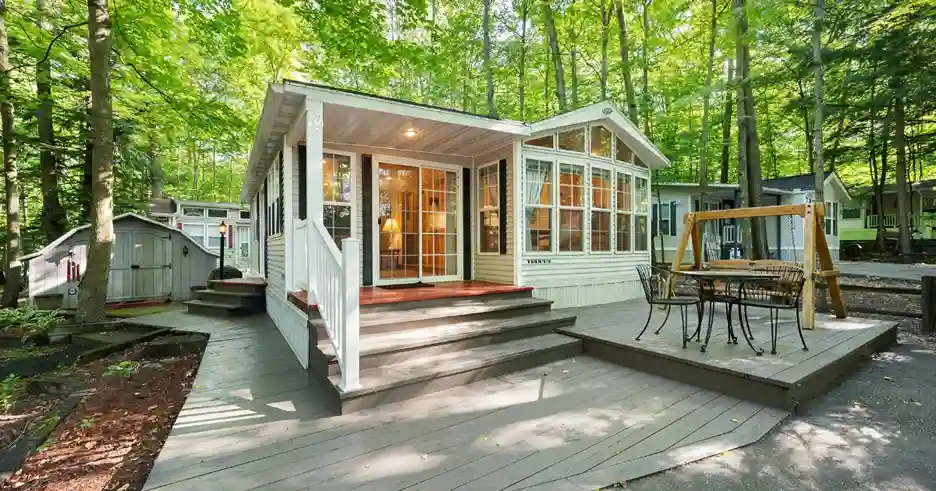
Yes, if your family cottage was used as a secondary property, then you will probably have to pay capital gains tax on it (assuming that the cottage was sold for more than what you paid for it).
If you bought the cottage for $200,000 and sold it for $500,000, your profit would be $300,000. Since 50% of a capital gain is taxable, only $150,000 of that would be taxable income.
I rented out part of my home as an Airbnb and then sold it.
If you rent out a portion of your home, you may have to pay capital gains tax on that part when you sell. The selling price and adjusted cost base (ACB) are usually divided between the portion you used as your principal residence and the portion used for rental income.
For the part of your home that was your principal residence (such as your own living space), you generally won’t pay tax on the gain. For the rental portion (such as rooms or areas used for Airbnb guests), you’ll need to report the gain when you sell.
I sold my primary residence.
Generally, you will not pay any capital gains tax on the sale of your primary residence. However, you must still report the sale to the CRA on your tax return for the year you sold the property.
Understanding how capital gains tax in Canada works can help you prepare for your next move. Curious how much your next move could cost? Explore listings on Zoocasa to find a home that fits your budget.